As Viet Nam seeks to expand its tourism markets and diversify its offerings, there is considerable scope for the two countries to strengthen cooperation in this sector.
Viet Nam and Bhutan have great potential to expand tourism cooperation
According to Nguyen Trung Khanh, Director of the Viet Nam National Authority of Tourism, the country’s tourism industry is continuing to grow strongly while steadily reinforcing its position as one of the region’s most attractive destinations.
“In this new phase of development, the tourism sector is shifting its focus from quantitative growth to improving quality, with sustainable development serving as its overarching guiding principle,” Khanh said.
Viet Nam is also prioritising the development of high value-added tourism products built on its cultural and natural resources and distinctive local identities. These efforts are expected to extend visitors’ length of stay, increase tourism spending, and enhance the overall visitor experience.
Viet Nam boasts a diverse range of tourism assets, including more than 3,200 kilometres of coastline along with numerous scenic attractions and cultural and natural heritage sites of outstanding value. Based on these strengths, Viet Nam’s tourism development strategy identifies four flagship tourism products: marine and island tourism, cultural tourism, ecotourism, and urban tourism.
Khanh noted: “Viet Nam and Bhutan have significant potential to expand tourism cooperation. Both countries possess rich cultural identities, and the majority of their populations practise Buddhism, creating favourable conditions for developing cultural and spiritual tourism products.”
In addition, both countries’ strengths in agriculture and community-based tourism present valuable opportunities to cooperate in promoting sustainable rural tourism.
Viet Nam currently has five villages recognised by UN Tourism in its list of Best Tourism Villages, underscoring its commitment to tourism development linked with cultural preservation and improved community livelihoods.
Cultural, spiritual, and wellness tourism to receive greater focus
Damcho Rinzin, Director of Bhutan’s Department of Tourism, said the number of Vietnamese visitors to Bhutan remains modest, at around 2,000 annually, with most travelling for spiritual tourism. He added that Bhutan hopes to strengthen cooperation with Viet Nam to promote two-way tourism exchanges.
He also praised Viet Nam’s tourism sector for its rapid recovery and strong growth in recent years.
Commending Bhutan’s tourism development strategy, Khanh said Bhutan had established itself as a high-quality destination and built a national brand centred on happiness, sustainable development, and the effective preservation of traditional cultural values and natural resources.
These are also the objectives that Viet Nam’s tourism industry is pursuing as it seeks to improve the quality of its growth, added Khanh.
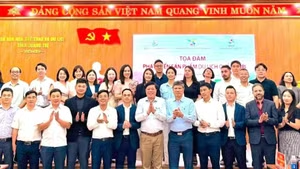
To boost tourism cooperation between the two countries, the Viet Nam National Authority of Tourism proposed that both sides consider signing a memorandum of understanding, increase exchanges of familiarisation trips and media delegations, and strengthen information sharing.
The two sides could also jointly recommend that the relevant authorities explore the launch of direct flights when conditions permit, making travel more convenient and encouraging greater visitor exchanges.
Regarding air connectivity, Viet Nam and Bhutan will build on the Memorandum of Understanding on Civil Aviation signed in 2025 to develop linked transit tourism packages, expand seasonal charter flights offering direct connections, and encourage Vietnamese and Bhutanese airlines to establish codeshare partnerships.
Regarding specialised tourism products, both sides agreed to promote tourism offerings that meet the demands of their respective markets, with particular emphasis on the growing trend for wellness and retreat tourism.
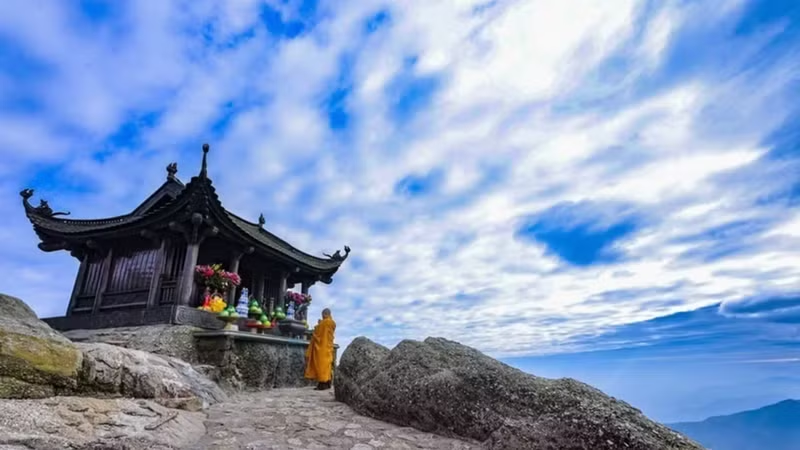
For Bhutanese visitors travelling to Viet Nam, the tourism sector will focus on promoting spiritual tourism routes featuring Yen Tu, Trang An, and Bai Dinh Temple and Perfume Temple, combined with meditation retreats and Buddhist cultural exchanges.
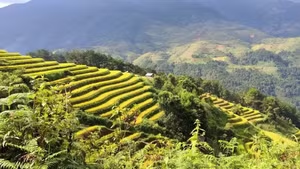
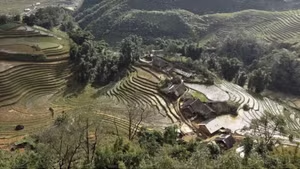
Community-based tourism destinations such as Mai Chau, Pu Luong, Sa Pa, and Hoang Su Phi, together with responsible ecotourism experiences in national parks including Cuc Phuong, Phong Nha-Ke Bang, and Cat Tien, will also be highlighted.
For Vietnamese travellers visiting Bhutan, both sides will continue to promote distinctive spiritual, historical, and cultural tourism products combined with organic agriculture and traditional medicine.
![[Video] Viet Nam among Top three Asian destinations for return visitors](https://en-cdn.nhandan.vn/images/nyM650OGFWrOVWc-xajqN-rTZ68Rlmc1fiGJOhBRYHErj-E25MBpvJqrpphXazfrpe9t-fYCGuQU4CN0yXo3Rg/du-lich-vietnam.jpg.avif)