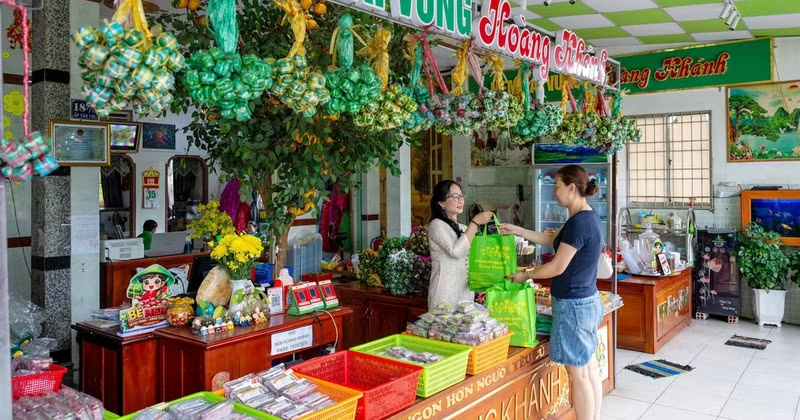
Travelling along National Highway 1A from Ho Chi Minh City to Can Tho, after crossing My Thuan Bridge, visitors will see roadside stalls selling neatly square-shaped fermented pork roll, tied in bundles of ten, closely associated with the place name Lai Vung.
From a humble dish
Dang Thi Ngoc Thuy, owner of the Hoang Khanh roll-making establishment in Lai Vung Commune, is one of the artisans of the Lai Vung roll-making craft. Having spent more than 20 years in the trade, from working as a hired labourer to becoming the owner of a well-known roll production workshop, Thuy is proud to have contributed to spreading the reputation of this local speciality.
Thuy said selecting the ingredients is the most important step in making fermented pork roll. Pork leg or lean pork from the rump should be selected as it is tender and contains little sinew or fat. The pork must be fresh and still “hot” immediately after slaughter. As for the pork skin, skin from the body must be selected to ensure a crisp texture. Skin from sows should be avoided as it is too tough.
The banana leaves used to wrap the fermented pork roll must be pliable and durable Siamese banana leaves with a good colour. The leaves used to wrap the fermented pork roll directly must be leaves from the coral tree or star gooseberry leaves, as both types help facilitate the natural fermentation of the meat. They are also the traditional vegetables served with fermented pork roll.
After the ingredients are mixed according to a ratio of 80% meat to 20% finely shredded pork skin, the wrapping process begins. This requires the greatest skill, as it determines not only the appearance of the nem but also the quality.
In addition to the traditional fermented pork roll, nem que (cinnamon-flavoured fermented pork roll), and nem don (large fermented pork roll), all of which have achieved the four-star OCOP rating, Thuy is preparing applications for three more products to achieve the four-star rating in 2026. The establishment has also developed dozens of other products in a variety of sizes to meet diverse consumer preferences.
Preserving a family craft
The Co (Mrs) Hoan food processing establishment officially opened its roll production workshop in 1993 in Tan Thanh Commune, formerly Lai Vung District. Le Hoang Minh Nhat, a representative of the establishment, said: “In the past, my grandmother only made fermented pork roll for the family or for parties. My mother, whose name is Hoan, was a teacher. While teaching, she made fermented pork roll as an additional source of income, mainly selling it to neighbours and acquaintances. Yet over time, more and more people came to know and enjoy the fermented pork roll, and they began calling it ‘Co Hoan roll.”
Initially, the Co Hoan Food Processing Establishment supplied fermented pork roll to vendors near ferry terminals, then sold it to individual customers through intermediaries such as newspaper and lottery-ticket vendors who also took fermented pork roll to sell. Since establishing a new facility on National Highway 80 in Vinh Hung Hamlet, Lap Vo Commune, Co Hoan roll has been sold directly to consumers rather than through intermediaries.
The establishment now has more than 12 retail outlets at rest stops along National Highway 51 and National Highway 1A, at Phuong Trang Ben Tre, four outlets in Dong Thap Province, and outlets in four other provinces and cities: My Phuoc Ward, An Giang Province; Tan An Ward, Can Tho City; Cho Lon Ward, Ho Chi Minh City; and, most recently, an establishment at Phan Thiet Market in Duc Nghia Ward, Lam Dong Province. Its products are also available at several supermarket chains, including Co.opmart, Big C, and Mega Market.
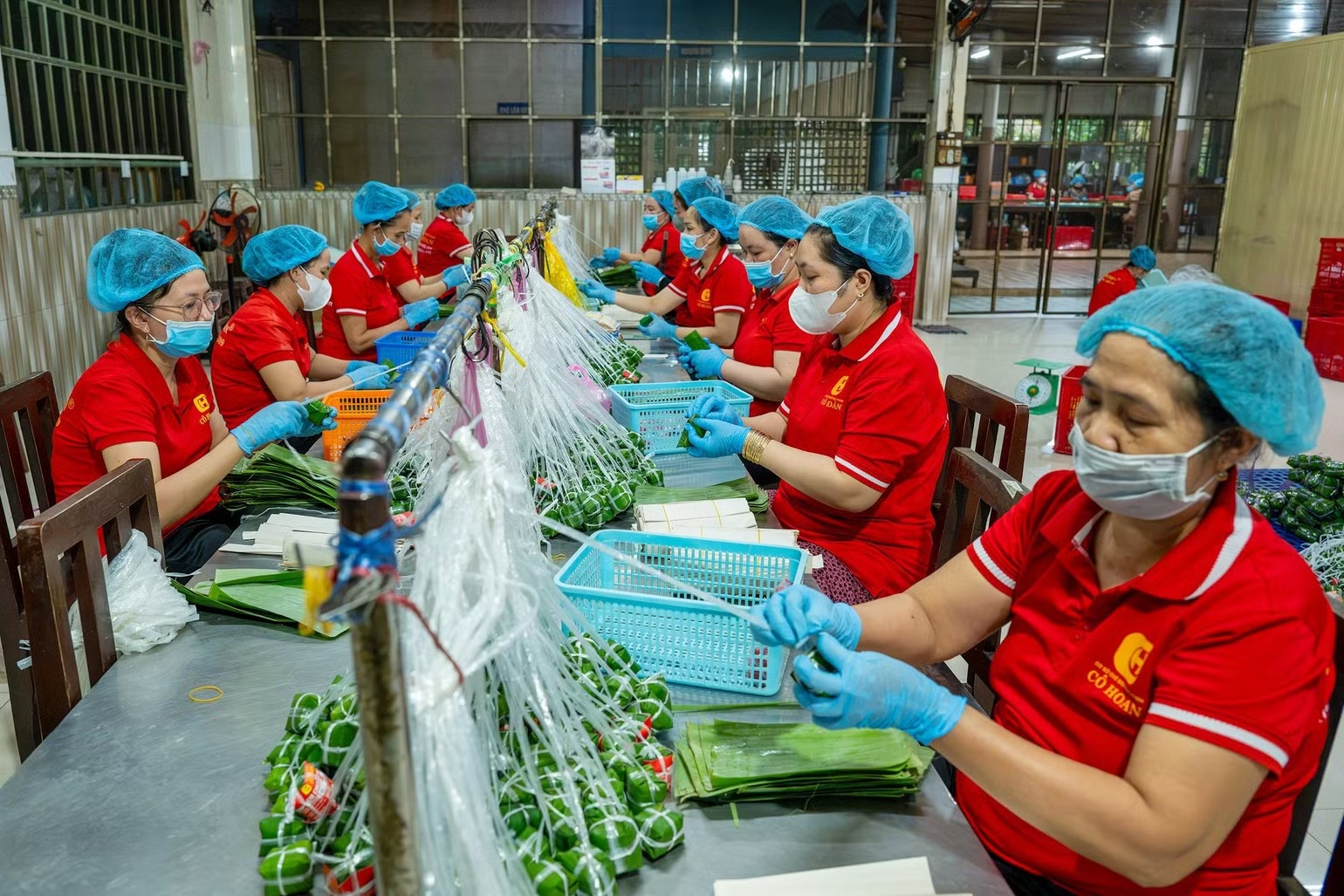
When My Thuan Bridge was inaugurated in 2000, trading via the former My Thuan ferry became much less active. Recognising changes in the market and new business opportunities, the Hoan's family moved its production facility to the frontage of National Highway 80 to expand access to customers.
According to Minh Nhat, whereas the family previously focused mainly on Lai Vung fermented pork roll, the application of science and technology to production has enabled the establishment to develop more than 30 products for the market. Among these, three products have achieved the four-star OCOP rating, while nine others have achieved the three-star rating. The establishment has also received “Made in Dong Thap” certification for its "Co Hoan roll" products.
Despite many ups and downs, the Lai Vung roll-making craft has survived and continued to develop. In 2012, Lai Vung fermented pork roll was recognised by the Viet Nam Records Book as one of the country’s top 10 famous roll specialities. On November 10, 2023, the Ministry of Culture, Sports and Tourism recognised the traditional craft of “Lai Vung roll-making” as a national intangible cultural heritage.
Although the product remains popular with consumers, with many vehicles carrying freshly made fermented pork roll to deliver directly to agents, rest stops, and supermarkets every day, products nearing their expiry date are collected by the establishment on the same day. Minh Nhat said: “Customers’ satisfaction is the greatest happiness for people in this trade. It is the motivation for us to maintain our quality and reputation and continue contributing to taking Lai Vung fermented pork roll even further.”
Despite many ups and downs, the Lai Vung roll-making craft has survived and continued to develop. In 2012, Lai Vung fermented pork roll was recognised by the Viet Nam Records Book as one of the country’s top 10 famous roll specialities. On November 10, 2023, the Ministry of Culture, Sports and Tourism recognised the traditional craft of “Lai Vung roll-making” as a national intangible cultural heritage.