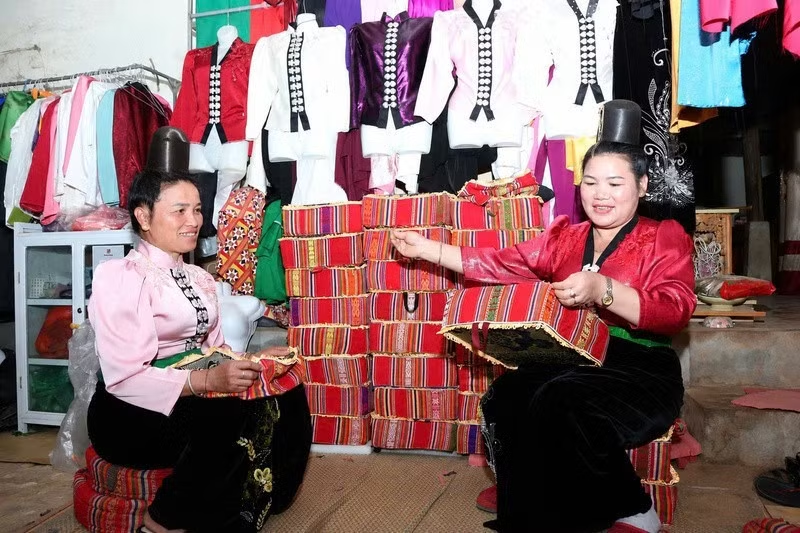
From brocade fabrics woven by the skilful hands of Thai women, the seat cushions today carry stories of creativity, determination to rise and the aspiration to become prosperous in their own homeland.
From threads to sustainable livelihoods
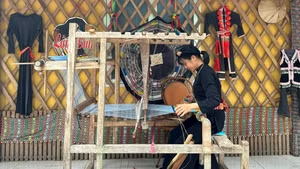
The brocade weaving craft in Nong Bon Village has been preserved through many generations of Thai people. However, changes in the demand for traditional clothing have placed the weaving craft under pressure to renew itself. A craft can only be sustainable when it both preserves its identity and creates value in contemporary life. Driven by this concern, Lo Thi Thieng, who has spent 20 years devoted to needlework, has brought brocade patterns beyond skirts and shirts to appear on products serving everyday needs. It is a simple approach that opens up a new direction: preserving the craft through the economic value that the craft itself creates.
“To preserve the craft, brocade must become part of everyday life,” Lo Thi Thieng said. After studying the market, she found that consumers welcomed brocade products applied to interior furnishings. From there, foam seat cushions covered with brocade fabric were created, combining the convenience of modern products with the distinctive beauty of Thai ethnic patterns, creating a unique character for traditional handicraft products.
Thanks to the combination of traditional elements and modern needs, the products were quickly welcomed by customers. On average, Thiêng supplies around 1,000 brocade seat cushions to the market each year, creating jobs for more than 10 local people. The products currently serve not only residents of the commune but are also sought by customers in many other localities as gifts or for use in their homes.
Assessing Lo Thi Thieng’s initiative in preserving and promoting the traditional brocade weaving craft, Vice Chairman of the People’s Committee of Muong Khieng Commune Quang Van Tiep said that the locality always encourages people to promote traditional crafts associated with local cultural advantages to create livelihoods and increase incomes. Lo Thi Thieng’s model of producing seat cushions using brocade materials is one of the creative approaches that both contributes to preserving the cultural identity of the Thai people and creates products with economic value that meet current market demand.
At present, Muong Khieng identifies developing production and increasing people’s incomes as key tasks. Alongside supporting agricultural production models, the locality also focuses on reviewing and developing distinctive products to participate in the One Commune One Product (OCOP) Programme. Models such as Thiêng’s brocade seat cushions not only contribute to creating local employment but also open up a direction for rural economic development associated with the preservation of traditional culture, in line with the locality’s orientation towards sustainable new-style rural development.
Opening up a new future for the highlands
Lo Thi Thieng’s seat cushion production model demonstrates an effective approach to exploiting local cultural values for economic development. Rather than preserving the traditional craft merely by keeping it unchanged, she has brought brocade into modern life, giving the products additional use value and commercial value.
For Muong Khieng Commune, the establishment of production models associated with ethnic culture is particularly significant in the process of building new-style rural areas. Products bearing local characteristics not only contribute to increasing people’s incomes but also open up opportunities for developing community-based tourism and promoting the image of the land and people of the area.
However, much work remains to be done for brocade seat cushion products to develop sustainably. At present, most products are sold through retail channels, the scale of production remains small, there is no separate brand, and product packaging and identification systems remain limited. These are also barriers that make it difficult for the products to access larger markets.
Lo Thi Thieng shared that her greatest wish is to receive support in completing product designs, building a brand, designing packaging and guidance on completing the necessary documents to participate in OCOP. If the products receive OCOP certification, they will have greater opportunities for promotion, market expansion and increased value.
This aspiration is not only Thiêng’s personal wish but also a common aspiration among many production households in the highlands. When a local product succeeds in building a brand, the added value will return to the people themselves, creating more jobs and providing momentum for rural economic development. By knowing how to promote local cultural advantages, every traditional product can become an important link in the journey towards building sustainable new-style rural areas in the highlands of Son La.