New perspectives on turning cultural resources into IP
Viet Nam possesses a rich store of cultural resources, ranging from heritage, history, cuisine, and traditional craft villages to stories, figures, and places. But how can these resources become creative material, be developed into intellectual property (IP), and generate value in the market?
Sharing a new perspective on developing cultural resources into IP and bringing IP to the market, Master Hoang Thi Thanh Hang, Vice Director of the Institute for Science, Technology and Education Development and Chairwoman of TRIHD Asia Communications Company, said that behind a heritage site, a dish, or a traditional craft village could lie an “IP mine” that has yet to be identified.
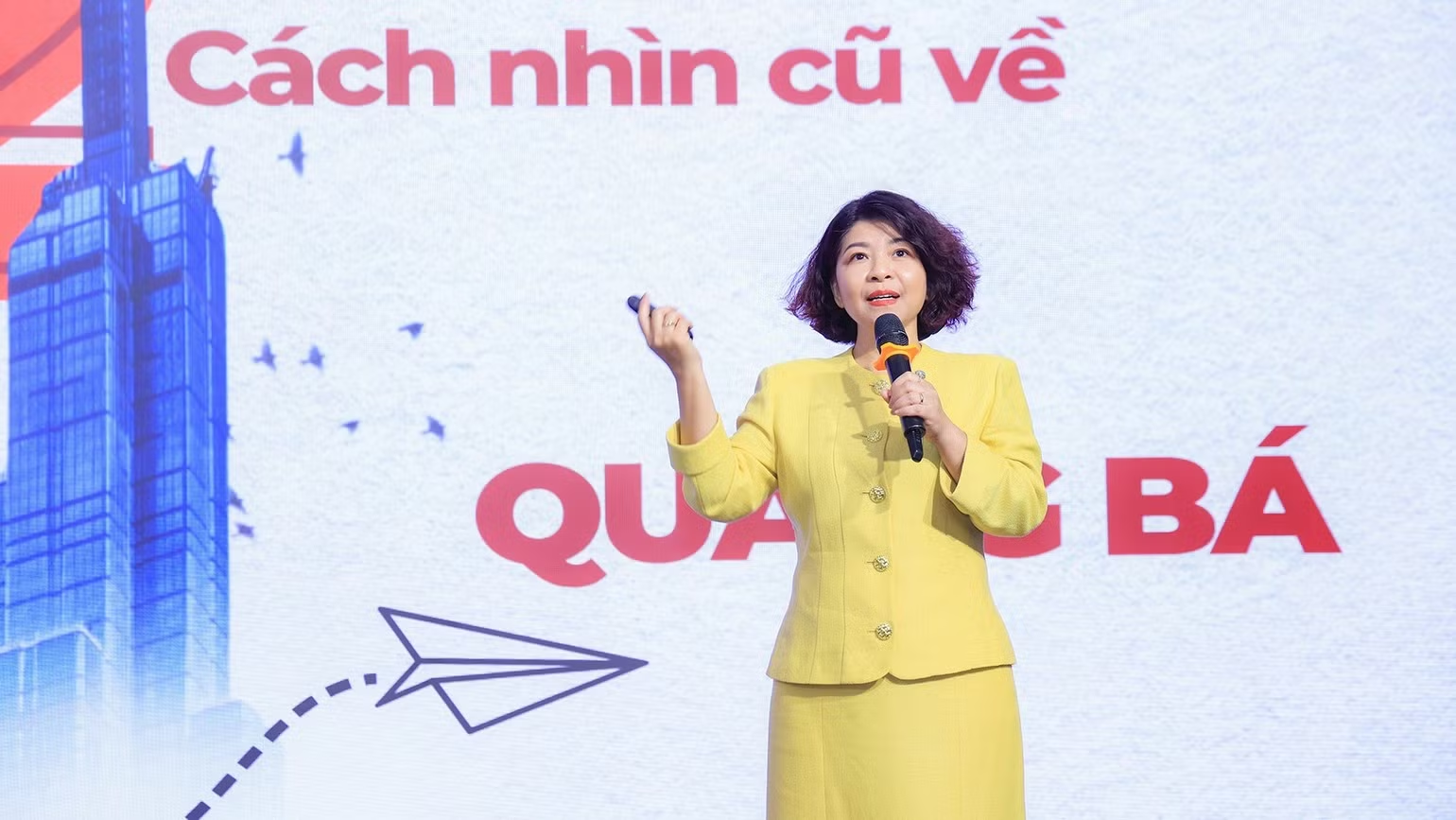
Drawing on international experience, particularly the Republic of Korea's approach to developing cultural content into an ecosystem of experiences and consumption, she suggested a value chain in which cultural resources are transformed through creativity into IP and brought to market, with technology playing a role throughout the process, enabling cultural resources to be digitised, retold, and made more accessible.
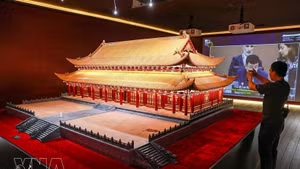
From a museum perspective, Master Nguyen Khac Xuan Thi, Director of the Ho Chi Minh City Museum of History, emphasised that a museum does not merely preserve artefacts but also preserves figures, stories, memories, and worlds that have yet to be fully told. Historical materials, when digitised and made accessible in the right way, can become input material for creators and the creator generation.
However, according to Nguyen Khac Xuan Thi, opening heritage to creativity also requires respect for the authenticity of the source. The more creative the work, the more essential it is to have a solid data foundation and a proper understanding of heritage.
At the other end of the value chain, Master Huynh Dinh Thai Linh, General Director of WTC Becamex, raised the question of how IP can be brought to the market. According to her, the creation of an IP is not the end point but merely the beginning of a process of productisation, licensing, distribution, and experience development. A story only truly becomes a creative asset when it has the ability to live on beyond the work itself and create value in everyday life.
However, there are also concerns about whether infrastructure can keep pace once an IP begins to emerge.
A perspective from cinema was shared by journalist Hoang Anh Tuan, Editor-in-Chief of The World of Cinema Magazine. According to Hoang Anh Tuan, Viet Nam has begun to develop IPs from cinema and culture. However, in some cases, infrastructure is still lagging behind IP because localities have not had time to prepare for the moment when an IP generates strong attraction.
Hoang Anh Tuan cited the example of the film “Yellow Flowers on the Green Grass”, which placed the former province of Phu Yen (now part of Dak Lak) on the tourism map, while accommodation, transport, and service infrastructure did not always keep pace with the demand that arose. This shows that creating an IP is only the first step; an entire ecosystem needs to be prepared so that the IP can develop and generate long-term value.
Who will turn heritage and culture into IP?
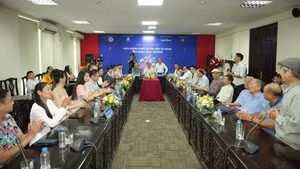
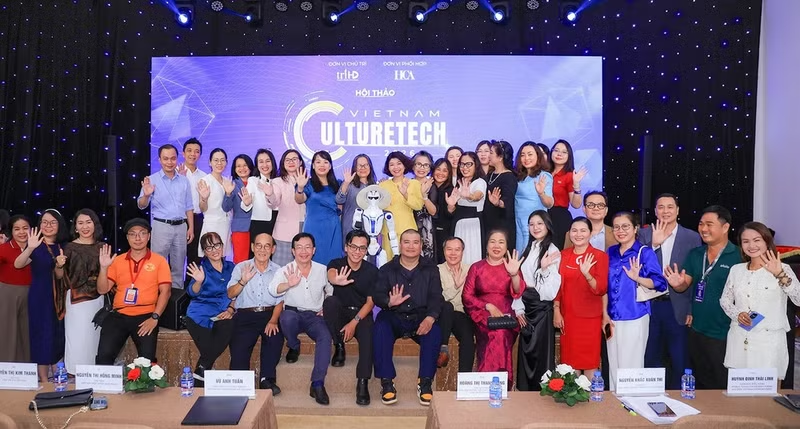
Discussing the topic “Who will turn culture into IP?”, speakers Master Nguyen Khac Xuan Thi, Doctor Pham Huy Quang, Rector of the Ho Chi Minh City University of Theatre and Cinema, and Master Huynh Dinh Thai Linh, moderated by Master Hoang Thi Thanh Hang, raised questions about the role of each stakeholder in the value chain: Who owns the resources, who creates, who invests, who owns the rights, who productises them, and who brings the IP to the public?
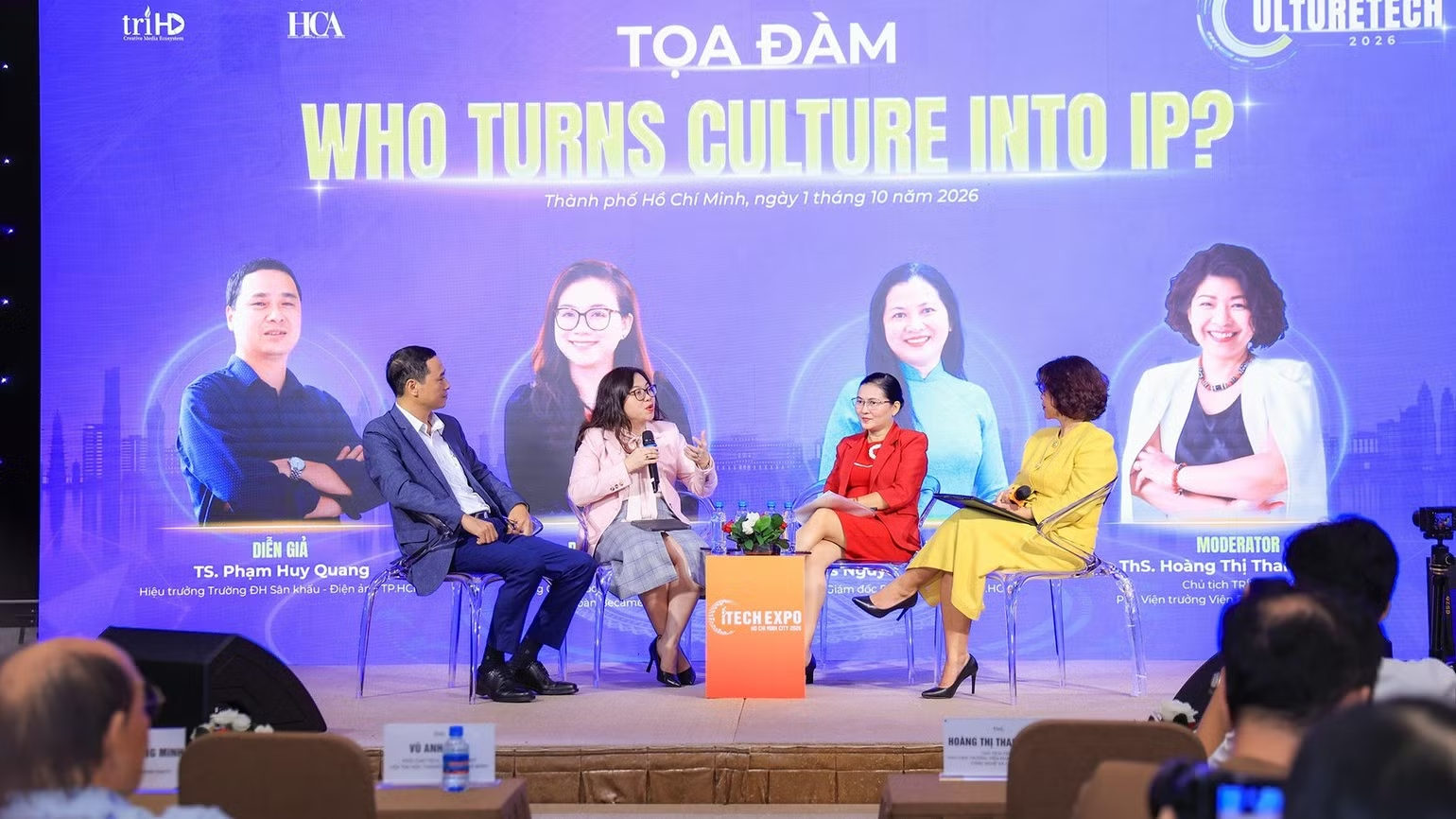
From the speakers' perspectives, opportunities to develop IP can come from many fields, ranging from food, agricultural products, and traditional craft villages to history, heritage, and the arts. What is important is to recognise the IP potential in resources that already exist and establish mechanisms for all parties to participate.
Doctor Nguyen Thi Hong Minh, Chairwoman of the Transparent Food Association, shared her enthusiasm for building a national brand for Vietnamese food. Nguyen Thi Kim Thanh, Chairwoman of the Viet Nam Coconut Association, has also received much encouragement to develop IP from Vietnamese coconuts. People's Artist Ho Van Thanh, a film music designer, further emphasised the importance of identity and tradition when cultural products reach international markets.
Master Hoang Thi Thanh Hang said: “Culture has its sources, creativity has its people, and the market has its demand, but there is a lack of glue between these links.” That “glue” is an ecosystem capable of connecting resource owners, creators, businesses, technology, and the market, while clarifying the rights, roles and interests of each party. This is also the spirit of “Culture Tech 2026: From Culture to IP”: not merely to digitise culture, but to open the storehouse of cultural resources to the creative industries, enabling inherited values to continue to be told, developed into IP, and create new value in contemporary life.
The journey from culture to IP is not merely a creative journey. It is a journey of turning resources into assets and taking cultural values beyond the works that gave rise to them. Turning cultural resources and heritage into intellectual property assets is also in line with the orientation of Resolution No. 80-NQ/TW, turning cultural identity into an endogenous resource, transforming culture into a development resource, and contributing to economic growth.