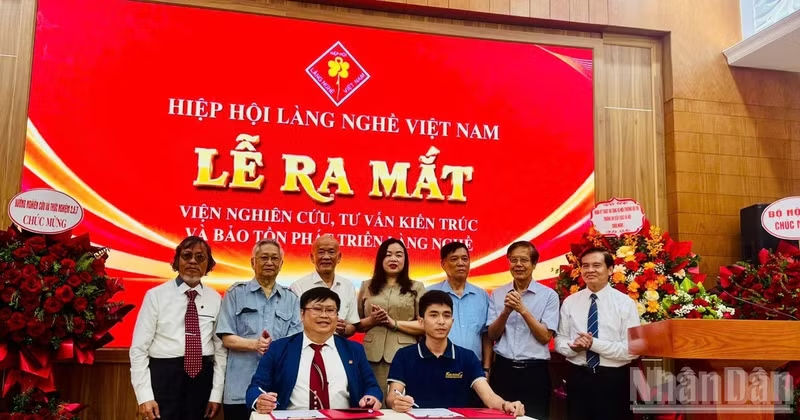
Architect Nguyen Khanh Hiep serves as Director of the Institute.
Under its approved mandate, the Institute will focus on scientific research in architecture, planning, conservation and craft village development; provide consultancy, independent reviews and appraisals for programmes, projects and planning schemes; design architectural spaces for craft villages; provide training and technology transfer; organise seminars, exhibitions and trade promotion activities; and expand domestic and international cooperation.
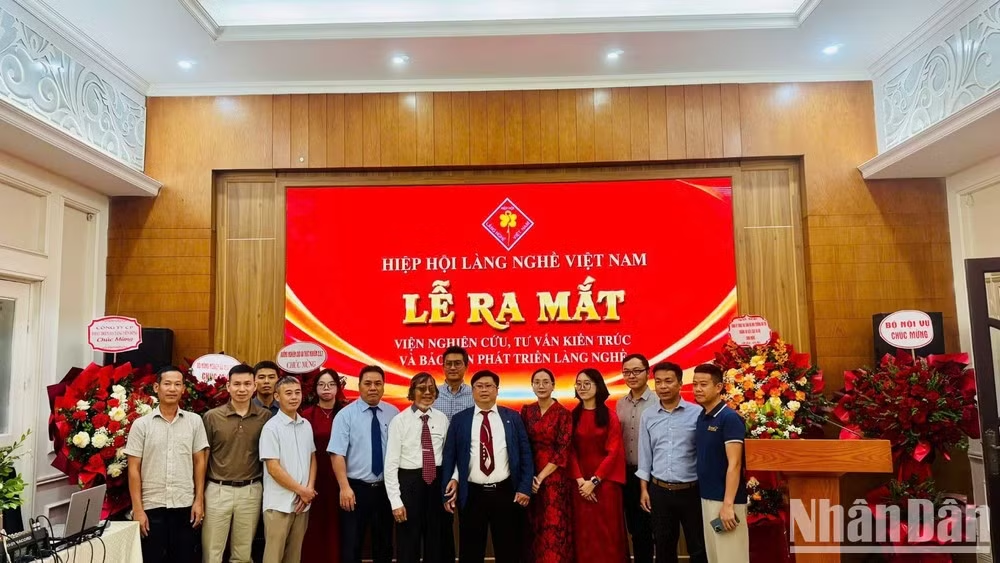
One of the Institute’s key priorities is to develop solutions that strike a balance between preserving traditional values and meeting new development requirements. Craft villages are viewed not merely as places of production, but as integrated spaces encompassing culture, architecture, landscape and livelihoods, where historical values, traditional crafts, local communities and distinctive regional identities converge.
On that basis, the Institute will carry out research programmes on craft village planning and development; the application of new technologies and materials; the development of digital databases on craft villages; and architectural design solutions tailored to the cultural characteristics of different regions. It will also study measures to conserve architectural heritage, develop craft village tourism, protect the environment and strengthen climate change adaptation.
The Institute also aims to assist localities in developing green craft village models and the circular economy, improving resource efficiency and gradually creating production spaces closely integrated with cultural life, tourism and commerce.
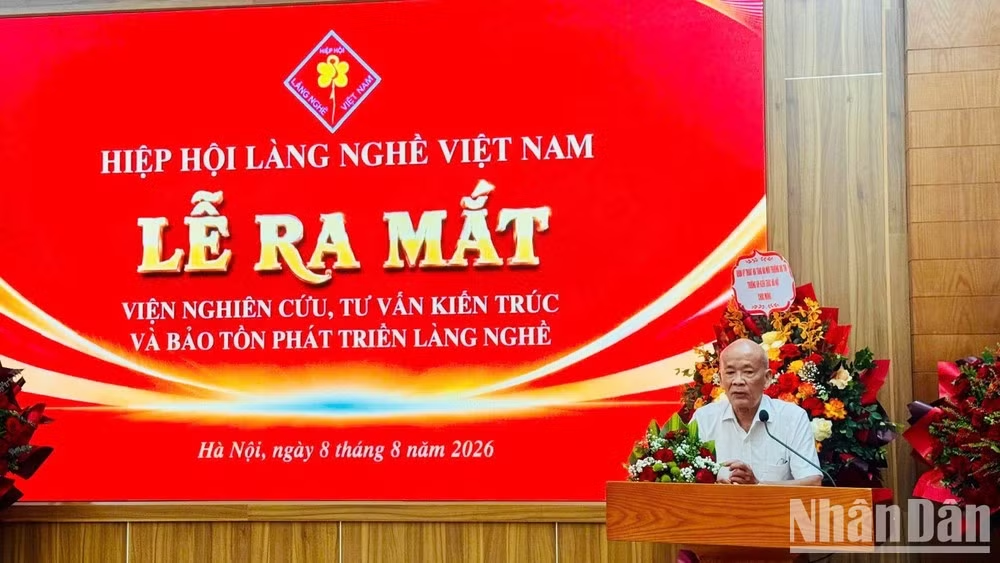
Speaking at the launch ceremony, Trinh Quoc Dat, Member of the Viet Nam Fatherland Front Committee and President of the Association of Viet Nam Craft Villages, emphasised that the establishment of the Institute represents an important step towards strengthening the Association’s capacity in scientific research, consultancy and innovation.
According to Trinh Quoc Dat, in the new stage of development, Vietnamese craft villages need not only to preserve their traditional crafts, products and cultural values, but also to embrace new approaches to planning, architecture, technology, environmental protection, digital transformation and market development.
He therefore called on the Institute to fully harness the expertise of its specialists, scientists and architects, as well as its network of artisans and businesses, to translate research findings into practical solutions.