Destination is an unfamiliar land
In 1976, the country entered a period of post-war economic recovery and development. The policy of developing new economic zones in Lam Dong Province was rolled out across the districts of Ha Noi. With the material conditions of the time, Lam Dong remained a vague concept for most residents of the capital, particularly young men and women from Ha Noi.
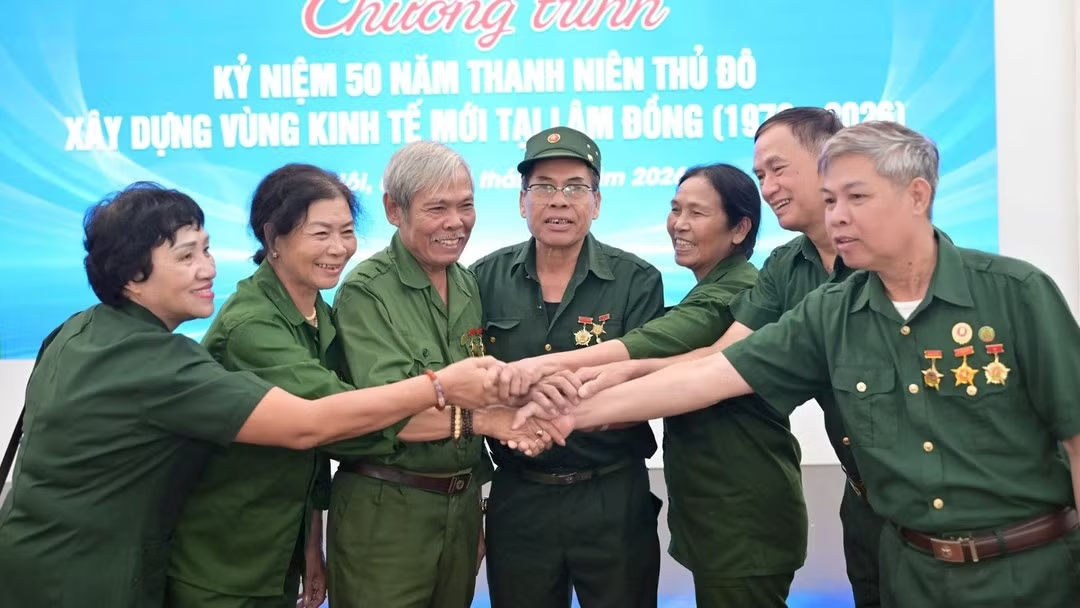
“At the time, I had just turned 19. From the information provided to us, I learnt that travelling by car from Ha Noi to Lam Dong took about a week. When I expressed my intention to volunteer for the trip, no one in my family supported me. Some neighbours even made pointed remarks: “A young woman should stay close to home and look after her parents, not demand to leave home as soon as she has grown up,’” recalled Cao Thanh Xuan, a former youth volunteer developing Ha Noi’s new economic zone in Lam Dong.
Eventually, the young woman from former Gia Lam District set off, carrying with her a firm sense of purpose and a desire to devote herself to the Fatherland. In the first deployment, the district sent a total of 124 young volunteers to help develop the new economic zone.
At that time, Lam Dong welcomed young people from the capital who had volunteered to contribute their strength, talent, and intellect for the common good of the community and the country. They were greeted by vast mountain ranges and endless stretches of dense forest. There were no houses ready for them, nor any reliable supply of clean water.
In the new economic zone, each youth volunteer took on several responsibilities at once, from production work and building houses for incoming settlers to security duties. The challenges came not only from the harsh natural environment but also from the constant threat posed by FULRO forces in Lam Dong at the time. “After working in the mornings, we would take our K54 pistols and patrol, guarding our unit and the local people. Once, while chasing insurgents, I slipped and fell into Cam Ly Waterfall and lost consciousness. Fortunately, I regained consciousness and struggled to make my way back to the unit,” Xuan recalled emotionally.
According to Nguyen Thi Mao, former Standing Deputy Secretary of the Youth Union and now Head of the Liaison Committee for former Youth Volunteers who served as an advance party for Ha Noi’s new economic zone in Lam Dong, the Ha Noi Youth Union had been instructed by the Ha Noi Party Committee to send 2,000 youth volunteers to the new economic zone by the end of the first quarter of 1976. Upholding the spirit of the “Three Readies” movement, the advance party of young people from the capital eventually numbered nearly 3,000 youth union members and other young volunteers, many of whom had put aside their studies and left their families behind to face hardship and challenges in a land 1,600km from the capital.
“The young people from the capital shed sweat, tears, and even blood to build that new economic zone. We, who were all under 20 at the time, levelled land, filled in muddy ground, built roads, and constructed houses, health stations, and schools to welcome people from Ha Noi who were coming to settle permanently. We never had quite enough to eat or enough sleep, but no one considered giving up. When our families sent letters urging us to return to continue our studies or get married, many of us replied frankly that we would think about those things once our mission had been completed,” Mao recalled.
Upholding the capital’s youth tradition
In 1977, as the number of people moving from the capital to Lam Dong increased, localities such as Tu Liem and Thanh Tri organised the deployment of teachers to the new economic zone. After conducting field visits, the teachers returned to Ha Noi to request textbooks, learning materials, and essential equipment. Meanwhile, local leaders in the new economic zone quickly found a suitable row of buildings to serve as classrooms and recruited additional teachers to open a school. In that academic year, the first school in the new economic zone opened with four classes and nearly 100 pupils. It was named Thang Long.
According to Nguyen Tran Vy, the first teacher in Ha Noi’s new economic zone in Lam Dong, Thang Long School subsequently established branch campuses in the Dong Anh, Gia Lam, and Thanh Tri areas of the zone. However, the sparse population in the Ba Dinh, Dong Da, Hoan Kiem, and Hai Ba Trung areas, only multigrade classes could be opened. Some classes therefore had just four or five pupils, whose educational levels varied considerably.
To ensure that educational activities ran effectively, the Youth Union in the new economic zone established a teachers’ Youth Union branch and organised Youth Union training classes for secondary school pupils. After about a year, school activities had quickly stabilised and, more importantly, no pupils were dropping out.
“The dedication of the teachers who went to develop the new economic zone and the determination of its pupils to overcome difficulties in their studies are truly a source of pride. Among the first cohort of pupils, some went on to become rectors of Da Lat University, while others held important positions in the Lam Dong Provincial Party Committee. In one family, both daughters from Thang Long School’s first cohort eventually became principals or vice-principals of schools in the area. Over the past 50 years, the original school, with its corrugated metal roof, timber walls, and muddy playground, has been transformed into a modern, spacious educational establishment with multi-storey classrooms,” teacher Vy said.
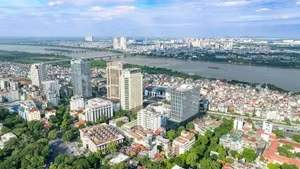
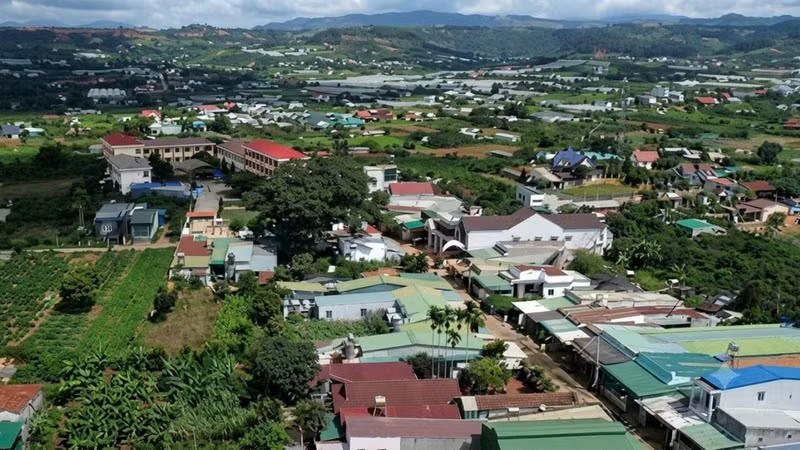
The once-wild new economic zone, which had welcomed the first pioneering steps of young volunteers from the capital, has since been transformed into a prosperous and well-developed area. Established through the merger of Nam Ban Township and the former communes of Dong Thanh, Me Linh, and Gia Lam of Lam Dong Province, Nam Ban Lam Ha Commune bears a distinctive name commemorating the contributions of young volunteers from the capital. “Lam” refers to Lam Dong, while “Ha” stands for Ha Noi. Covering more than 117 square kilometres and home to over 31,000 people, Nam Ban Lam Ha no longer retains even the slightest trace of what was once a land of "sacred forests and perilous waters."
“The generation of young people from Ha Noi in those years transformed their labour and unwavering faith into a fruitful legacy, opening a brighter future for Nam Ban Lam Ha. We understand that to appreciate how far our homeland has come, we must always remember where that journey began. The young people of Nam Ban Lam Ha today are working tirelessly to continue the pioneering mission and open new horizons for development through knowledge, science and technology, digital transformation, and innovation. To further strengthen the special bonds of solidarity and affection between Lam Dong and Ha Noi, a book titled “50 Years of Ha Noi’s New Economic Zone in Lam Dong” is being compiled. The publication will bring together valuable documents and memories while conveying a deep sense of pride and appreciation for the arduous but heroic journey of previous generations,” said Phan Tien Dung, Deputy Secretary of the Party Committee and Chairman of the People’s Committee of Nam Ban Lam Ha Commune.
According to Duong Minh Duc, Deputy Secretary of the Ha Noi Youth Union, previous generations demonstrated that whenever the Fatherland called, young people from the capital were ready to go to the most challenging places, take on the most arduous tasks, and accept responsibility for their choices. Building on this tradition, young people in Ha Noi today will boldly open new avenues for development through knowledge, science and technology, innovation, digital transformation, and development partnerships.