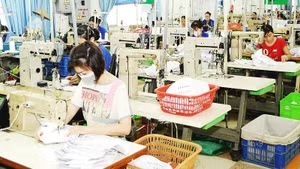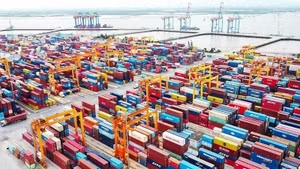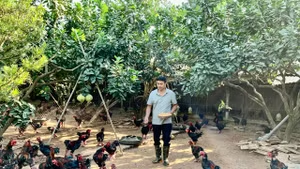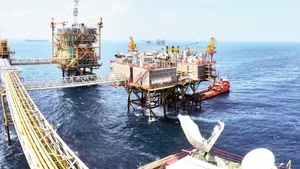
The Resolution emphasises the objective of establishing a new growth model and restructuring the economy, accelerating industrialisation and modernisation, with science and technology, innovation, and digital transformation as the primary drivers.
Accordingly, growth is to be promoted in tandem with maintaining macroeconomic stability, controlling inflation, and ensuring major economic balances, including public debt and the state budget deficit within prescribed limits. It calls for close, consistent, effective, and flexible coordination among fiscal policy, monetary policy, and other macroeconomic measures, ensuring sufficient capital supply to support the goal of double-digit growth, while resolutely preventing any economic crisis under all circumstances. The Government will proactively adjust taxes and fees in emergency situations.
To achieve growth targets, the Government requires continued restructuring of economic sectors; enhanced mobilisation of development resources; and the revitalisation of traditional growth drivers alongside the strong development of new industries, sectors, and economic models as emerging growth engines. The real estate market is to be managed to ensure healthy, transparent, and sustainable development, better meeting housing demand.
The state budget structure will be rebalanced, with increased spending on development investment focused on priority sectors, alongside breakthroughs in mechanisms and policies to improve the quality and efficiency of public investment and accelerate disbursement.
Decisive measures will be implemented to develop a stable, safe, and healthy stock market and corporate bond market, turning them into effective medium- and long-term capital mobilisation channels to support double-digit growth. The banking system and credit institutions will be modernised, while efforts to address weak credit institutions and cross-ownership will be intensified.
The Resolution also calls for building and modernising a strong national industrial base; restructuring the agricultural and rural economy towards green, ecological, and circular transformation based on value chains; and creating breakthroughs in the development of all economic sectors in line with the effective implementation of Politburo resolutions.
The state economy will be reformed, focusing on governance of state-owned enterprises in line with international standards, enhancing their efficiency and leading role in key sectors. The private sector is to be developed as one of the most important drivers of the national economy.
Mechanisms will be established to effectively attract selective foreign investment associated with technology transfer, learning, and absorption, thereby strengthening domestic technological capabilities and enhancing linkages between the foreign-invested sector and other sectors of Viet Nam’s economy.
![[Infographic] GRDP growth scenarios for 34 provinces and cities in fourth quarter of 2026](https://en-cdn.nhandan.vn/images/nyM650OGFWrOVWc-xajqN-rTZ68Rlmc1fiGJOhBRYHFSa4DhrHNDxEFdnz313Vk5dNJuxdkHglPA3rLeaPeiaUheNuCI723k2lNssd-YLJuKR58epWq7s21lV5WjM-HR2-Qpbi4MwAzqt9wRjL4WjGkfEz7RO9qhcwg8o8LQFK8/grdp-growth-scenarios-for-34-provinces-and-cities-in-q42026-anh-dai-dien.jpg.avif)