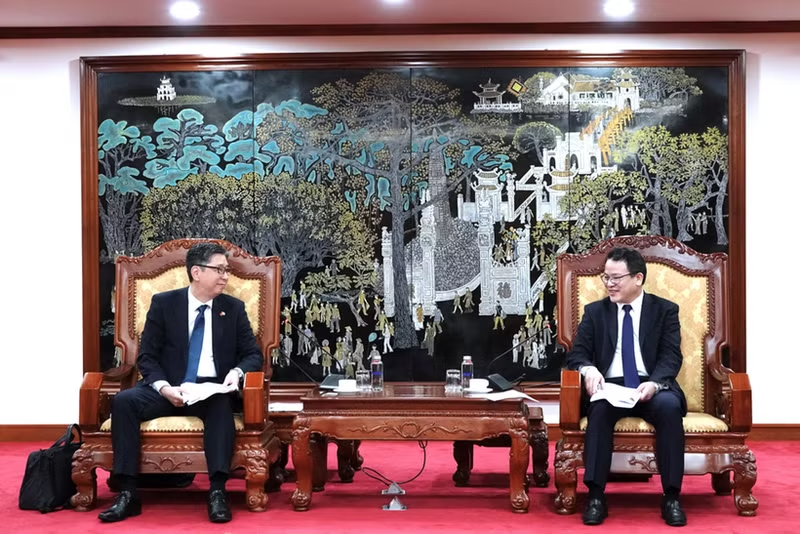
The deputy minister noted that Viet Nam – Japan relations have developed remarkably in recent years, particularly following high-level visits between the two countries’ leaders. Japan remains one of Viet Nam’s leading economic partners, ranking first in official development assistance (ODA) and labour cooperation, third in investment, and fourth in bilateral trade.
During Japan’s fiscal year 2025, the two sides inked three loan agreements worth nearly 90 billion JPY (566.28 million USD) in total. The Vietnamese Ministry of Finance highly appreciates JICA’s close and effective cooperation, which contributed significantly to the successful conclusion of these pacts, Phuong said.
On this occasion, the official called on JICA and Hayakawa himself to continue working closely with the ministry and relevant agencies of Viet Nam to further enhance ODA cooperation in a manner that serves the interests of both countries.
For his part, Hayakawa praised Viet Nam’s socio-economic achievements. He noted that from 2002 to 2006, he worked in Ha Noi, where he directly helped with the drafting of the country’s five-year socio-economic development plan and coordinated with development partners to mobilise international resources, particularly for poverty reduction programmes.
According to the JICA Senior Vice President, Viet Nam’s development progress has demonstrated that the agency’s previous cooperation and support strategies were both appropriate and effective. Building on that foundation, JICA wishes to continue accompanying the nation in the next stage of development through a more strategic and long-term approach.
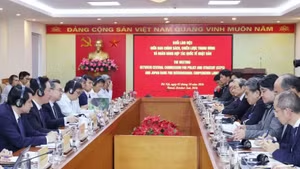
At the meeting, both host and guest also discussed a pipeline of future cooperation programmes and projects.
The JICA representative affirmed that the agency will continue to work closely with the Vietnamese ministry’s department of debt management and external finance to formulate, refine and effectively implement upcoming projects.
Meanwhile, Phuong welcomed JICA’s proposals and cooperation orientations, reaffirming that the ministry will maintain close coordination with the Japanese agency to translate these plans into concrete actions, thereby contributing to Viet Nam’s socio-economic development in the years to come.