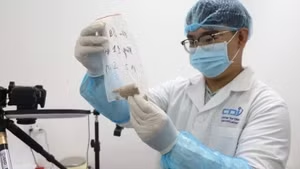
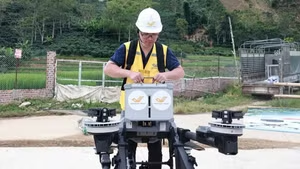
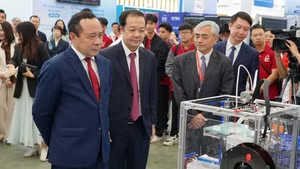
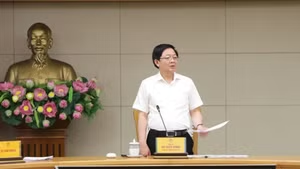
The event was jointly organised by the Department of Digital Technology and Artificial Intelligence under the Ministry of Science and Technology, FPT Corporation, the Korea AI-Semiconductor Fabless Association (KAISA) and the VINASA Semiconductor Industry Development Committee.
At the summit, Vietnamese and Korean businesses, associations and educational institutions exchanged eight memoranda of understanding (MOUs), focusing on three main areas: business connectivity and semiconductor supply chains, technology development, and human resource training. The agreements seek to capitalise on the complementary strengths of both sides, promote applied research and product commercialisation, and expand market access opportunities.
Vietnamese and Korean businesses, associations and educational institutions exchanged eight MOUs covering three main areas: business connectivity and semiconductor supply chains, technology development, and human resource training.
One of the key priorities for Viet Nam's semiconductor industry is to gradually move beyond participating in manufacturing stages towards developing research and design capabilities and gaining greater control over semiconductor products.
Under Decisions No. 1018/QD-TTg and No. 1017/QD-TTg, Viet Nam aims to have at least 100 chip design companies, one small-scale chip fabrication plant and 10 packaging and testing facilities by 2030, with annual semiconductor industry revenue exceeding 25 billion USD. The country also targets training 50,000 semiconductor professionals with university-level qualifications or higher.
Achieving these objectives requires domestic capacity development to go hand in hand with international cooperation and access to technology and manufacturing expertise. The Republic of Korea, with its technological strengths and advanced semiconductor industry, is considered an important partner in this process.

Speaking at the summit, Deputy Minister of Science and Technology Tran Trung Tinh emphasised that Viet Nam’s goal goes beyond attracting investment to gradually mastering technology and participating more deeply in global value chains.
The Deputy Minister outlined three priority areas for cooperation with the Republic of Korea: shifting from investment and manufacturing cooperation towards joint research, design and product development; making high-quality human resource training a long-term pillar; and jointly developing an open, safe and trustworthy AI-semiconductor ecosystem.
From a business perspective, Nguyen The Phuong, Deputy General Director of FPT Corporation, emphasised: “Signing an agreement is only the starting point. What matters is that the parties identify priorities, assign focal points and maintain implementation progress.”

According to Phuong, the effectiveness of Viet Nam-Republic of Korea cooperation should be demonstrated through tangible outcomes, such as joint research programmes, workforce training aligned with practical needs and the development of products suitable for real-world applications.
Meanwhile, Kyungho Kim, President of KAISA, said that combining the Republic of Korea’s technology and semiconductor manufacturing capabilities with Viet Nam’s talented workforce and growing market could generate synergies. He expressed hope that VKAISS would develop into a sustainable platform for bilateral cooperation in AI and semiconductors.