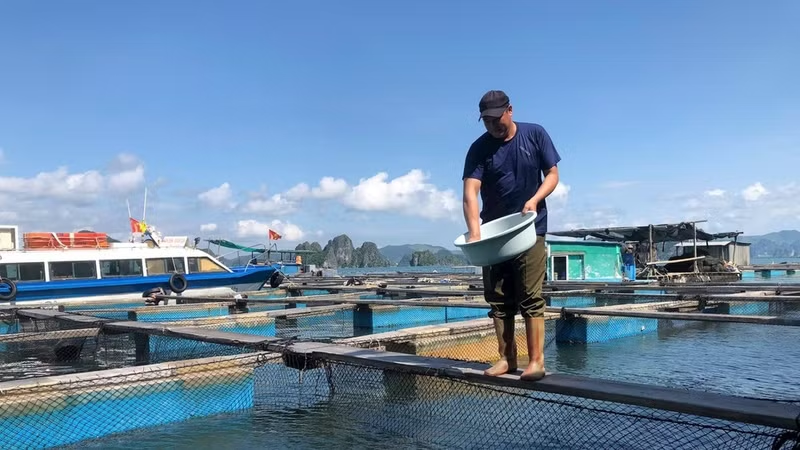
In 2026, the National Agricultural Extension Centre under the Ministry of Agriculture and Environment is implementing more than 20 projects in fishery extensions and rural trades. The projects focus on key areas such as marine aquaculture, seafood harvesting and processing, and the development of freshwater fisheries, thereby contributing to the development of concentrated raw material production areas and improving product quality and value. Compared with traditional production methods, fishery extension models applying technical advances deliver 15–25% higher economic returns. Specifically, shrimp farming has been achieving yields of more than 20 tonnes per hectare, with economic efficiency increasing by over 20%.
In addition, preservation technologies used in seafood harvesting help reduce post-harvest losses, improve product quality and selling prices, reduce labour requirements, and enhance safety for fishermen. Furthermore, the application of new technical processes helps increase survival rates, improve productivity and product quality, enhance production efficiency, promote market linkages, and support brand development.
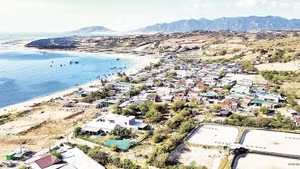
According to Nguyen Khac Dung, Deputy Director of the Department of Agriculture and Environment of Quang Ninh City, aquaculture and fisheries exploitation are considered key strengths of the city, with annual output exceeding 200,000 tonnes. To capitalise on these advantages, the city has earmarked tens of thousands of hectares for aquaculture, identifying it as a key sector. In particular, the city has recently received support from the National Agricultural Extension Centre to implement models for raising grouper and golden pompano in HDPE cages under VietGAP certification, and to transfer enzyme technology for application in seafood processing. These initiatives have enabled local people to access new farming technologies and techniques, improve production efficiency, and gradually move towards modern, sustainable marine aquaculture.
Currently, in many coastal areas, HDPE fish cages are gradually replacing traditional bamboo and wooden cages. This is considered an optimal solution because HDPE cages are highly adaptable to offshore farming conditions.
To help local people gain access to new technologies, the National Agricultural Extension Centre is implementing a project during the 2025–2027 period on grouper farming in offshore HDPE cages under VietGAP certification, linked to product consumption, in Cat Hai Special Zone (Hai Phong City) and Van Don Special Zone (Quang Ninh City). The model aims to reduce waste and environmental pressure through feed management, the use of preparations and microbial technologies, while also helping to improve survival rates and limit disease outbreaks. At the same time, it seeks to help local people shift their mindset from experience-based marine farming to production based on standardised procedures, with production logs, input controls, and traceability.
Nguyen Thi Ngan, a representative of the Centre for Agricultural Extension and Forest Protection, Management and Development of Quang Ninh City, said: “The results in 2025 show that groupers raised under the above model reach an average size of 1.13 kg per fish, with economic efficiency nearly 70% higher than that of traditional farming. For the fish stock raised under the 2026 programme, after five months of farming, the survival rate reached 85%, with each fish weighing between 600 and 700 grammes. This production approach contributes to the development of a green, modern, efficient, and sustainable marine economy.”
If production relies solely on experience and traditional methods, farming efficiency often falls short of expectations. However, fishery extension projects have enabled businesses and local people to access new production technologies and techniques, thereby improving production efficiency and creating higher-value products.
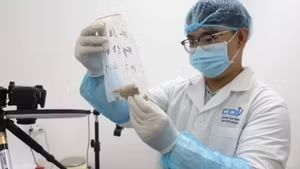
Pham Quang Tung, Director of Thanh Tung Van Don Company Limited (Quang Ninh City), shared: “Recently, our company has received support and technology transfer from the National Agricultural Extension Centre to apply enzyme technology in processing Van Don’s speciality products, such as squid and sipunculid worms. A key advantage of this technology is that it enables better control of the processing process, limits changes in the nutritional components, and preserves the natural value of the raw materials.
“In August and September, the company produced approximately 600 kg of squid cakes using the transferred technology. For fish sauce production, the company has applied enzyme-based hydrolysis technology, significantly shortening the fermentation period from 15–18 months to 10–12 months before the product is ready. The processed fish sauce also has a milder smell than that made using traditional methods, making it easier to market.”
Dang Xuan Truong, Head of the Fisheries Extension and Rural Trades Division under the National Agricultural Extension Centre, said that in the coming time, the agricultural extension system, from central to local levels, would step up the development of concentrated aquaculture areas in a green, ecological, circular, and responsible direction. Priority would be given to establishing and expanding models that apply high technology, optimise nutrition, reduce costs, improve product quality and value, and reduce emissions into the environment. The projects would continue to support the development of key aquatic species, promote market linkages, build brands, and develop OCOP products to meet the requirements of domestic and international markets.