Historical responsibility
I was born and raised in the capital city of Ha Noi, but my veins have always carried an unwavering pride in my paternal ancestral homeland of Vinh Long, a land rich in revolutionary traditions and the birthplace of Professor and Academician Tran Dai Nghia, who laid the foundations for a scientific establishment devoted to serving the Fatherland. Memories of war have never been distant from my family.
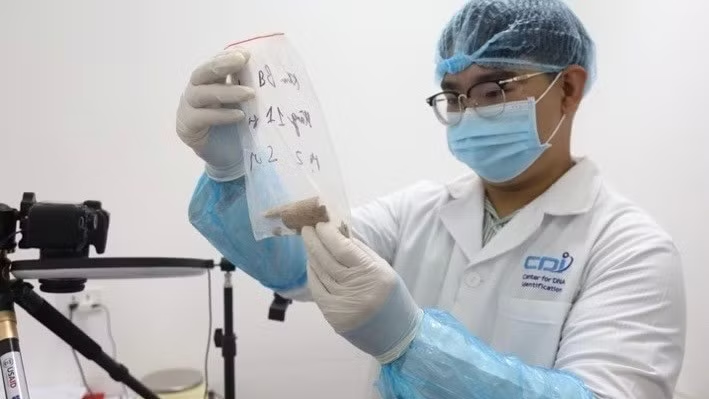
My paternal grandfather was a fallen soldier, while my paternal grandmother was bestowed with the noble title of Vietnamese Heroic Mother. To this day, many of my relatives have fallen on battlefields without their identities ever being established or their final resting places located. That is why, whenever I enter the sample storage room of the DNA Identification Centre (Institute of Biology, Viet Nam Academy of Science and Technology) and carefully hold in my hands each tiny bone fragment wrapped in a sterile bag, I see more than just double-helix structures or dry genetic markers.
Deep in my consciousness, I seem to see the figures of my ancestors and fully comprehend every last tear shed by Vietnamese heroic mothers who have spent half a century waiting tirelessly for news of their children.
The war ended more than 50 years ago, yet the wounds of the post-war period remain painfully visible across every part of our homeland. To date, approximately 175,000 fallen soldiers nationwide have yet to be recovered, while the remains of 230,000 others have been recovered but their gravestones still bear only the chilling words: “Fallen soldier whose identity has not yet been established”. Every gravestone without a name represents an unrelenting concern for the Party and the State, as well as the anguish of hundreds of thousands of families who, across generations, have still been unable to bring their loved ones home to rest in their native land.
In 2022, during a working visit to the Institute of Biotechnology, Prime Minister Pham Minh Chinh personally inspected the laboratory system and listened to a report on DNA testing of the remains of fallen soldiers. The moment when I had the honour of representing the scientists of the Institute of Biotechnology to receive the Prime Minister’s commendation and award remains deeply imprinted in my mind, serving as a sacred reminder that we must race against time and innovate technologically to restore the names of our fallen comrades and fellow countrymen.
The Institute of Biology’s journey towards technological innovation in identifying the remains of fallen soldiers began with cooperation with experts from the International Commission on Missing Persons (ICMP). This collaboration brought about a breakthrough with NGS-SNP technology, enabling the reading of ultra-short DNA fragments using the FORCE marker panel comprising 5,422 SNPs, in combination with an ancient bone extraction process. The technology enables the accurate analysis of fragmented DNA sequences of just 50–70 nucleotides, raising the success rate of nuclear DNA recovery to more than 80%. It also expands multi-generational pedigree analysis: by analysing the nuclear genome through both paternal and maternal lineages, it allows kinship to be established accurately up to the fourth and fifth generations (grandchildren, great-grandchildren and distant relatives).
The outstanding, demonstrable effectiveness of the technology has been proven at Tra Linh Cemetery (Cao Bang), where 93% of samples met the standards for comparison (54 out of 58 samples); at Nga Bay (Can Tho), where SNPs were obtained from 100% of the collected samples, successfully identifying six fallen soldiers; and at Giong Rieng (An Giang), where the technology is being used to process 535 samples that have been submerged in water for many years.
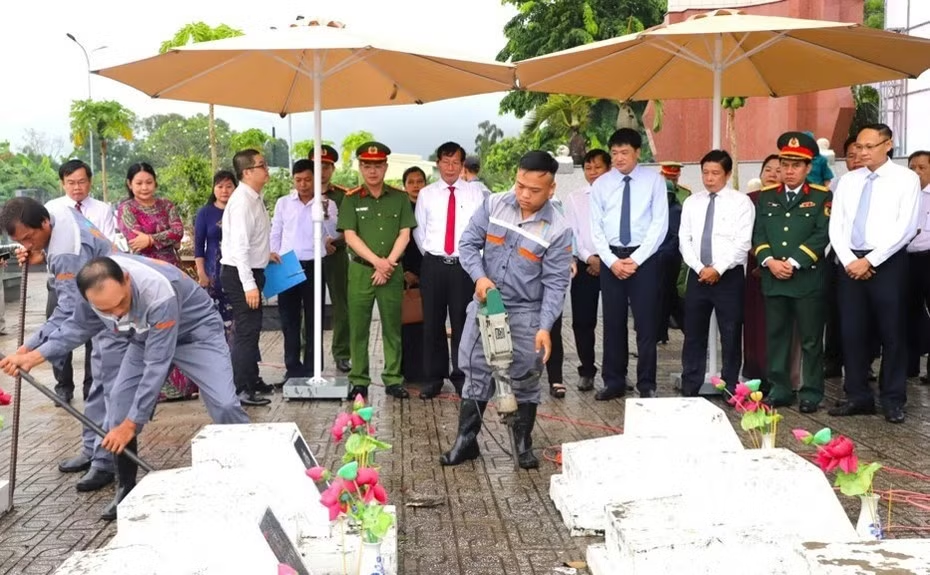
On May 21, 2026, the groundbreaking ceremony for the collection of biological samples at Giong Rieng Martyrs’ Cemetery (An Giang) took place in a solemn atmosphere amid torrential rain. When the graves were opened after more than 40 years, the scientists were deeply saddened to find that the remains were submerged in water and mud, with many samples crumbling to pieces at the slightest touch. This is the heartbreaking reality at battlefields across the country.
After 50 to 70 years, the hot, humid tropical climate, together with acidic, alum-contaminated soil, has caused the remains to decompose. The samples deteriorate with each passing day, while time waits for no one. Witnesses are growing old, and some have even passed away; grave maps have been lost; and most heart-rending of all, the mothers and wives who have spent years waiting anxiously for news of their sons and husbands are now in the twilight of their lives. Many mothers have passed away without ever seeing their loved ones’ names engraved on their gravestones.
This reality has spurred our scientists at the DNA Identification Centre to embark on the intensive phase of the “500-Day Campaign to Accelerate the Search for, Recovery and Identification of Fallen Soldiers’ Remains”, determined to identify more DNA profiles and help establish the identities of more fallen soldiers from severely damaged remains.
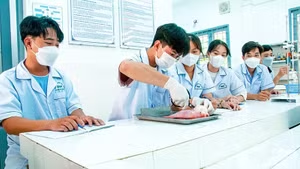
Over the past five months, staff members have worked quietly for hours on end in clean rooms, clad in fully enclosed protective clothing. Each bone fragment is carefully cleaned, its weathered outer layer ground away, and then finely pulverised in a cryogenic mortar before undergoing dozens of sophisticated biochemical extraction steps.
The staff and Party members of the Institute of Biology always bear in mind the guiding principle: “Race against time, but never allow even the slightest error.” We understand that behind every sample code is a life that devoted its entire youth to the Fatherland; behind every result lies the faith and half-century-long yearning of an entire family lineage. A minor lapse resulting in contamination or an algorithmic error could permanently deprive a soldier of the opportunity to have their name restored.
Continuing the epic of gratitude
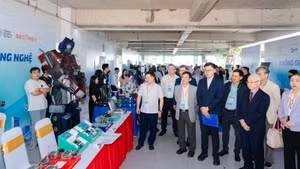
Rather than keeping its technological know-how to itself, and with the highest sense of responsibility towards the Party organisation and the people, the Institute of Biology has organised specialised training courses and transferred the entire NGS-SNP technological process to three key forensic institutions: the Military Forensic Institute (Ministry of National Defence), the Institute of Criminal Science (Ministry of Public Security) and the National Institute of Forensic Medicine (Ministry of Health). Systematic training and intensive practical work have helped expand identification capabilities nationwide, transforming the scientific advances of the Academy into the collective strength of the entire political system.
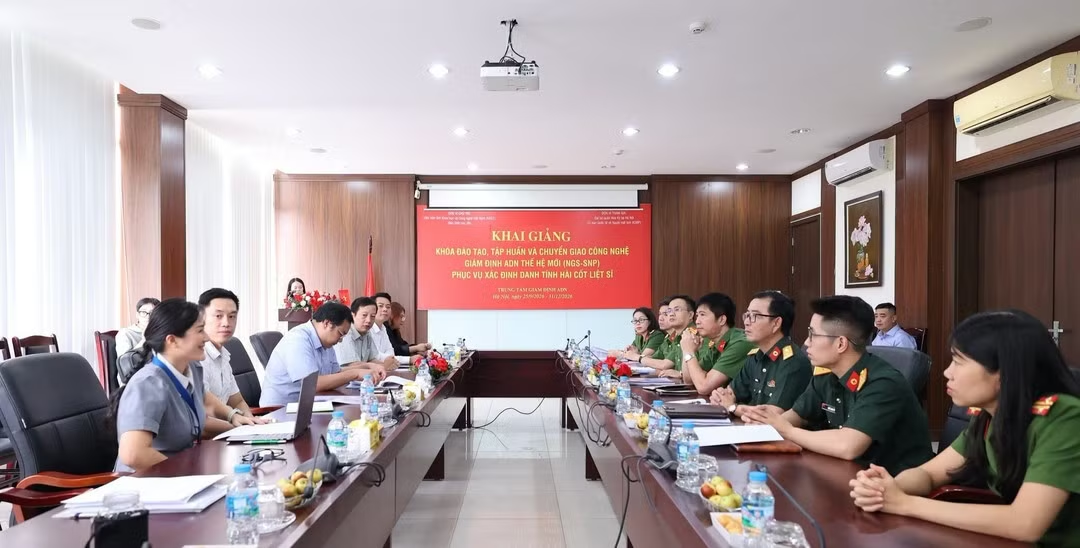
The Institute has also actively maintained close coordination with reputable news agencies, newspapers and television broadcasters, including Nhan Dan Newspaper, Viet Nam Television, Viet Nam News Agency, National Defence Television and Tuoi Tre Newspaper, among others, to organise filming, produce specialised reports and broadcast television link-ups. Through these activities, every painstaking step, from receiving and preserving tens of thousands of biological samples to applying NGS-SNP technology, has been faithfully portrayed, helping the public better understand the efforts of scientists and strengthening the trust of the families of fallen soldiers.
Notably, to address the funding challenge, the Institute of Biology has also received support through socialised funding, mobilising contributions from major domestic corporations and enterprises. Typical examples include the support and financial sponsorship provided by Vingroup and Kinh Bac Group. The close combination of State budget allocations, funding from private enterprises and international technical assistance has not only provided timely additions to modern equipment and biological reagents, but also served as vivid evidence of the spirit of great national unity, with the business community and society as a whole joining hands with the Party and State to shoulder this sacred mission of gratitude.
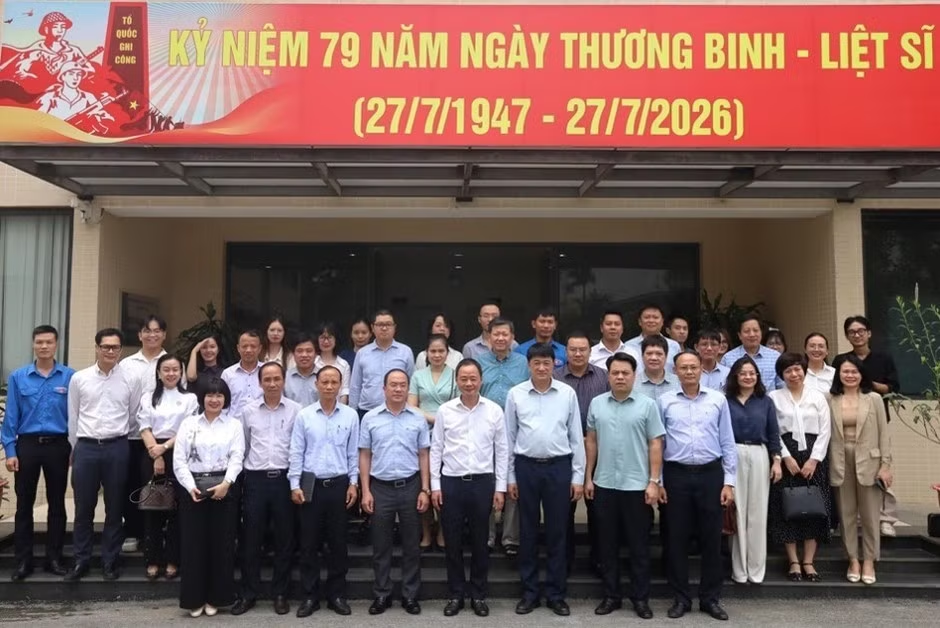
The breakthrough achievements made by the Institute of Biology during the “500-day campaign to accelerate the search for, recovery and Identification of Fallen Soldiers’ Remains” stem from the close and resolute leadership and direction of Party committees at all levels. This includes the close guidance of Professor and Doctor Tran Hong Thai, Member of the Party Central Committee, Secretary of the Party Committee and President of the Viet Nam Academy of Science and Technology, and Deputy Head of the Central Commission for Policy and Strategy.
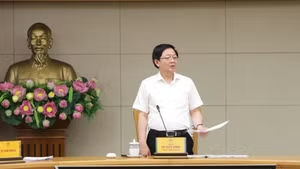
At a working session with Steering Committee 515 of the Viet Nam Academy of Science and Technology, the Secretary of the Party Committee emphasised the imperative for action: “Our gratitude must not be expressed merely through words, sticks of incense offered in remembrance or visits to pay tribute. It must be translated into concrete action, through advanced scientific knowledge, modern technology and the most accurate results possible, bringing solace to the relatives of fallen soldiers.”
It also reflects the dedicated, hands-on direction provided in the field by Professor and Doctor Chu Hoang Ha, Vice President of the Academy, Member of the National Steering Committee 515 and Head of the Academy’s Steering Committee 515. The Professor spared no effort in overcoming difficulties, travelling with working delegations to remote border cemeteries, proactively establishing effective links with international ODA projects and directing the development of an NGS-SNP process suited to Viet Nam’s practical conditions. Above all, it reflects the determination and resolve of the Party Committee and leadership of the Institute of Biology, together with the tireless dedication of the staff and identification specialists at the DNA Identification Centre.
The leaders of the Viet Nam Academy of Science and Technology have also been the ones to transform the laboratory into a “peacetime battlefield”, persevering through every difficulty and hazardous condition to read each page of genetic memory lying dormant beneath the earth.