
Barriers to phasing out an old technology
In recent years, many countries have sought to shut down 2G networks to free up spectrum, reduce operating costs, and focus resources on 4G/5G. However, the major challenge lies not in discontinuing an old technology itself but in transitioning users and subscribers who depend on 2G networks.
In India, early in 2024, the country’s largest telecom operator, Reliance Jio, proposed that the government develop a roadmap for shutting down 2G and 3G. However, at the time, around 250 million people were still using 2G, mostly through low-cost feature phones.
Telecom operators themselves acknowledged that affordability was a major obstacle, particularly in rural areas, where smartphones are considered a significant expense. To date, India has yet to set a mandatory deadline for a nationwide 2G shutdown.
South Africa had previously set an earlier and more ambitious roadmap. A draft policy issued in 2022 set a target of ending 2G services by March 2024 and shutting down the network completely by June of that year.
The plan subsequently failed to meet its original targets, as 2G continued to be used for card payment machines in shops, vehicle tracking devices, alarm systems, and various other automated connections.
A new policy issued in 2024 therefore set a preliminary target of shutting down 2G by the end of 2027.
Even developed countries such as the UK have needed more than a decade for the transition. Since 2021, the government and telecom operators have agreed on a timeline for phasing out 2G that is expected to extend until 2033, due to the huge costs involved and the risk of disrupting the operation of millions of devices beyond mobile phones, ranging from telecare and fire alarm systems to IoT devices and critical infrastructure.
Around 12 million smart meter systems alone need to be migrated to alternative technologies before 2G/3G networks are switched off.
The three countries face different barriers, but they share one common point: 2G can only truly be switched off when users and essential devices no longer rely on it.
Viet Nam addresses the challenge of 18 million 2G subscribers
More than 20 years ago, Viet Nam’s telecommunications landscape was still relatively underdeveloped, with less than 5% of the population having access to mobile services. At the time, tariffs were high and infrastructure was concentrated mainly in urban areas, making mobile communication a luxury for most people.
By 2009, everything had changed. Mobile penetration had surged to more than 100%, meaning that virtually every Vietnamese person had access to mobile services. This was considered one of the most important turning points in the development of information and communications technology in Viet Nam. Today, with access to mobile communications widely available, 2G has essentially fulfilled its historic mission.
To remove 2G from the network, the core challenge lies in infrastructure: 4G coverage must be expanded widely, while 5G must continue to be rolled out to improve network capacity and quality.
This means huge investment costs for telecom operators to install additional base stations, particularly in rural and remote areas, where population density is low but the area requiring coverage is extensive. This is also why many countries have been hesitant to proceed with 2G shutdown.
In January 2024, Viet Nam still had as many as 18.2 million 2G-only subscribers. The biggest difficulties were faced by older people, low-income groups, and residents in remote and isolated areas, where access to information, the skills needed to use new devices, and the cost of replacing phones were all major barriers.
Therefore, Viet Nam’s challenge was not simply to encourage users to replace their phones before a deadline. The government set out a clear transition roadmap, requiring telecom operators to complete 4G coverage before switching off the old network, while also introducing specific policies for older people, poor households, and residents in remote and isolated areas.
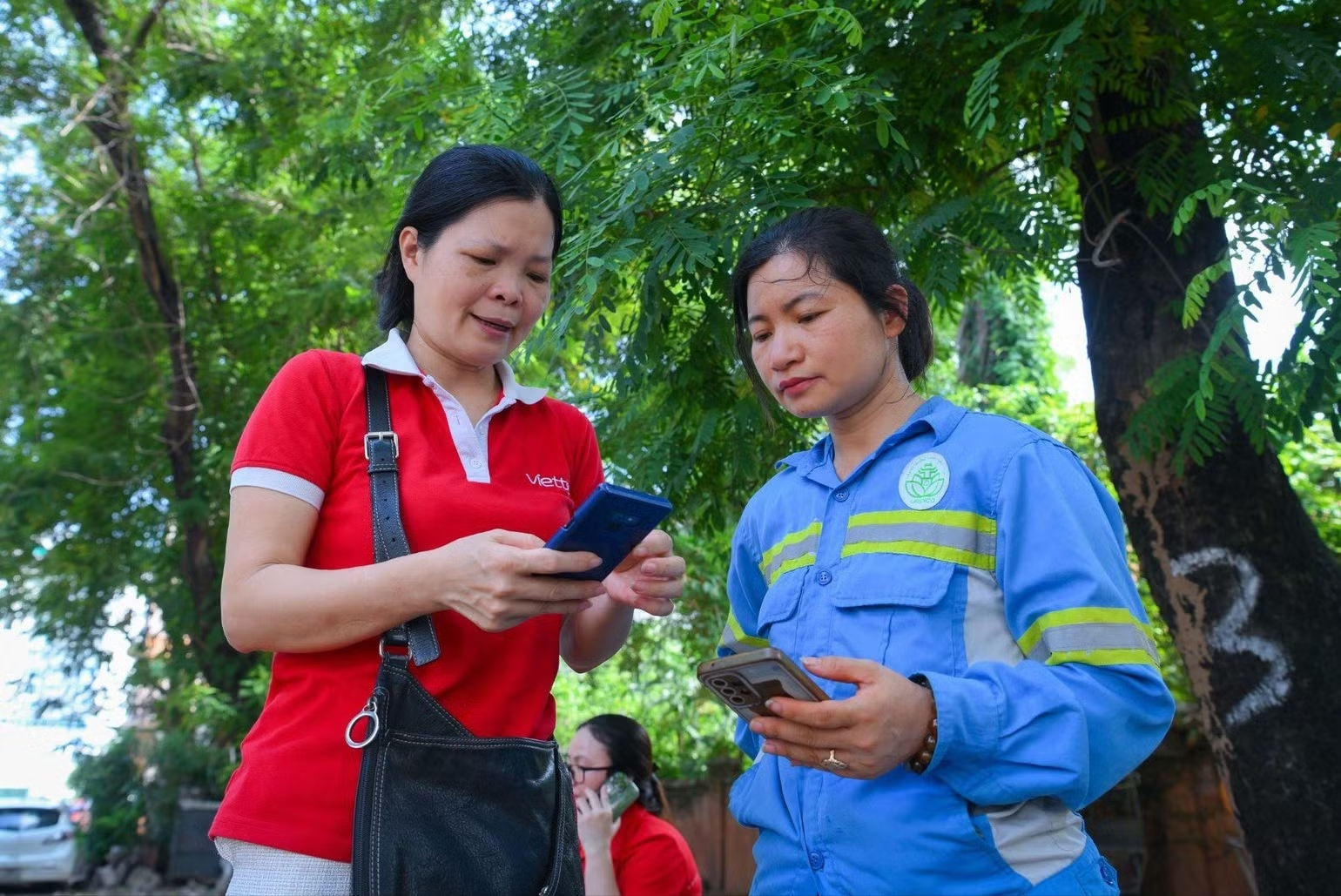
Viet Nam implemented the roadmap in two main phases. In the first phase, from late October 2024, telecom operators stopped providing services to phones that supported only 2G. However, the 2G network was maintained for a further period to support machine-to-machine (M2M) connections and 3G and 4G devices that did not support direct voice calls over 4G networks (VoLTE).
At Viettel, the number of subscribers still needing to migrate to 4G/5G voice services fell from 9.3 million at the end of 2025 to around 750,000 as of September 15, 2026, meaning that nearly 8.6 million subscribers had been migrated in just over eight months. By the time the network was switched off, 99% of customers were using full voice and data services on the new networks, while the remaining users continued to receive support with the transition.
Ensuring no one is left behind
To switch off 2G without disrupting connectivity, telecom operators had to simultaneously prepare replacement networks and migrate users to new devices. As the operator serving more than half of the country’s 2G subscribers — more than 10 million customers in 2024 — Viettel took the lead with a strategy of “infrastructure first, devices second”, focusing on removing cost barriers and optimising grassroots support.
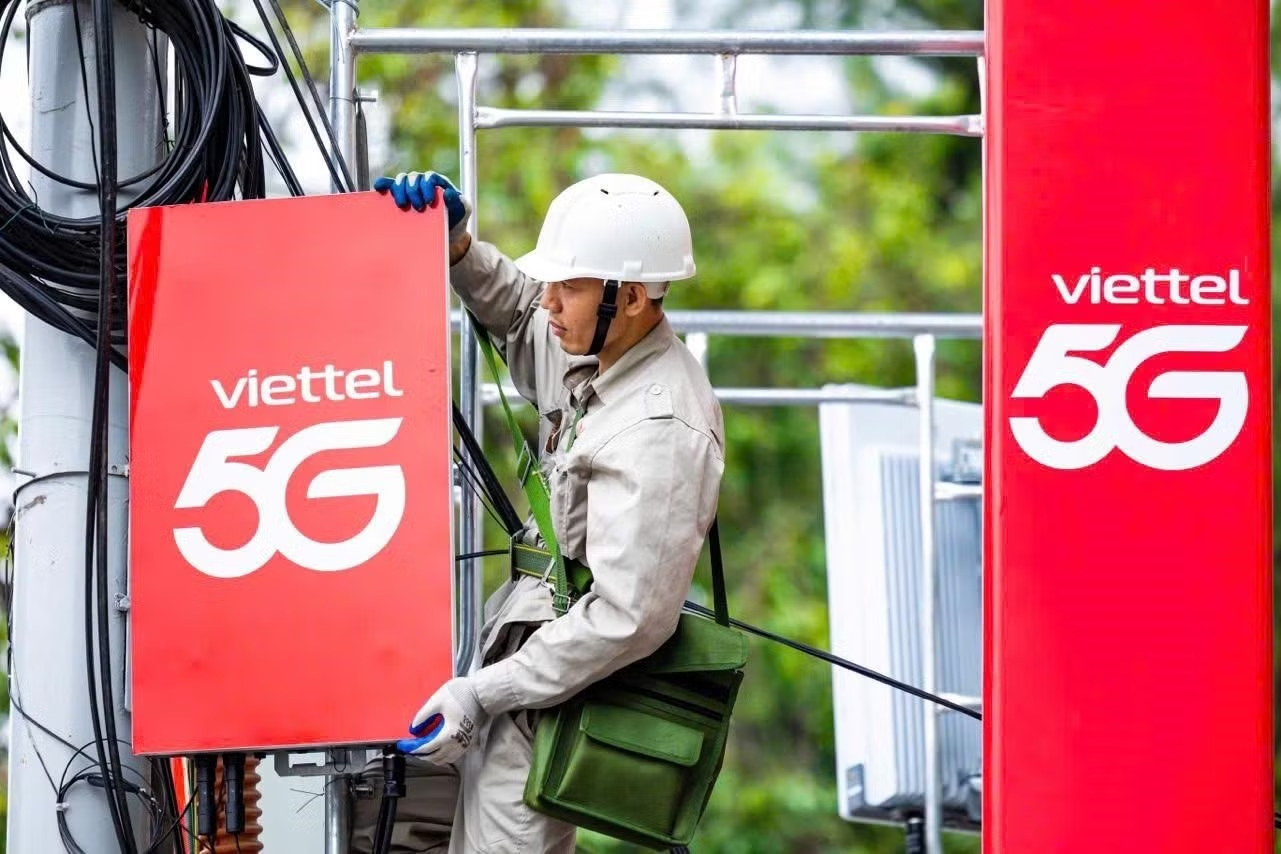
On the infrastructure side, Viettel installed more than 6,000 additional 4G base stations, raising coverage to around 99.7% of the population and extending connectivity to more than four million people in remote and isolated areas.
To further optimise the transition, Viettel proactively prepared resources for the new network after winning an auction for the right to use the 900MHz spectrum band, which has strong propagation characteristics and is suitable for expanding 4G/5G coverage in hard-to-reach areas.
However, having network coverage does not necessarily mean that users will switch automatically. For low-income people, the cost of buying a new phone is the biggest barrier.
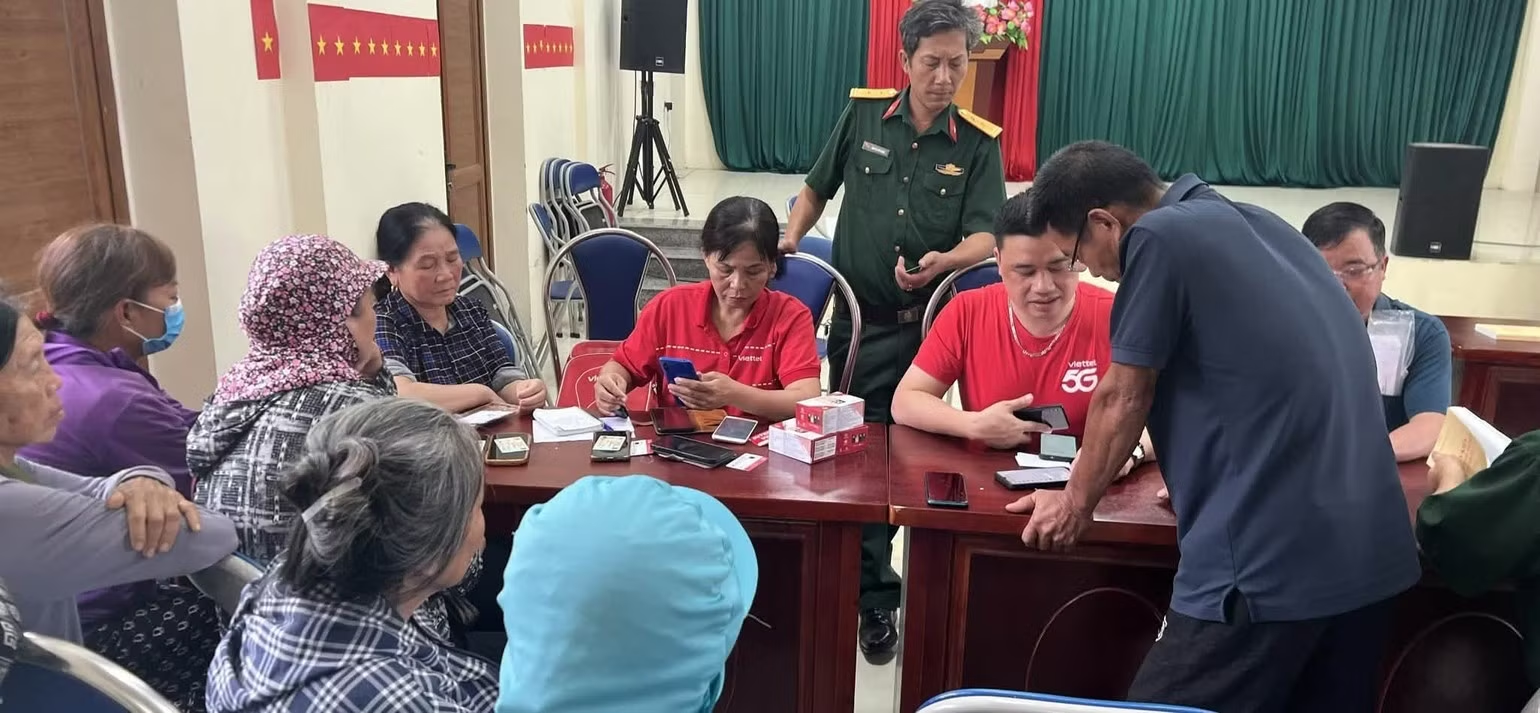
Recognising this issue, Viettel has offered low-cost 4G feature phones priced from just 200,000 VND, combined with a flexible trade-in programme. At the same time, the operator has worked with the Viet Nam Public-Utility Telecommunications Service Fund to provide around 400,000 4G phones directly to poor households and policy beneficiaries.
In addition to financial assistance, Viettel sent staff directly to remote and isolated areas. Through cooperation with community digital technology teams, the operator’s employees travelled to individual villages to guide residents in replacing SIM cards and installing and using new phones, helping them overcome their reluctance towards new technology.
After September 15, 2026, the spectrum previously allocated to 2G can be used more efficiently for new-generation mobile networks. Viettel plans to deploy around 20,000 additional 5G base stations, bringing the total number to 50,000 by the end of 2026.