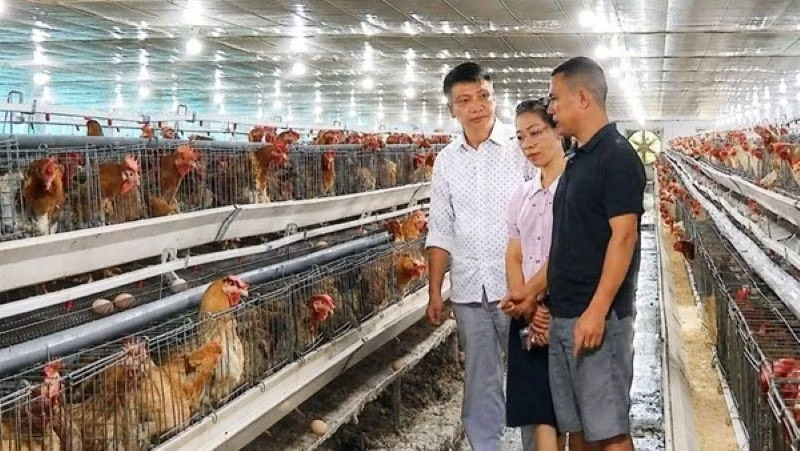
With nearly 2,100 cooperatives, more than 120,000 members and nearly 500 cooperative groups, Bac Ninh's collective economic sector is undergoing a significant shift from traditional models towards value-chain-based production, high-tech applications, digital transformation and the development of One Commune One Product (OCOP) products.
According to the provincial Cooperative Alliance, hundreds of new cooperatives were established across the province in 2025, bringing the total to more than 2,100. Agriculture, forestry and fisheries continue to account for a large proportion, alongside non-agricultural cooperatives operating in handicrafts, trade and services.
Many cooperatives have proactively invested in machinery, net houses and management software, while establishing partnerships for product distribution. These efforts have helped increase members' incomes and create stable employment for local workers.
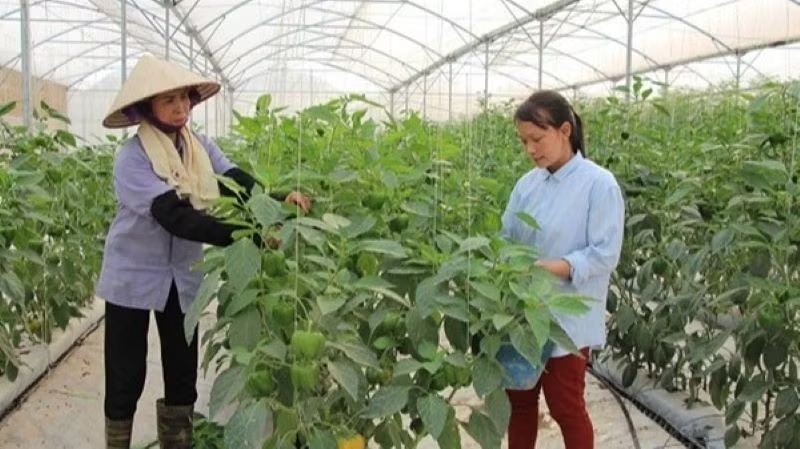
One outstanding example is the Yen Dung Clean Vegetable Cooperative in Canh Thuy Ward. Established in 2016, the cooperative has expanded to approximately 60 hectares, comprising four farms and 15 hectares of high-tech net houses. It supplies more than 60 varieties of VietGAP-certified vegetables, tubers and fruits to major supermarket chains, including WinMart, GO!, Co.opmart and AEON.
Nguyen Van Hiep, Director of the cooperative, said: “We supply more than 500 kilogrammes of vegetables and fruits every day. Around 70% of our production processes have been mechanised. Annual revenue reaches 5–6 billion VND, providing regular employment for approximately 100 workers, with monthly incomes ranging from 5 million to 8 million VND per person.”
Similarly, the Gac Viet Agricultural Cooperative in Van Ha Ward specialises in the advanced processing of “gac” (Momordica cochinchinensis) fruit under a circular economy model. Each year, the cooperative purchases and processes 2,000–3,000 tonnes of fruit, sourced from 100–200 hectares of cultivation, creating jobs for 30–40 workers and providing stable incomes for hundreds of affiliated farming households.
The cooperative generates annual revenue of approximately 22 billion VND and profits of around 3 billion VND. Its products, including “gac” oil, “gac”-flavoured che lam (a traditional Vietnamese sweet) and “gac” noodles, have been exported to India, the Republic of Korea, Taiwan (China) and Malaysia.
To support the collective economy, Bac Ninh has approved an increase in the charter capital of its Cooperative Development Support Fund to 100 billion VND. Loan limits have been raised, with repayment terms of up to five years at preferential interest rates. To date, the fund has disbursed more than 40 billion VND to dozens of projects, enabling cooperatives to invest in machinery, expand production and participate in value chains.
Pham Minh Hien, Chairman of the Bac Ninh Cooperative Alliance, emphasised: “We have identified the development of cooperatives embracing green and digital transformation and circular economy practices as a priority. Our goal is to establish at least 80 new cooperatives each year and ensure that, by 2030, collective economic organisations are responsible for more than 80% of OCOP products. We also aim to support at least 100 organisations in adopting digital technologies in production, management and marketing.”
In addition, Farmers’ Associations at all levels have actively contributed to the development of the collective economy by establishing occupational groups and associations and supporting the formation of production and business linkages. Many cooperatives have adopted QR codes for product traceability, listed their products on e-commerce platforms and participated in interregional trade promotion programmes with Ha Noi and neighbouring provinces.
Despite these positive results, Bac Ninh's collective economic sector still faces several limitations, including small-scale operations, uneven management capacity and the poor performance of many cooperatives. In the near future, Bac Ninh will continue to promote awareness of the 2023 Law on Cooperatives, strengthen underperforming cooperatives, provide support for management training and digital transformation, and expand partnerships with businesses. By 2030, the province aims to establish a dynamic and efficient cooperative system that makes a significant contribution to economic growth.