From forest-based livelihood models…
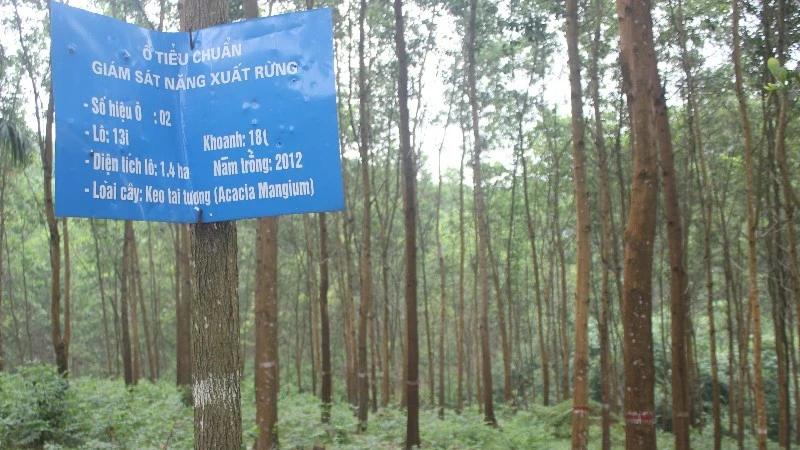
Under the lush canopy of the protection forest in Phu Thu Village (Ba Vi Commune, Ha Noi), Tran Luu Huong carefully prunes dan huong (sandalwood) sprouts — an herbal species that is generating substantial economic value for local residents. Three years ago, he boldly began growing more than four hectares of sandalwood beneath the forest canopy. Today, the model is delivering results beyond expectation.
“Nothing goes to waste with sandalwood: its leaves, branches, and fruits are all valuable medicinal materials. The economic return is very good — my family just keeps developing from it,” Huong shared.
In Phu Thu Village, more than 60 households have taken part in planting native trees, medicinal plants, and practising ecological livestock raising under the forest canopy. All households have signed commitments not to encroach on special-use forests, not to cut trees, and not to let livestock roam freely in natural forests.
According to the village’s head, Tran Duc Hoai, the forest-based livelihood model is transforming awareness and ensuring stable incomes. “A layer of sandalwood offers long-term income, and beneath it there are short-term fruit trees. People feel less pressure and rely less on exploiting natural forests,” he said.
Ba Vi National Park Management Board has also shifted to an approach of “co-management and benefit sharing” with residents — providing seedlings, technical support, forest-protection contracts, and opening up opportunities for eco-tourism development. These changes clearly demonstrate the role of forestry not only in rural economies but also in environmental protection and community well-being.
Tuyen Quang, a major forestry hub with more than 901,000 hectares of forest and a forest-cover rate of 62.2% (third highest nationwide), has actively implemented measures under the Sustainable Forestry Development Programme.
Director of the Tuyen Quang Forest Protection Department, Dao Duy Tuan, said the province has mobilised the entire political system to participate in forest management, protection, and development: “We determine that local people are the central actors. Without their participation, there would be no achievements today. They do the work, and they receive the benefits — so they protect their own forests.”
Tuyen Quang currently has 90,000 hectares of FSC-certified sustainable forests, the largest area in the country, enabling exports to strict markets such as the EU, the US, Japan, and the Republic of Korea. From 2021 to 2025, the province will harvest more than 6.7 million cubic metres of timber, creating stable incomes for tens of thousands of workers while maintaining a forest-cover rate above 62%.
Many eco-tourism, forest-based agriculture, and forest-product processing models have helped upland communities increase incomes, reduce pressure on natural forests, and reshape the development landscape of mountainous areas.
Tuan emphasised: “Not only forest growers but also communities engaged in eco-tourism are benefiting from forests. People eagerly participate because they see the real value forests bring.”
Forestry: a pillar of national socio-economic development and environmental protection
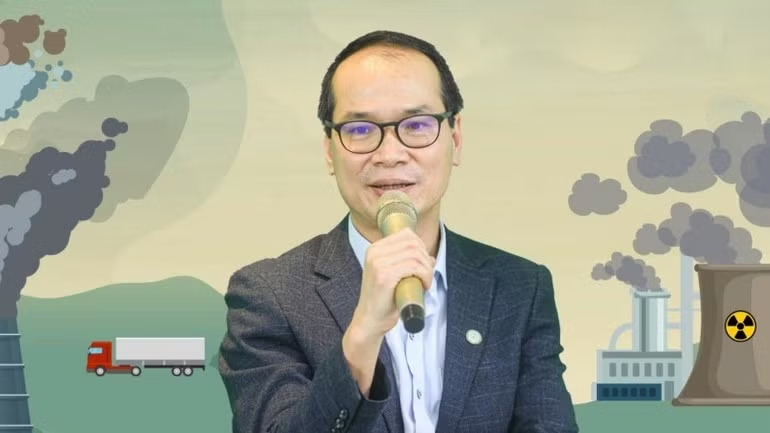
According to Pham Hong Luong, Deputy Director General of the Forestry and Forest Protection Department (under the Ministry of Agriculture and Environment), Viet Nam’s forestry sector has made remarkable progress after five years of implementing the Sustainable Forestry Development Programme (2021–2025).
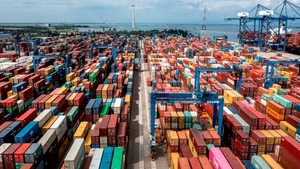
He noted that Viet Nam’s wood and forest product export value has averaged 16 billion USD per year, making Viet Nam the fifth-largest wood exporter in the world and the second-largest in Asia. The country now has 700,000–800,000 hectares of non-timber forest product plantations; 500,000 hectares of production forests are expected to achieve sustainable forest management certification by 2025; revenue from forest environmental services reaches several trillion VND annually; and Viet Nam has become a regional pioneer by successfully transacting 11.3 million tonnes of carbon, earning 56.5 million USD.
“These achievements demonstrate the comprehensive impact of forestry across all three pillars — economic, social, and environmental — while contributing to biodiversity conservation and enhancing climate resilience,” Luong affirmed.
Importantly, the shift in mindset from merely “managing and protecting” forests to “developing forests” has created major momentum. Forestry is no longer just a technical economic sector; it has become a field that directly contributes to social welfare, generates jobs, and integrates local people into global value chains.
Putting people at the centre of forest stewardship: the foundation for a green and sustainable future
Realities in Ba Vi and Tuyen Quang, along with the viewpoint of state management agencies, all converge on a common principle: people are at the heart of forestry development.
Luong emphasised: “When people’s livelihoods and incomes are secured, forests will be protected and developed. All policies must ensure that people genuinely become the stewards of the forests they manage.”
Thanks to this approach, local awareness has changed significantly in many areas. Communities now proactively protect forests, harvest resources responsibly, and develop new economic models such as medicinal plant cultivation, agroforestry, and eco-tourism.
From small households in Ba Vi to the vast highland forests of Tuyen Quang, from under-canopy livelihood models to export-oriented wood value chains, the forestry sector is affirming its role as a pillar in: rural and agricultural development, national economic growth, environmental protection, biodiversity conservation, and climate change adaptation.
Forestry does more than safeguard forests and land — it protects livelihoods, community stability, and ecological balance for the entire nation.
With its strategy to 2030 and vision to 2045, the forestry sector continues to advance toward becoming a driving force of green growth, making essential contributions to Viet Nam’s sustainable development and long-term prosperity.