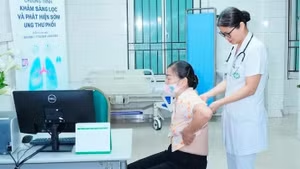
The patient, identified as N.T.T., born in 1970 and residing in Dien Ban Bac ward of Da Nang, sought treatment at the hospital after being diagnosed with lung cancer at another medical facility. She had experienced persistent coughing and right-sided chest pain that affected her daily life and had no history of smoking.
Pathological examination confirmed lung adenocarcinoma, the most common subtype of NSCLC. Imaging revealed a tumour in the right lung with mediastinal lymph node involvement but no evidence of brain or bone metastases at the time of diagnosis. Based on the findings, doctors diagnosed advanced-stage right lung cancer and ordered molecular testing to determine the most appropriate treatment strategy. The test results showed that the patient harboured both EGFR and ALK driver mutations. Doctors noted that lung cancer patients typically carry only one actionable driver mutation to guide targeted therapy, making the coexistence of both mutations extremely uncommon.
To ensure diagnostic accuracy, the tissue sample was re-examined and the test results verified before the hospital confirmed it as the first dual-mutation case recorded at the Da Nang Oncology Hospital. The case posed a significant clinical challenge, as limited evidence exists on which mutation should be prioritised when both are present.
Following multidisciplinary consultations and a review of available clinical evidence, the patient initially received the targeted therapy afatinib. However, after nearly three months, computed tomography (CT) scans indicated that the response fell short of expectations. The hospital's multidisciplinary team subsequently decided to switch to a targeted treatment directed at the ALK mutation.
After more than six months of treatment, follow-up assessments showed a favourable response. CT imaging no longer detected the tumour, the patient's clinical symptoms had improved markedly, and her overall health remained stable.
According to Dr Nguyen Kim Thong, head of the hospital's Internal Medicine Department No. 2, the case underscores the growing importance of precision medicine in cancer treatment. Analysing the biological characteristics of each tumour enables physicians to tailor treatment to individual patients, improving therapeutic outcomes.
The case also highlights the hospital's capability in molecular diagnostics, multidisciplinary consultations and personalised cancer treatment, enabling patients in Viet Nam's central and Central Highlands regions to access advanced oncology care closer to home.