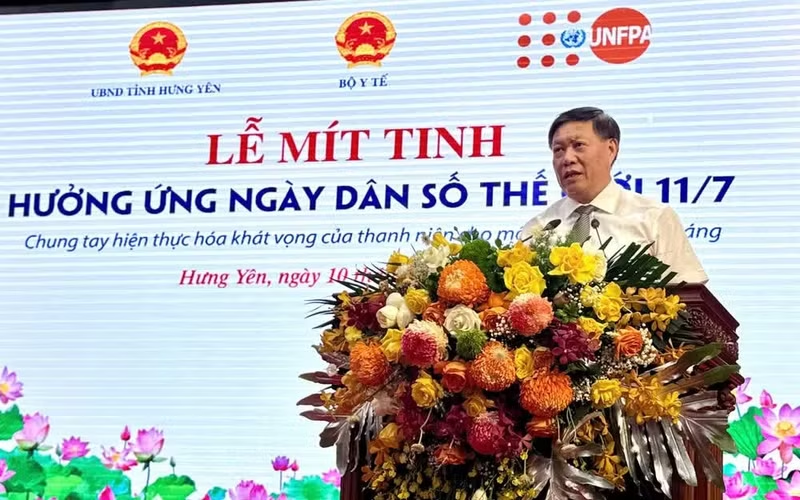
The event, jointly organised by the Ministry of Health, Hung Yen Provincial People’s Committee and the United Nations Population Fund (UNFPA), was held under the theme "Realising the hopes and aspirations of young people for their futures."
Addressing the event, Deputy Minister of Health Do Xuan Tuyen said Viet Nam is currently in a demographic "golden period", with nearly 70 million people of working age, offering a significant opportunity to drive long-term economic growth and sustainable development.
However, he warned that the country faces growing demographic pressures, including delayed marriage, declining fertility, rapid population ageing and a persistently high sex ratio at birth. If left unaddressed, these trends could lead to labour shortages, faster ageing, rising social welfare costs and greater pressure on future economic development.
The deputy minister also highlighted concerns over teenage pregnancy, child marriage in some ethnic minority communities and the need to improve the quality of the future workforce.
Pauline Tamesis, United Nations Resident Coordinator in Viet Nam, said the country had reached a pivotal stage in its demographic transition. She welcomed the adoption of the Population Law and related policies, describing them as evidence of Viet Nam's commitment to a rights-based approach that enables individuals and couples to make informed and voluntary reproductive health decisions.
Officials called for effective implementation of the Population Law and the National Target Programme on Health Care, Population and Development for the 2026-2035 period, alongside continued support from UNFPA and other international partners in policy development, technical assistance and capacity building.
Following the ceremony, youth volunteers and students took part in a parade to raise public awareness of population issues and highlight the role of young people in promoting sustainable national development.