Reaching new medical milestones
In August 2025, Viet Duc University Hospital successfully performed Viet Nam’s first simultaneous heart-lung transplant, not only saving a patient's life but also demonstrating the expertise of Vietnamese physicians, particularly in the field of surgery. The successful operation marked an important milestone for Viet Nam on the global medical map.
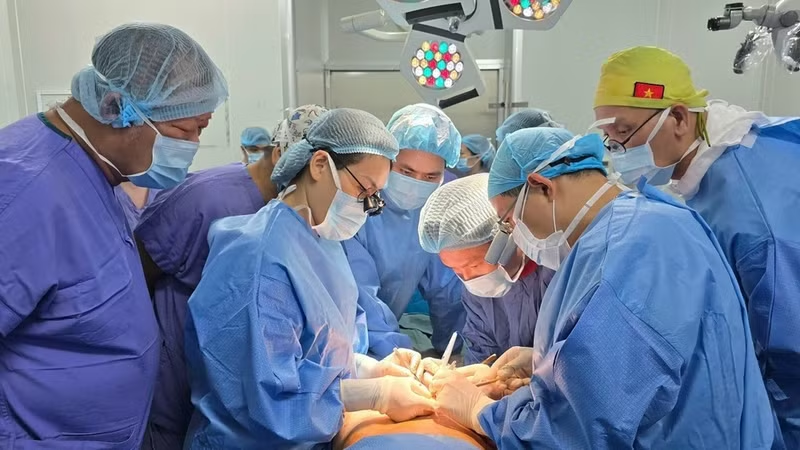
Building on its achievements in organ and tissue transplantation, the hospital has recently carried out the country's first penile transplant from a brain-dead donor. This was the first such procedure in Viet Nam and the sixth reported worldwide in medical literature.
Associate Professor, Doctor Duong Duc Hung, Director of Viet Duc University Hospital, said that because it was the first operation of its kind in Viet Nam, the medical team undertook extensive preparation. This included developing clinical protocols, studying international experience, and coordinating across multiple specialties, including organ transplantation, andrology, microsurgery, anaesthesiology, and intensive care, immunology, and pathology.
Beyond the surgical procedure itself, the transplant fully applied modern tissue and organ transplantation protocols, with every stage performed in the correct sequence and with close multidisciplinary coordination. According to Hung, the operation not only provided treatment for an individual patient but also demonstrated the ability of Vietnamese doctors to master complex composite tissue transplantation techniques. It also establishes an important foundation for the hospital to continue developing advanced composite tissue transplantation, improving treatment quality, and offering new hope to patients with severe injuries for whom no optimal treatment previously existed.
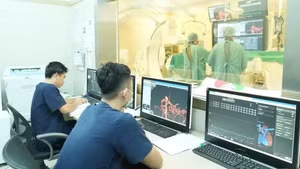
Another major achievement came when the Ha Noi Department of Health and the Can Tho Department of Health, in collaboration with the Vinmec Healthcare System, successfully carried out Viet Nam’s first two-way remote robotic surgery.
The two hospitals, located nearly 2,000 kilometres apart, alternated between serving as the control centre and the receiving hospital. Every movement made by the surgeon at one location was replicated with complete precision by the robotic arms at the other, enabling each hospital to take turns controlling the entire surgical procedure.
The first operation was performed on a 15-year-old female patient receiving treatment at Vinmec Can Tho. Using the robotic system, surgeons at Vinmec Smart City in Ha Noi controlled the operation remotely and completely removed the tumour.
The second procedure involved a 42-year-old male patient undergoing treatment at Vinmec Smart City. The man had been diagnosed with hepatocellular carcinoma associated with chronic hepatitis B infection. After four hours of surgery, during which specialists at the Can Tho control centre operated the robotic system remotely, the procedure was completed successfully. The achievement demonstrated the capability of the system's technological infrastructure, standardised clinical protocols, and highly coordinated multidisciplinary teamwork.
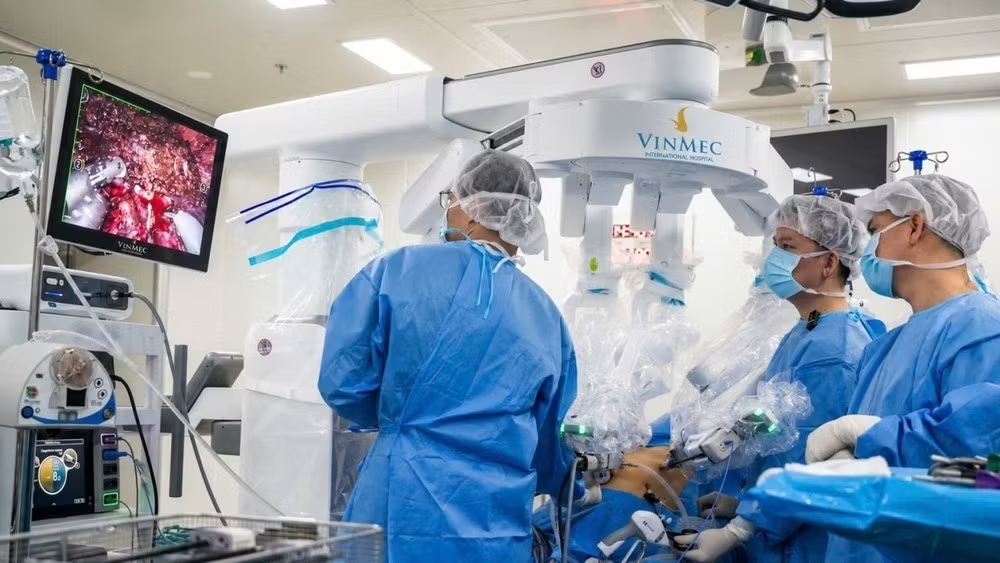
This breakthrough lays the foundation for a "borderless surgery" network, enabling leading specialists to participate directly in patient treatment across multiple healthcare facilities without being constrained by geographical distance.
Nguyen Trong Dien, Director of the Ha Noi Department of Health, described the success of the two-way remote robotic surgeries as a major breakthrough for Vietnamese medicine in applying advanced high-tech solutions. He said the achievement provides an important foundation for the healthcare system in Ha Noi and across the country to expand the application of science and technology in remote diagnosis, treatment, and healthcare services.
Prioritising areas with breakthrough potential
According to healthcare experts, Viet Nam possesses significant advantages for further healthcare development.
Its greatest strength lies in its people. Vietnamese doctors are well trained, possess extensive practical experience, and have demonstrated their ability to rapidly adopt and master advanced medical technologies. In many specialties, they have not only successfully implemented transferred techniques but have also refined procedures to suit local conditions and subsequently trained other medical professionals.
A second advantage is the scale and diversity of clinical practice. With a population of more than 100 million, Viet Nam offers a broad spectrum of diseases and conditions, providing favourable conditions for clinical research across numerous medical fields.
Another important strength is the country's relatively comprehensive healthcare network, comprising hospitals under the Ministry of Health, other ministries and sectors, local authorities, the armed forces, and the private sector.
Healthcare costs in Viet Nam remain relatively low compared with many other countries, while medical expertise in several specialties has reached internationally recognised standards. This creates opportunities both to retain domestic patients and gradually attract international patients, particularly in areas where Viet Nam has established competitive strengths.
Prof, Dr Tran Van Thuan, Deputy Minister of Health and Chairman of the National Medical Council, said that several priority measures should be implemented. These include establishing evaluation mechanisms based on treatment outcomes, patient safety, patient satisfaction, efficient resource utilisation, research quality, training capacity, and technology transfer. He also stressed the importance of developing a highly qualified healthcare workforce through multidisciplinary teams rather than relying on a limited number of outstanding individuals.
In the years ahead, science and technology, innovation and digital transformation should be regarded as the primary drivers of advanced healthcare. Priority should be given to fields where Viet Nam has the potential to achieve major breakthroughs, including precision medicine, genomic technology, cell technology, and regenerative medicine.