This year’s edition builds on the success of the previous three seasons, organised by the Asia Awards Organisation (AAO) at iconic venues including Marina Bay Sands in Singapore, SO/Bangkok in Thailand and The Shilla Seoul in the Republic of Korea.
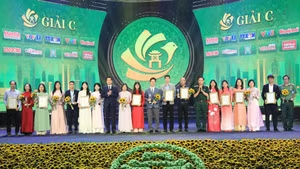
The event attracted hundreds of architects, designers, hotel and tourism operators, property developers, creative professionals and media partners from nearly 20 countries and territories across Asia.
Held under the theme "Influential Asia", this year's awards honoured individuals, projects and brands that are shaping Asia's global standing through creativity, innovation, cultural identity and sustainable development.
Speaking at the ceremony, Tan Quee Peng, Chairman of the Judging Panel, said that the event is not only an opportunity to honour outstanding achievements in architecture, design and hospitality, but also a moment for us to witness how Asia's future is being shaped by bold ideas and a spirit of innovation.
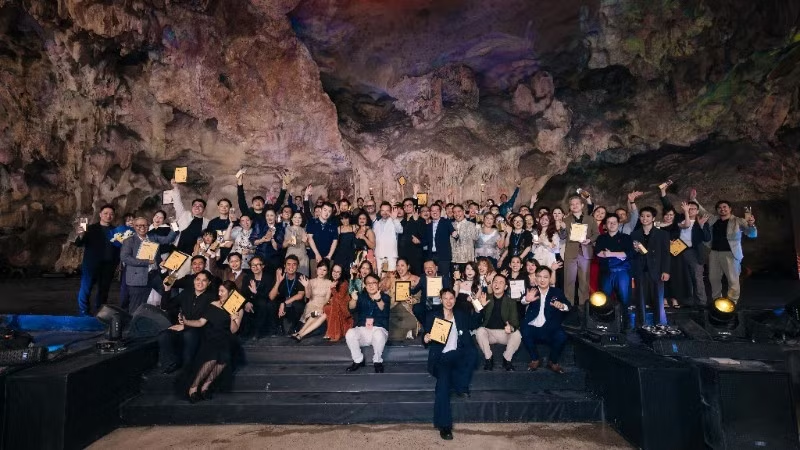
Nature spent more than 150 million years creating Ngoc Rong Cave and the honouring ceremony for the people who are shaping the future through creativity, responsibility and a commitment to delivering lasting value for communities was taking place here, he added.

Tan Quee Peng noted that over the past several months, the judging panel had reviewed hundreds of entries from across Asia. Each project offered a distinctive perspective on how architecture, design and hospitality can enhance quality of life, preserve cultural identity and create new pathways towards sustainable development. More importantly, the projects demonstrated a pioneering spirit and a commitment to creating values with a lasting impact.
Among the standout architecture and design projects was Coastal Quang Ngai – A Community by HAUS, recognised for its climate-resilient urban development approach and strong emphasis on sustainable community values.
In addition, several other projects also reflected the growing trend towards adaptive architecture and the regeneration of existing spaces.
Picture Book Dream Maru from the Republic of Korea transformed a buried reservoir into an emotionally engaging cultural and community space. AMAMI HOUSE in Japan introduced a housing model centred on self-sufficiency and harmony with nature, while HAUS Da Lat in Viet Nam successfully integrated hospitality, wellness and the preservation of the Central Highlands' forest landscape.
In the tourism, travel and experiential hospitality categories, this year's awards highlighted the rise of eco-resorts, boutique hotels and next-generation hospitality concepts, where authenticity, local identity and meaningful human connections have become defining values.
Ulaman Eco Luxury Resort in Bali, Indonesia, was recognised for seamlessly combining sustainable architecture, holistic wellness and environmentally responsible luxury experiences. Meanwhile, Sataa Resort Nan in Thailand reinterpreted the hospitality traditions of northern Thailand through contemporary architecture rooted in local cultural identity.
In the experiential tourism category, Athena Premium Cruise of Viet Nam impressed the judges by integrating contemporary design, wellness services, advanced technology and sustainability initiatives to deliver a comprehensive luxury cruising experience.

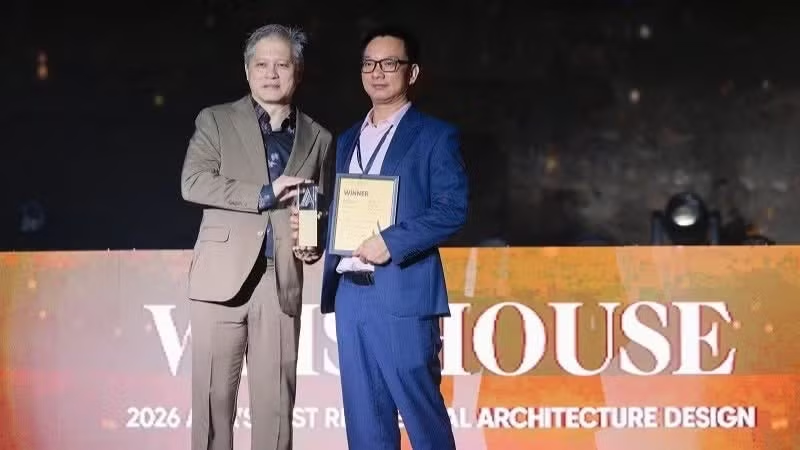
Alongside outstanding projects from Thailand, Japan, the Republic of Korea, the Philippines and many other countries, Vietnamese entries made a particularly strong impression. Residential projects such as WMS House and Bánh Mật House demonstrated how nature can become an integral part of the urban living experience, while Vikki Digital Bank redefined the traditional banking environment as a digital ecosystem integrated with community-oriented services.
Commenting on the Vietnamese winners, Tan Quee Peng said this year's projects reflected the remarkable maturity of Viet Nam's architectural and design thinking, not only in terms of technical excellence but also in their ability to generate long-term value for society.
Projects such as Sola Peninsula and One Central Saigon, together with LandProduction by Landco Corporation, also showcased Viet Nam's increasingly sophisticated manufacturing and craftsmanship capabilities, helping to strengthen the country's architecture, design and interior ecosystem. According to the judging panel, these projects not only demonstrated professional excellence but also contributed to shaping the future of cities and communities across Asia.
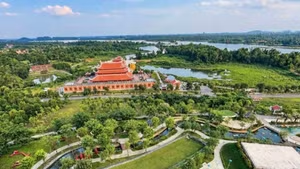
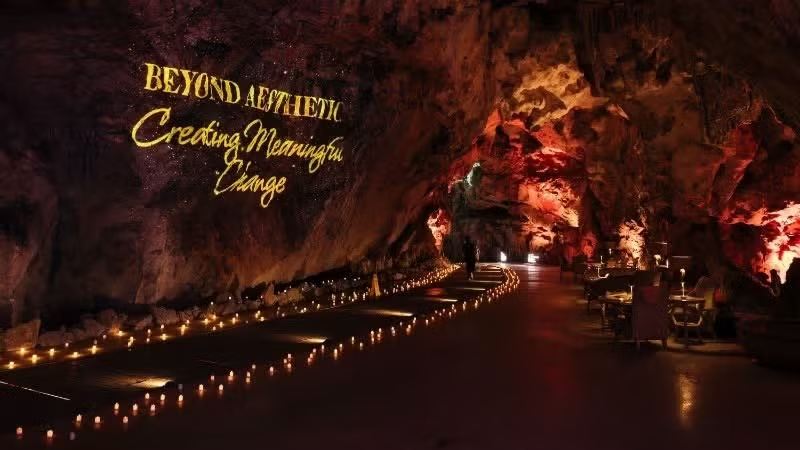
One of the defining highlights of the 2026 awards ceremony was its venue inside Ngoc Rong Cave, a geological wonder formed approximately 150 million years ago and distinguished by its vast limestone formations and spectacular cave system, among the largest and most remarkable in Viet Nam and the world.
Throughout the evening, the cave itself became part of the artistic experience. This extraordinary natural heritage site was transformed into a unique performance venue through a combination of 3D mapping technology, contemporary music and specially curated artistic performances, creating an immersive visual and emotional journey for guests.
Hosting an international event of this scale within Ngoc Rong Cave not only celebrated Asia's achievements in architecture and tourism but also helped position Viet Nam as an emerging destination for major international cultural, artistic and MICE events.
At the close of the 2026 awards season, the Asia Awards Organisation officially launched the 2027 season under the theme "Visionary Asia".
Under the new format, both the Asia Architecture Design Awards and the Asia Hospitality Awards will adopt a continuous evaluation and announcement process throughout the competition period, replacing the previous model of announcing winners only after a single judging session. The new approach is designed to provide more timely recognition for outstanding projects while enabling businesses, design teams and operational partners to make more effective use of their achievements in communications, marketing and brand development.