After only three editions, what began as a bold initiative is gradually affirming its position as a distinctive international film forum where stories from Asian cinema meet the world. Behind this journey lies an enduring aspiration to expand cultural boundaries, along with the persistent efforts of Vietnamese filmmakers and a Da Nang that is steadily shaping a cultural brand of new stature.
Vibrant days of cinema
“Bridging Asia to the world” is the theme of the 4th Da Nang Asian Film Festival 2026 (DANAFF 4), scheduled to take place from 28 June to 4 July. The city on the Han River remains youthful, dynamic and full of vitality, much like the early days when it first hosted the inaugural festival season, yet it now exudes greater confidence, resilience and ambition.
The DANAFF was initiated in 2023. At that time, many people viewed the young film festival with a curiosity and caution. Around the world, building an international film festival is already difficult; maintaining it annually with stable and increasingly improved professional quality is far more challenging. Yet on the banks of the Han River, a cinematic dream was launched with all the enthusiasm, talent and intellect of those passionate about Vietnamese cinema.
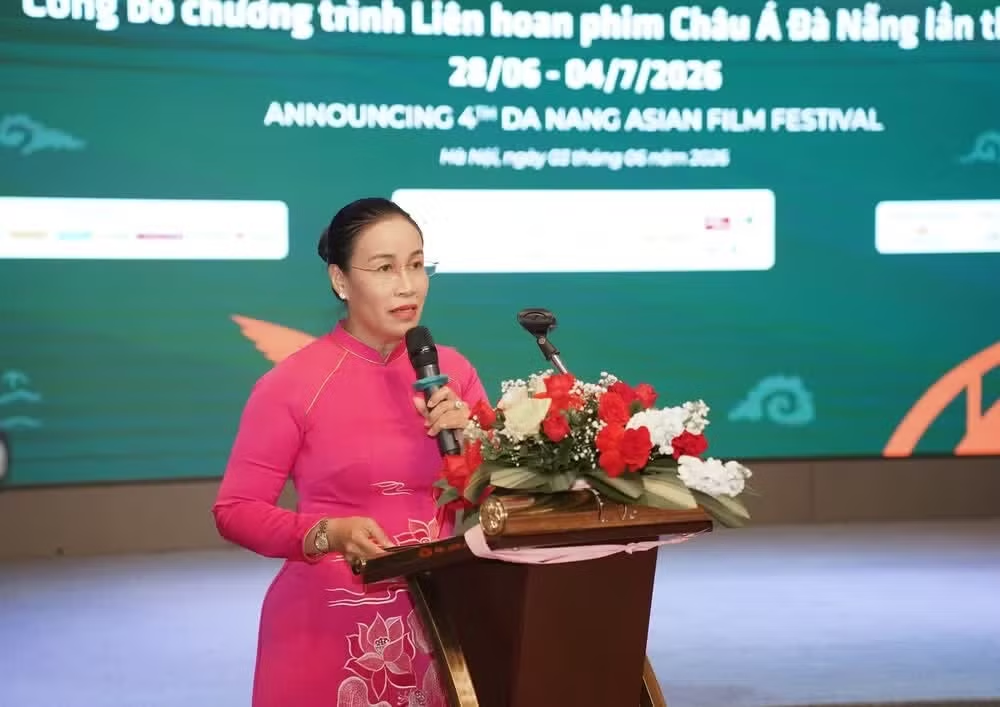
Now, as DANAFF enters its fourth season from June 28 to July 4, audiences and cinema lovers can already sense a significant shift reflected in the festival’s very theme. While DANAFF once introduced itself as “Bridging Asia”, this year a more confident message has emerged: “Bridging Asia to the world”. This is not merely a change in wording, but a sign of a journey towards maturity. From seeking regional connections, DANAFF is now aspiring to become a broader gateway through which Vietnamese and Asian cinema can engage directly with the world in their own distinctive voice.
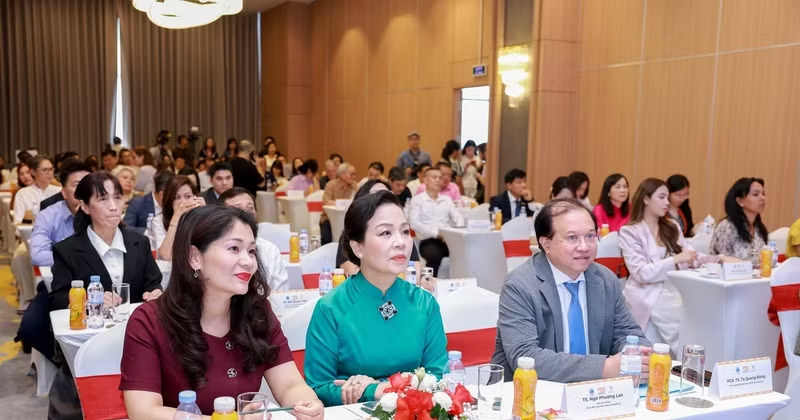
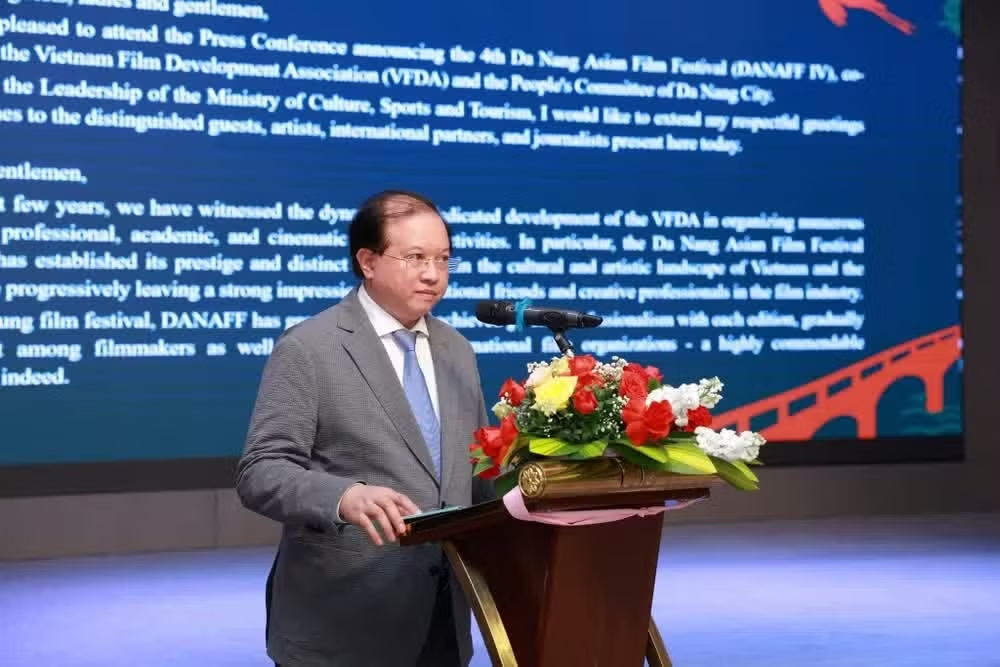
Dr Ngo Phuong Lan, the “captain” of DANAFF and Chairwoman of the Viet Nam Film Development Association (VFDA), shared that this year’s festival scale far surpasses previous editions, with more participating films, fiercer competition categories, and a larger gathering of delegates, stars and distinguished filmmakers from Viet Nam and abroad. This remarkable growth has been highly appreciated by Deputy Minister of Culture, Sports and Tourism Ta Quang Dong. At a time when the digital world is constantly shifting under the influence of AI technology, high-level meeting spaces such as DANAFF 4 represent a form of national “soft power”, where culture becomes a means of dialogue with the world and art a way to affirm Vietnamese identity.
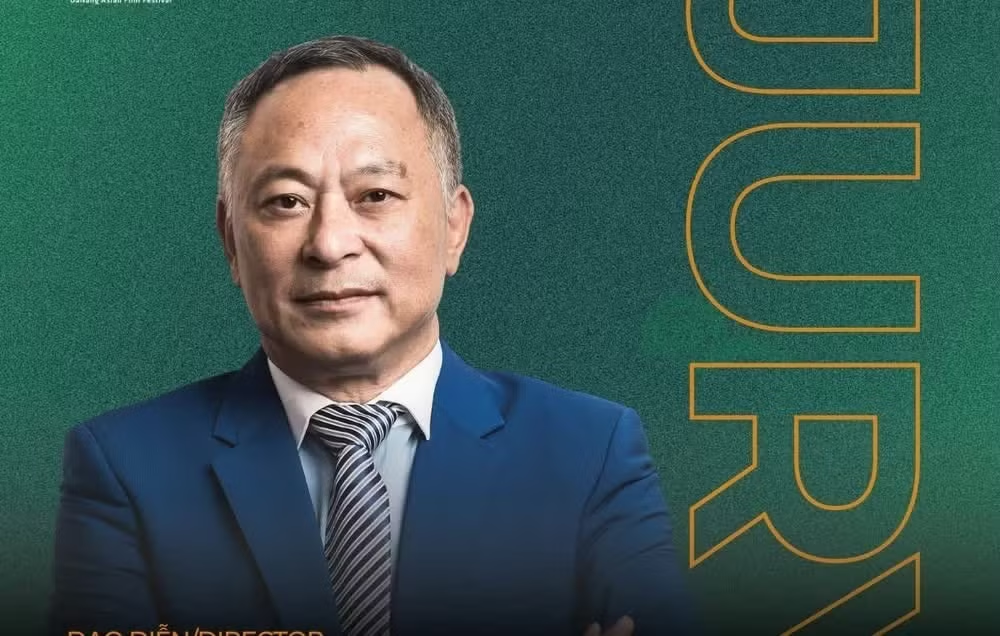
The heart of DANAFF 4 remains the competition arena of its two major categories: the Asian Competition section, featuring 13 outstanding films, including one purely Vietnamese production and one Viet Nam-US co-production, alongside the Vietnamese Films Competition category. This year’s DANAFF is judged by a prestigious jury chaired by acclaimed director Johnnie To from Hong Kong (China).
The competing works will compete for artistic excellence, while audiences will immerse themselves in a vast cinematic feast featuring 102 films and more than 200 screenings across cinemas throughout the city, including Le Do, CGV and Galaxy Da Nang. What particularly stirs pride among Vietnamese audiences are the programmes deeply rooted in national identity. According to Dr Ngo Phuong Lan, a highlight of the fourth edition of the festival is its film screening programmes, accompanied by engaging seminars and exhibitions for audiences and cinema lovers alike.
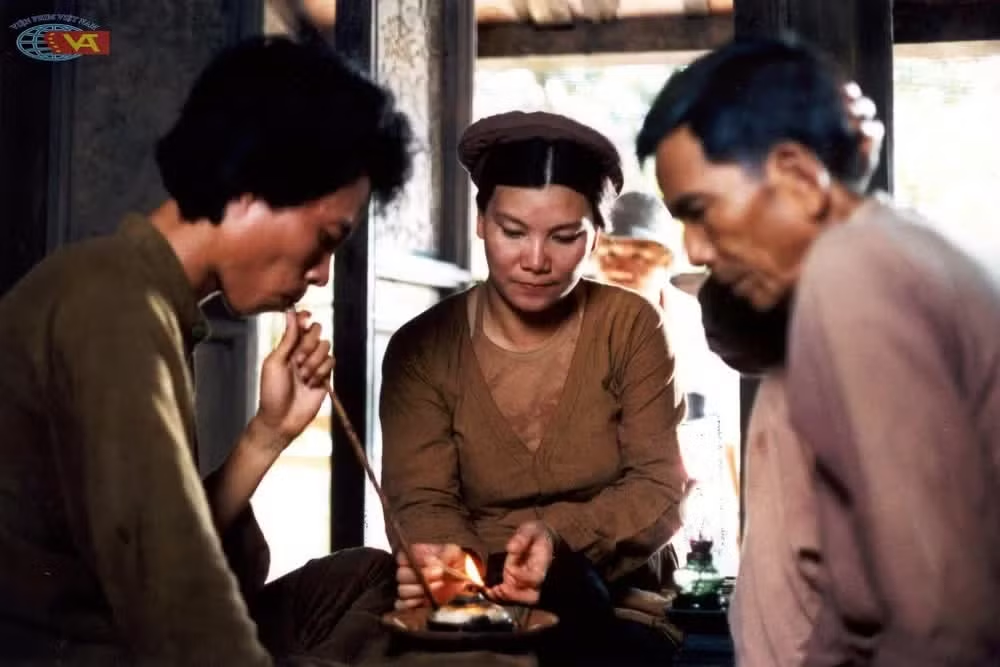
The first is the seminar themed “The Face of Vietnamese Cinema through 40 Years of Doi Moi (1986–2026)”, showcasing 17 feature films like a visual chronicle, vividly recreating the country’s and people’s remarkable transformation over four decades of change and renewal.
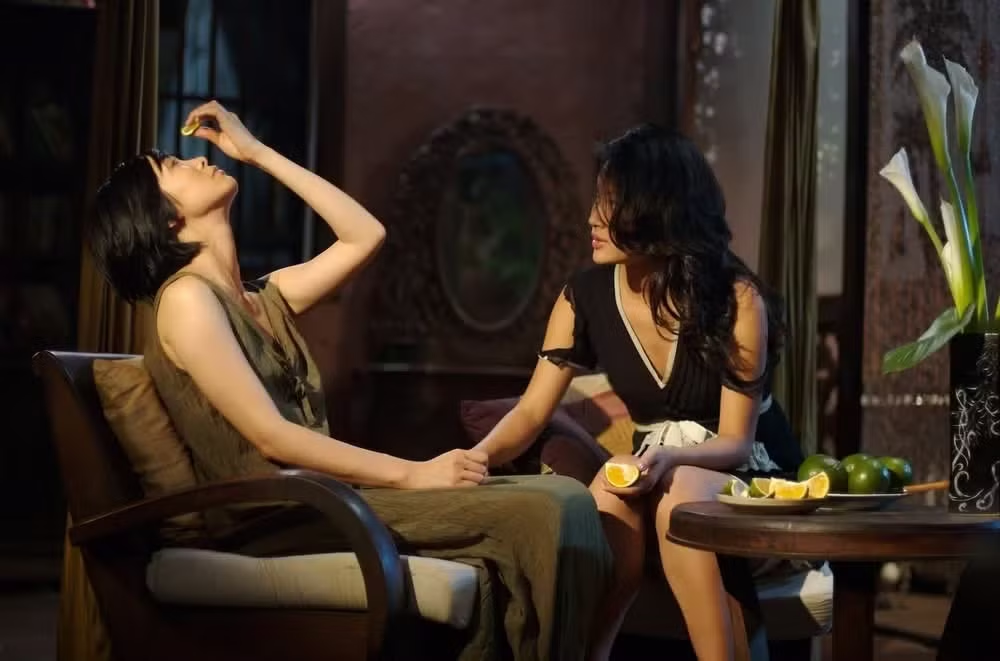
The second highlight is the programme “Contemporary Epics”, featuring notable contemporary films that celebrate the Vietnamese spirit, such as “Mua do” (“Red Rain”), “Tu chien tren khong” (Hijacked), and “Truy tim Long Dien Huong” (“Searching for Ambergris”), alongside the latest productions of 2026 including “Oc muon hon” Snail borrowing its soul) and “Phi phong” (the Blood Demon).
Finally, there are internationally oriented programmes such as “Vietnamese Cinema Today” featuring 28 films, “Panorama of Asian Cinema” with 21 films, and especially “Focus on American Cinema” with 11 films — a meaningful tribute marking the 250th anniversary of the US Independence Day, offering audiences an overview ranging from the silent film era to contemporary Hollywood.
Amid a digital world undergoing constant transformation under the impact of AI technology, high-level meeting spaces such as DANAFF 4 represent a form of national “soft power”, where culture serves as a means of dialogue with the world and art becomes a way to affirm Vietnamese identity.
Deputy Minister of Culture, Sports and Tourism Ta Quang Dong
It must also be said that the greatest value of DANAFF does not lie in the number of films screened or the scale of its premieres. What gives the festival its real depth are the professional activities taking place behind the scenes, including specialised seminars such as “The Face of Vietnamese Cinema in the Renewal Era”, “Artificial Intelligence, Digital Technology and Intellectual Property Protection”, and “The American Film Industry – Successful Models and Lessons for Viet Nam”.
All of these seminars and discussions revolve around one central question: How can Vietnamese cinema develop sustainably in a world changing by the day? What can Viet Nam contribute to world cinema amid the country’s rapid development? It is precisely for this reason that the presence of project development programmes, scriptwriting workshops, acting and film production training courses demonstrates that DANAFF is moving beyond the role of a conventional film festival to become a genuine creative ecosystem.
One notable initiative is the DANAFF Talents project incubator, which features 18 projects undergoing intensive development in two categories: Asian Art-house Projects and Vietnamese Genre Film Projects. This programme serves as a launchpad for young ASEAN filmmakers to continue training in Thailand and France while connecting with European co-production funds through CNC’s Cinema du Monde programme.
Another standout programme at the festival is the Script Lab, which selected eight outstanding projects for intensive mentoring and refinement under the guidance of Professor Jack Lechner, Dean of Film at Columbia University School of the Arts, director Tony Bui, and director Anthony Chen, winner of the Camera d'Or at Cannes. Alongside this, the “Nurturing Talent” workshop and master classes in acting led by Dr Lydia Park and director Rob Marchand will help train nearly 40 young participants, promising to establish international professional standards.
The festival is also introducing, for the first time, the DANAFF Industry Days platform, developed with the consultancy of French expert Jeremy Segay. The programme will gather more than 20 international film companies and 10 major domestic studios with the goal of commercial networking and bringing Vietnamese films to the global market. In addition, the “DANAFF’s Cinephiles” space, initiated by director Phan Dang Di in collaboration with universities in Da Nang, aims to build a young community of cinema lovers.
According to the festival’s Organising Committee, half of all film tickets will be made available through free online registration, enabling the public to access screenings proactively. Open-air screenings held at venues such as APEC Park, the Da Nang Centre for Culture and Cinema, Hoa Khanh Square, Tam Thanh Beach and Song Hoai Square in Hoi An will help erase the distance between artists and audiences, bringing cinema back to the heart of the people.
A city of cinema and the ambition to reach new heights
Contributing to the realisation of that ambition, the local authorities have played the role of a solid foundation. Nguyen Thi Anh Thi, Vice Chairwoman of the Da Nang City People’s Committee, affirmed that the city had proactively coordinated logistics infrastructure, foreign affairs security and international communications in a synchronised manner, transforming DANAFF into a cultural brand representing a dynamic and deeply integrated Da Nang.
Immediately after the 2025 festival season concluded, the Da Nang City Department of Culture, Sports and Tourism, under the direction of Director Truong Thi Hong Hanh, promptly set out to “bring the festival abroad”, promoting the event in key cinematic markets such as the United States, France and Japan. Cinema has also been integrated into strategic tourism programmes aimed at building a sustainable cultural industry for the future.
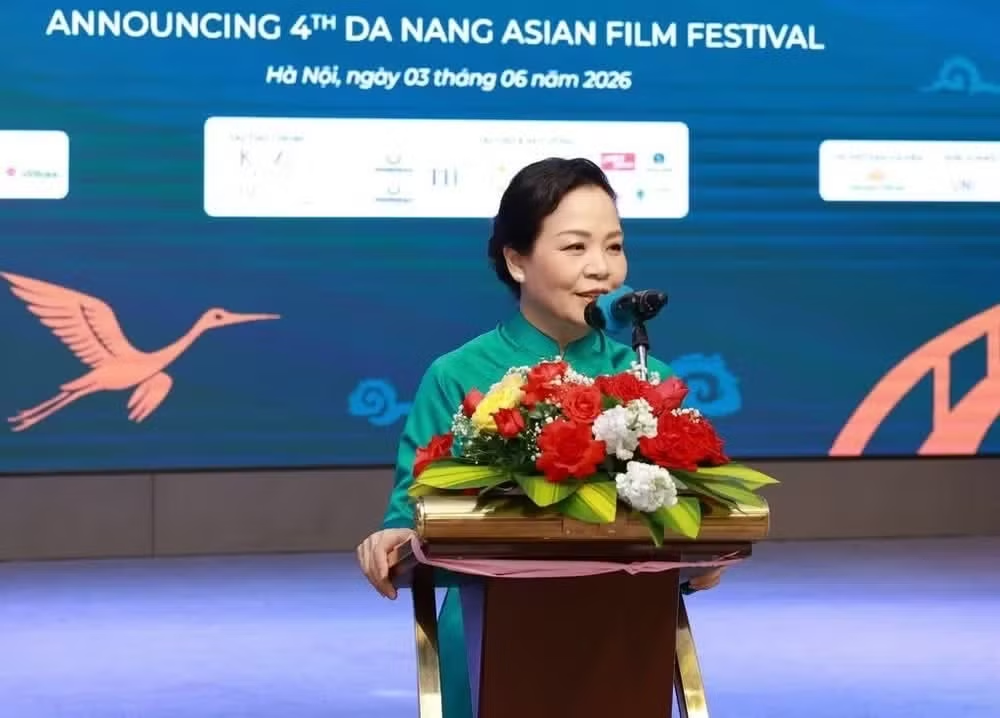
Behind the ambition to shape Da Nang into a “city of cinema” and bring Vietnamese films to the world stage lies the persistence of those who have devoted themselves to Vietnamese cinema, including Dr Ngo Phuong Lan together with the VFDA and her colleagues such as Nguyen Thi Anh Thi, Ly Phuong Dung and Dinh Trong Tuan. For them, above all else, is the belief that cinema is not merely an art form, but also a cultural force capable of connecting nations.
Dr Ngo Phuong Lan is not someone who seeks attention amid public events, yet she radiates a special energy born of intellect, perseverance and conviction. For many years, she has steadfastly pursued what seems both simple and immensely difficult: integrating Vietnamese cinema with the world without losing its identity.
The gentleness of a woman working in culture, the experience of a cinema scholar and the determination of someone willing to undertake major responsibilities all converge in Dr Ngo Phuong Lan. Watching DANAFF gradually mature on the banks of the Han River, one can understand that behind today’s achievements lie years of silent dedication, and within that journey remains her distinct imprint — that of a woman who has devoted herself wholeheartedly to the dreams of Vietnamese cinema.
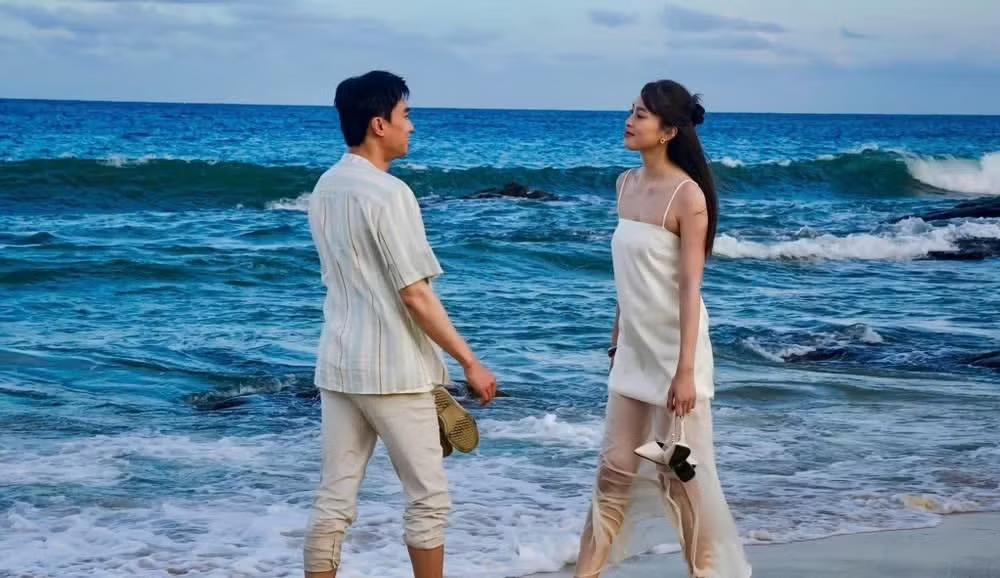
For this reason, when DANAFF 4 chose the theme “Bridging Asia to the world”, it represented not only the aspiration of a film festival, but also the ambition of Vietnamese filmmakers and the Da Nang authorities in their determination to gradually elevate Vietnamese cinema onto the regional and global stage.
Four years may not seem long compared with renowned international film festivals around the world, but every step taken by DANAFF has demonstrated a serious and persistent direction: using cinema as a bridge, culture as soft power, and dialogue and creativity as the path towards integration.
During these summer days along the Han River, as the lights of the film festival shine brightly once again, the journey of Vietnamese cinema and of a city of cinema is only just beginning, with confidence and steady steps forward.