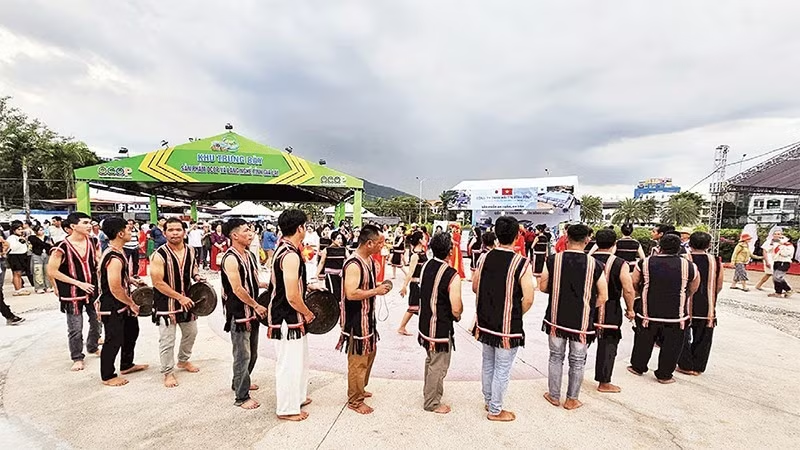
As Gia Lai prepares to host the National Tourism Year 2026, the preservation and promotion of these festivals have become even more meaningful, helping to safeguard cultural heritage while opening new directions for tourism development.
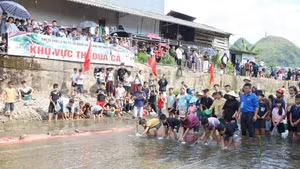
In Pleiku, the Gia Rai people’s Op Village still exists as a “village within the city.” However, rapid urbanisation has placed many traditional rituals at risk of fading into obscurity. Ceremonies such as engagement rituals, the new rice celebration and water wharf worship ceremonies — once closely tied to community life — have gradually become rarer, remaining largely in the memories of older generations.
In response, the Cultural and Social Affairs Division of Pleiku Ward has worked with the local community to revive the traditional Gia Rai engagement ceremony. This is not merely a marriage ritual but also an opportunity for younger generations to learn about cultural practices that once formed a familiar part of everyday life. Attending the ceremony for the first time, Ro Mah Luy from Op Village shared that the advice given by village elders during the ritual encourages young couples to cherish their love and to become more aware of preserving family values.
He expressed the hope that when he starts his own family in the future, he too will be able to hold an engagement ceremony in accordance with the traditional customs of his people.
In recent years, dozens of distinctive festivals of the Ba Na and Gia Rai communities have been supported by the cultural sector for revival, following the principle of respecting their original values. Within these activities, the community acts as the central participant, while the authorities play a supportive role by providing favourable conditions.
In 2026, Gia Lai will organise numerous activities linked to the heritage of gong culture with the aim to promote and restore traditional cultural values.
According to the plan, the programme “Weekend gong performances — Enjoyment and experience” will be held every Saturday evening. At the same time, the provincial museum will organise display spaces and thematic exhibitions on the heritage of the Gia Lai Gong Cultural Space. In addition, the Cultural Festival of Gia Lai’s Ethnic Groups is scheduled to take place in April, while an International Gong Festival will be organised in the fourth quarter of the year. Alongside these festive activities, the province is also implementing policies to support the restoration of the Gong Cultural Space.
Specifically, financial support mechanisms will be provided for Ba Na, Gia Rai, Cham, and H’re ethnic villages to construct traditional rong communal houses, with priority given to locations suitable for community-based tourism development. Each project may receive support of up to 1 billion VND, creating conditions for villages to preserve their cultural identity while linking it with local socio-economic development.
Le Thi Thu Huong, Deputy Director of the Gia Lai Department of Culture, Sports and Tourism, said that the provincial People’s Council has issued a plan on the preservation and promotion of the heritage value of the Gia Lai Gong Cultural Space for the 2026–2030 period. This serves as an important foundation for maintaining and reviving traditional rituals and festivals. The plan emphasises the role of local communities — regarded as the true custodians of the heritage — with the aim of ensuring sustainable cultural preservation and promotion while also boosting local tourism development.
As Gia Lai hosts the National Tourism Year 2026, the revival of traditional festivals carries special significance. It represents not only a return to cultural roots but also a strategic step in integrating indigenous culture into the broader process of development. Each revived festival stands as a testament to the enduring vitality of traditional culture, allowing the Ba Na and Gia Rai communities to affirm their values, helping visitors develop a deeper affection for the Central Highlands, and enabling Gia Lai to move confidently into the future with pride in its rich cultural heritage.