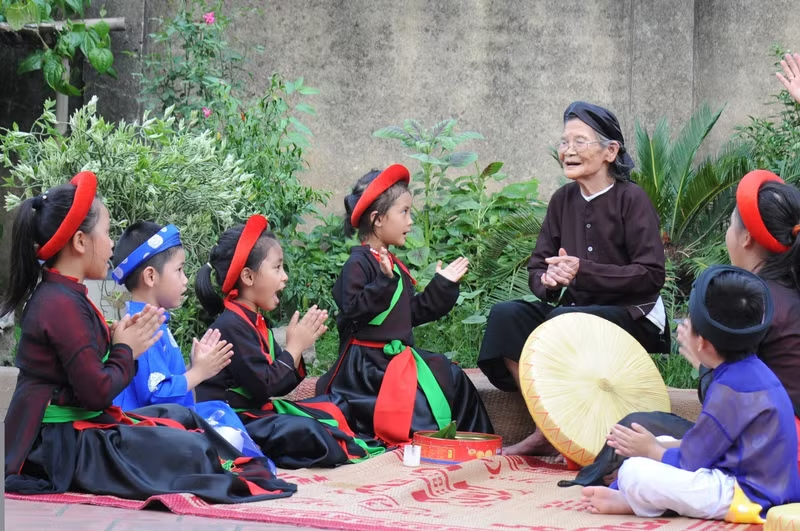
Question: What significance does traditional art hold within the structure of national culture, in your opinion?
Researcher Nguyen Hung Vi: Traditional art, also referred to as folklore, has existed within communities and society for centuries, and it endures to this day.
The values of traditional art meet the aesthetic needs of the community, shape its cultural identity, and form the most fundamental foundation for the overall development of modern and future culture. It is, in essence, the quintessence of culture at the level of the national-ethnic community, as we understand it today.
Q: What role does traditional art play in modern life, in your view?
A: Traditional art permeates every form of Vietnamese creativity, whether painting, architecture, sculpture, or music. In literature, theatre, and dance, its influence is even more pronounced. Vietnam has achieved remarkable success on the basis of traditional art, particularly after 1945 and again after 1975. Not every nation or territory has developed in such a direction or attained such accomplishments, especially amid the complexities of global cultural exchange.
Traditional art remains the foundation for development, innovation, and integration. Its values nourish the creative thinking of artists and define the character of their work. One may write literature in a foreign language, but the essence remains rooted in the traditional language and literature within the author’s soul.
Q: Some argue that traditional art constitutes the “aesthetic identity” of society, the foundation of a nation’s soft power. What is your view?
A: I not only agree but take great pride in it. We know that, among the 7,159 languages currently spoken worldwide, around 3,193 are at risk of extinction. The Vietnamese language, however, is not only safe from that fate but is developing in line with traditions handed down from the past.
The first lesson we learned in linguistics was Marx’s view on “thought”: labour comes first, leading to the development of language, and through language, complex human thought emerges.
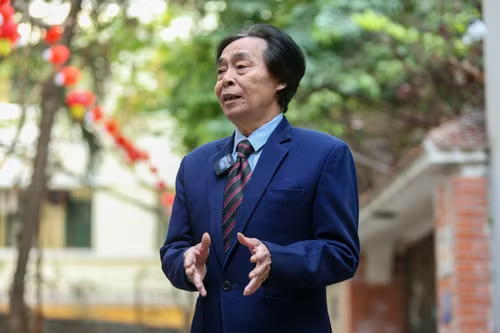
I have encountered national languages whose speakers admit they are insufficient for scientific thought in the modern world. The fundamental value lies in establishing the capacity for thought and creativity. Traditional art is also grounded in the distinctiveness of thought. “Aesthetic identity” is precisely that—an identity rooted in aesthetics.
Claude Lévi-Strauss, the eminent anthropologist of the 20th century and a foundational figure for UNESCO, argued that identity is determined by how a community treats and creates value for a cultural element, regardless of its origin. In other words, the origin of a cultural element is merely secondary in determining identity.
Thus, the identity of traditional art is the community’s affirmation of itself before others and, more importantly, a direct contribution to human culture. We have achieved much in this modern world. It is precisely because of these achievements that we are recognised and respected internationally. That is what is called soft power—soft strength.
Q: From a practical perspective, how do you assess the contributions traditional art can make to cultural and economic development, particularly in tourism or the cultural industries?
A: Slightly off-topic, someone once asked me what I gained from travelling widely to research and exchange on Quan ho (love duet singing), or from writing new lyrics for old folk melodies.
The first thing, I believe, is showing gratitude to local people. The second, more practical aspect, is that a beautiful heritage creates positive impressions everywhere. When people from that region travel, others will hold favourable impressions, trust them more easily, and be more willing to support and help. That is an incalculable value that helps people survive, establish themselves, and find happiness.
I myself carry deep gratitude to my homeland, which has sustained me to this day. Thus, traditional art can foster mutual understanding in the most positive sense, enabling people across the world to trust and unite.
Tourism and the cultural industries can be built sustainably on that basis. I rarely dwell on concepts like “cash flow” or “passive income” that dominate social media. But the true values of truth, goodness, and beauty—I am certain everyone resonates with them from the heart. People come together and find happiness because of that.
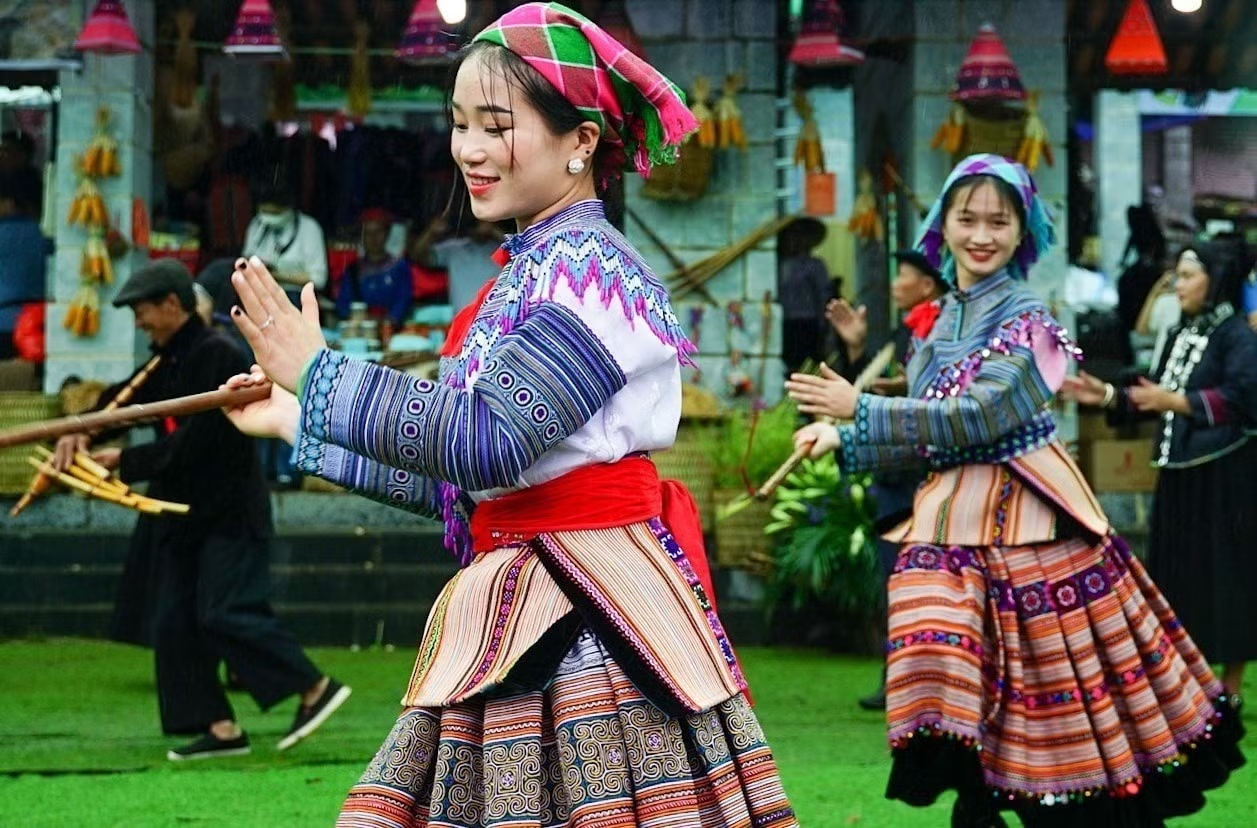
Q: Facts show that the preservation and promotion of traditional art forms still face considerable difficulties. What are the “bottlenecks” and how should they be addressed?
A: We have sound policies and directions. However, implementation has not yet met expectations. Often, we fail to harmoniously integrate UNESCO’s four-pillar approach to cultural heritage—Understanding, Preservation, Promotion, and Dissemination—when it comes to cultural heritage in general and traditional art in particular.
In terms of cultural institutions, we still lack specific plans tailored to each particular heritage. As a result, many outstanding artistic talents are wasted in the processes of preserving, developing, and promoting national traditional art. This is truly regrettable.
We have recognised the position of traditional art within national cultural development since the Outline on Vietnamese Culture in 1943. Its role is self-evident. What is needed now is awareness, coherent plans and programmes, appropriate methods, and investment in people and activities. That is the pressing requirement.
Thank you very much for your insights!
Born in 1956, cultural researcher Nguyen Hung Vi worked for many years in the Literature Department at the University of Social Sciences and Humanities. He was also one of the founding members of the Vietnam Museum of Ethnology.
With decades of experience in teaching and research, and direct involvement in surveys, preservation, and cultural heritage activities across many localities, he has made significant contributions to identifying traditional cultural values and proposing practical solutions to promote those values in contemporary life.