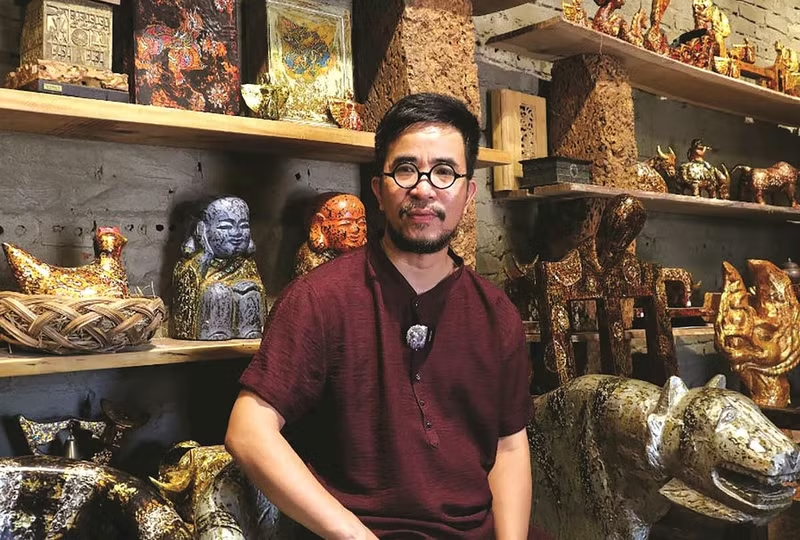
Bringing lacquer back into the community
Q: Your lacquer workshop at Ha Vi Communal Temple in the heart of Ha Noi’s Old Quarter attracted a large number of participants. Where did the idea for this event come from?
Painter Nguyen Tan Phat: Many artisans and artists share the same concern: how to keep traditional arts and crafts connected with everyday life. Lacquer is a precious medium, but if it remains confined to a few traditional spaces, it struggles to reach people.
When I had the chance to organise a workshop at Ha Vi Communal Temple—the temple that worships the founder of the lacquer craft—I felt it was both sacred and intimate, an ideal place to bring lacquer back into the community. These activities allow people to engage with lacquer in a more flexible and relaxed way.
Q: A distinctive feature of the workshop is that participants get to practise lacquer themselves. What do you hope they take from this experience, and what difficulties have you encountered?
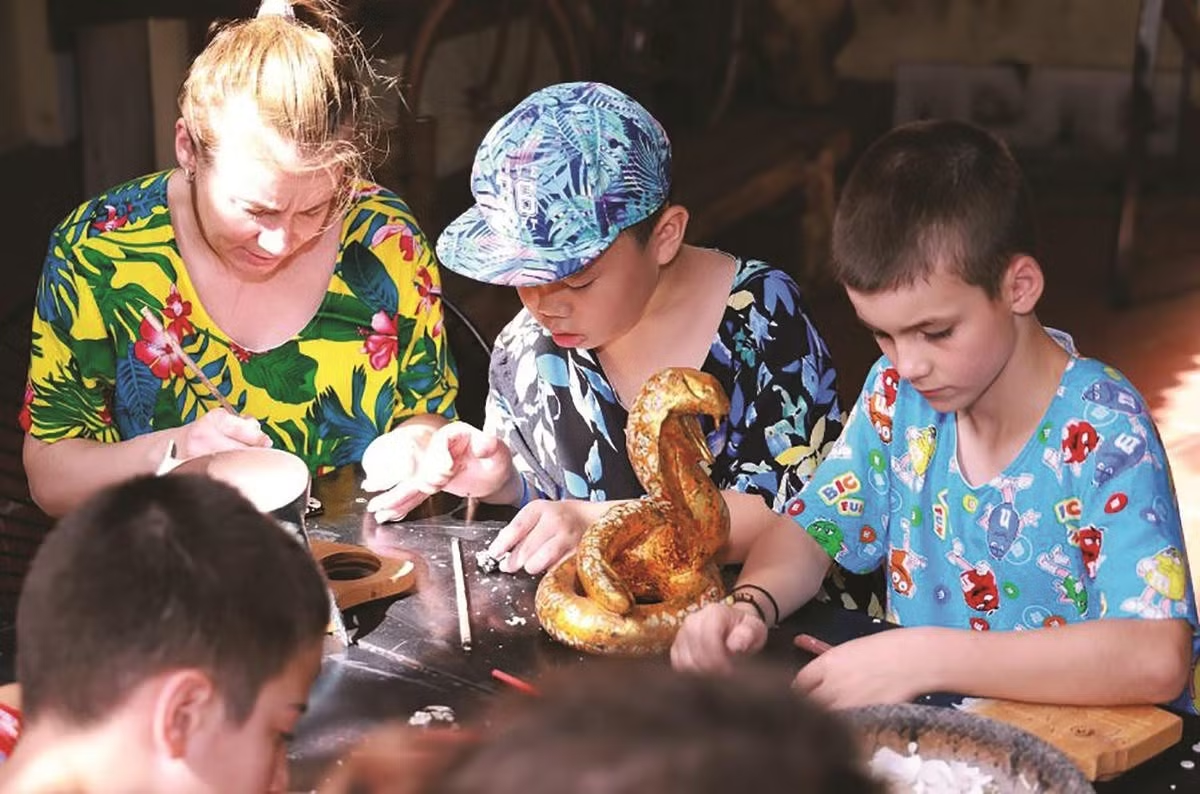
A: Only when people make things with their own hands do they begin to sympathise with and truly understand the craft. In the workshop, participants try various steps such as drawing and inlaying eggshell onto objects—procedures that may seem simple but demand concentration and patience.
Many young participants admitted they had no clear idea what lacquer was before. After trying it, they realised a finished piece must pass through many meticulous stages. I find this very valuable, because that genuine, emotional experience naturally sparks their interest in lacquer.
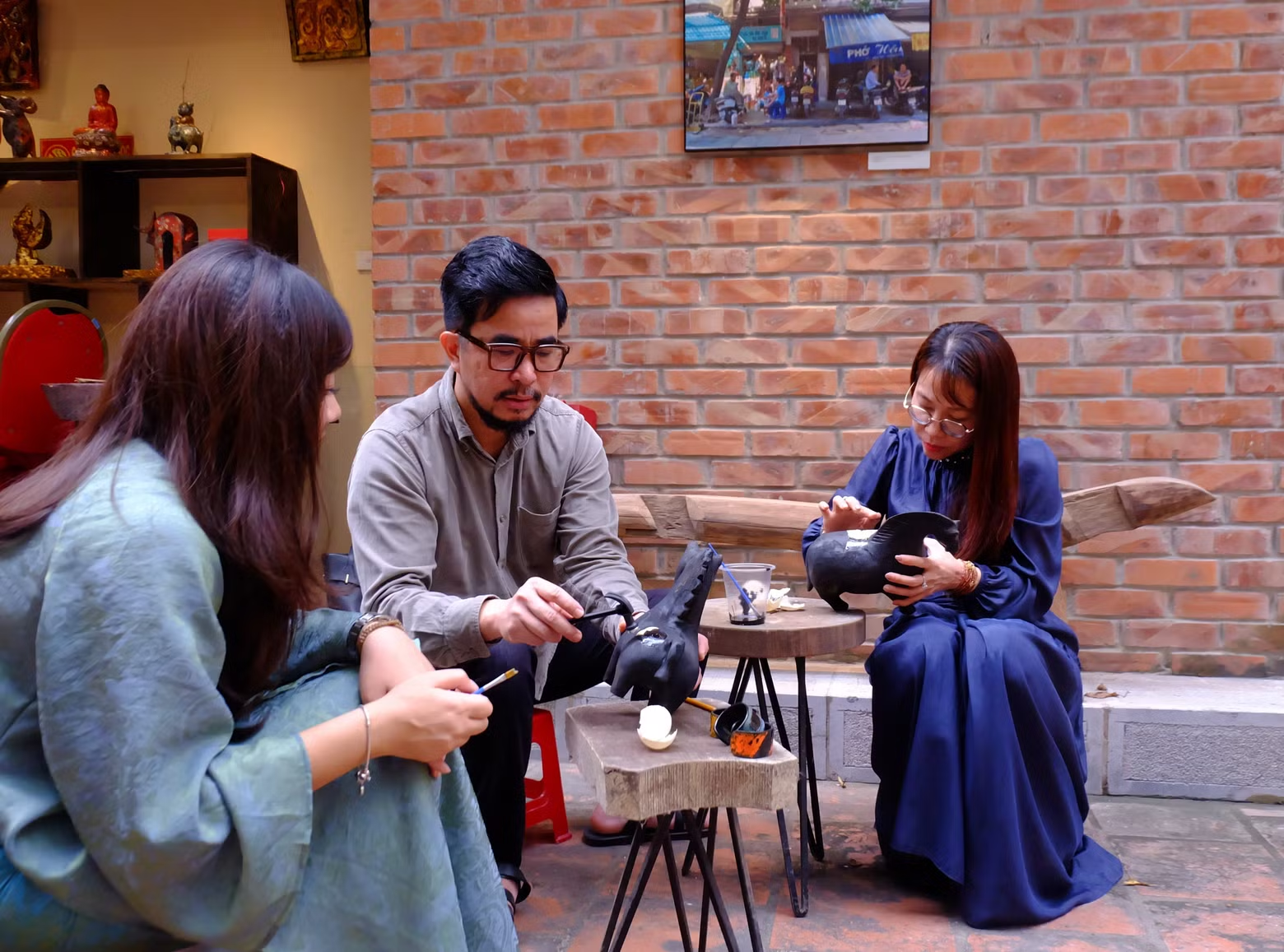
There are many difficulties, but the hardest challenge is helping people understand without lengthy explanations. The making of lacquer is inherently a slow craft, while modern life is fast. People expect instant comprehension, but lacquer requires patience and layering. So when organising such experiences, I must find ways to shorten the process without losing its essence. That is not easy.
Another difficulty is maintaining authenticity when opening the craft to a wider audience. When an event opens to the community and draws a wide audience, there is always the risk of oversimplification, even turning it into a casual activity rather than a true craft experience.
Besides that, practical challenges with space, time and materials also arise. Even so, I think these are part of the nature of lacquer. The craft was difficult to begin with. If it were too easy, perhaps I would not be devoted to it that much.
Free workshops as a gateway to heritage
Q: What does it mean to you to organise free activities for the public during these experiential events?
A: I believe that if we want lacquer to draw nearer to the public, the first step is to open the door. When there are no barriers, people—especially the young—can enter more easily.
Free workshops are not simply about giving something away; they are about creating opportunities. People may come out of curiosity, but once they sit down and try, connections begin to form.
I believe that repeated connections can gradually shift society’s view of traditional crafts.
Q: Many people argue that Vietnamese lacquer has real potential to reach international audiences. In your opinion, what is the most important factor for lacquer to go further?
A: Vietnamese lacquer already has distinctive values, from materials and techniques to the way we work. If we lose those and only make products to suit foreign tastes, similar items can be found anywhere.
I prefer works that carry the stories of our nation and ethnicity. When values are clear and the process is done with sincerity and dedication, they will be recognised both at home and abroad. To go further, many other factors are needed—such as ways of telling stories, promotion, and strategy—but the essence still lies in the craft itself.
Q: In the coming time, what plans do you have to bring lacquer closer to the community, especially in everyday applications?
A: I will continue using open spaces where anyone can experiment, not only in the Old Quarter but also in places closer to daily life. I am also exploring how lacquer can be applied to everyday objects while preserving its essence, so users can feel the difference.
If traditional arts want to survive, they must live within everyday life. When people see that traditional art and crafts are not distant, they will value, support and interact with them. Not everyone will take up the craft directly, but they will value it, support it, and engage with it.
For me, heritage lives on through simple, genuine experiences with true depth. When people touch lacquer, they understand why it must be preserved.
Thank you for sharing!