Bringing masks to the streets
Trang is the daughter of artisan Nguyen Hung, who has spent more than 30 years preserving the craft of making lion dance heads and masks.
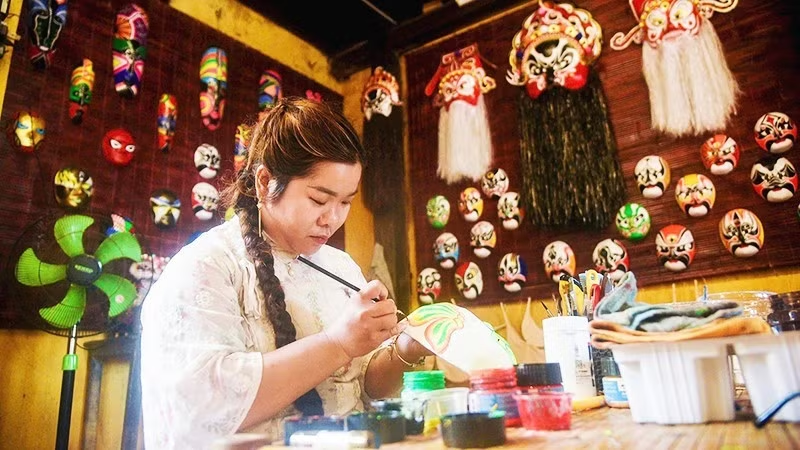
She began painting at the age of 14; while her peers were busy with carefree outings, she instead immersed herself in raw mask forms, meticulously refining every detail.
After graduating from university, despite many youthful ambitions, her hometown and the familiar scent of paint and finely honed brushstrokes drew her back to work with her family.
Trang shared: “At first, I intended to pursue a career in teaching. But seeing the family business so busy, and with my natural aptitude and love for painting from a young age, I found myself drawn into the craft without even realising it.”
Today, the family of artisan Nguyen Hung is among the few households in Hoi An that still produce masks and lion heads. Trang and her sibling have continued the family tradition, though she has expanded it further by focusing on mask painting.
What defines Trang’s masks is their uniqueness — no two are alike. Each piece reflects a distinct emotion and colour palette, shaped by her mood, thoughts, and stories of the day. Even when fulfilling large orders, every mask remains a one-of-a-kind creation.
She also revealed that decorative masks are typically made without cut-out eyes in order to preserve their “spirit”. The eye area is painted in deep black, creating a powerful and captivating expression — a detail highly appreciated by many visitors.
Driven by the desire to ensure that traditional crafts do not remain confined to museums but instead thrive in everyday life, Trang has chosen a bold path: rejuvenating heritage by combining production with hands-on tourism experiences. Rather than waiting for visitors to come to her, she actively brings the craft to them.
She currently operates a small display and experiential space for mask-making at the Hoi An Museum of Folk Culture.
These masks have travelled across seas with visitors to destinations around the world, becoming small yet meaningful “cultural ambassadors” carrying stories of a culturally rich Viet Nam and a creative younger generation.
Reviving heritage in modern life
Recognising the importance of sustainable commercialisation to sustain the craft, Trang has expanded promotion through wholesale distribution channels in major tourist areas, enabling her products to reach thousands of visitors each day.
Her distinctive masks have also found their way into high-end resorts and hotels. She has introduced short-term workshops at accommodation venues, allowing visitors — many of whom being unfamiliar with Vietnamese culture — to become “amateur artisans” in just a few hours.
The masks, deeply rooted in the aesthetics of tuong, are no longer merely decorative objects. Trang imbues them with auspicious spiritual meanings, offering blessings of peace and protection against misfortune.
Each of her works is priced from 350,000 VND to several million, depending on the size and complexity. Yet for someone so devoted to cultural heritage, the greatest value lies beyond revenue figures. Her true joy comes from explaining the meaning behind each motif and character in tuong to visitors. Seeing international guests delight in mixing colours and carefully painting their own personalised masks under her guidance reinforces her belief that her people-centred approach to heritage is the right path.
Every day, Trang and her family continue working tirelessly in their small workshop, transforming simple materials into soulful works of art, ensuring that the cultural current of tuong continues to flow through the heart of modern Hoi An.