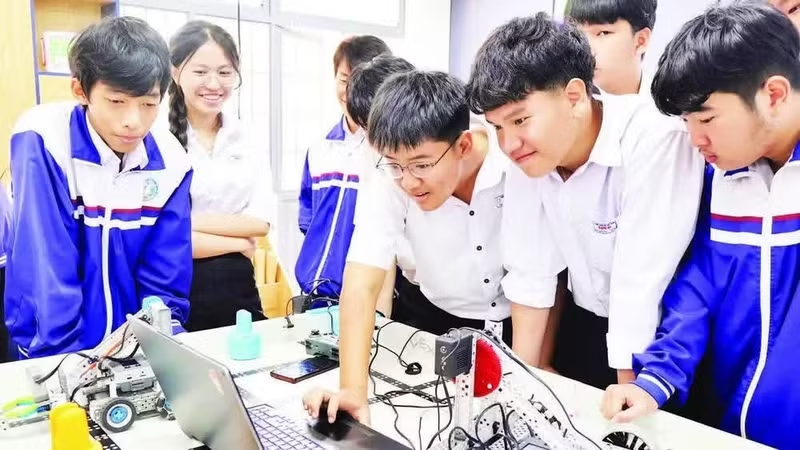
The requirements for teachers in this academic year are not only good capacity and qualities, but also the ability to adapt teaching and learning to an era in which artificial intelligence, digital transformation, science and technology are developing increasingly rapidly.
Implementing Politburo Resolution No. 71-NQ/TW, dated August 22, 2025, on breakthroughs in education and training development, the entire education sector has made considerable efforts to improve institutions and policies; renew management and improve the quality of teaching and learning, particularly the training of high-quality human resources; accelerate digital transformation; and prepare teaching staff, schools and classrooms, textbooks and other conditions for the new academic year.
After a period of restructuring public early childhood education, general education, vocational education and continuing education institutions, the country has reduced the number of educational institutions by an average of around 50%; thousands of redundant school leaders following mergers have continued to be assigned as deputy principals and teachers, initially helping to address the shortage of teachers.
The 2026-2027 academic year begins with many new tasks. In order to bring about clear and substantive changes, the education sector needs to renew its approach, shifting from a management mindset to educational development governance; focus on thoroughly addressing limitations, shortcomings, difficulties and obstacles; and continue to implement in a comprehensive, decisive and effective manner breakthrough tasks and solutions for education and training development.
On the basis of promoting the strengths of the teaching workforce, localities and the education sector will continue to pay attention to and support teachers after mergers in stabilising their mindset, while encouraging and motivating individuals to promote their capabilities and strengths. At the same time, each educational institution will strengthen discipline and enhance responsibility in performing assigned tasks; build a culture of honesty, integrity and substance; and develop specific solutions to address the pursuit of achievement for its own sake in teaching, learning, testing and assessment.
The Ministry of Education and Training is studying and proposing policies to attract teachers, particularly teachers of specialised subjects and those working in disadvantaged areas; revising regulations on teachers’ workload norms and working conditions to meet the requirements of digital transformation and the application of artificial intelligence; and providing guidance on reducing paperwork and administrative burdens so that teachers can focus on their professional duties…
In particular, following school mergers aimed at streamlining the education system and improving its operational efficiency, practice is now calling for proactive adaptation, a spirit of collective solidarity and close support from teachers and school management boards. When schools are merged, teachers play a key role in stabilising the organisation and maintaining the quality of teaching and learning. To adapt quickly to the new environment, teachers need to take the initiative to change, be ready to become familiar with new colleagues, new students and new facilities; actively apply technology and share effective lesson plans to improve the quality of lessons.
Notably, teachers need to continue learning to improve their professional qualifications, consistently serve as positive role models, and place students’ interests above the initial disruptions. Leaders of educational institutions should assign duties, arrange teaching schedules and allocate work according to teachers’ capabilities, avoiding placing excessive pressure on them; regularly engage in dialogue to promptly address difficulties related to policies, entitlements and psychological concerns; and promptly reward and honour teachers who demonstrate positivity, creativity and perseverance in overcoming difficulties following the mergers.