From lessons to love for seas and islands
For students, the sea and islands represent a vast space that can sometimes feel distant from their daily lives. If approached solely through concepts, figures, and legal regulations, knowledge about the sea and islands can easily become dry and fail to resonate deeply.
Therefore, integrating content on Viet Nam’s seas and islands into the school environment requires appropriate approaches for students' psychology, age, and ways of perceiving the information.
When knowledge is transformed into relatable stories, real-life situations, engaging questions, or hands-on activities, the sea and islands are no longer distant concepts but become an integral component of students’ understanding.
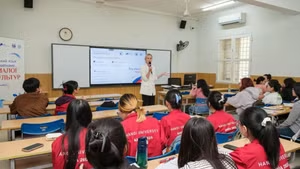
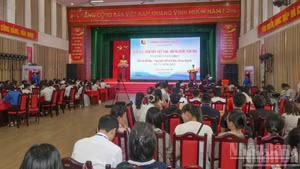
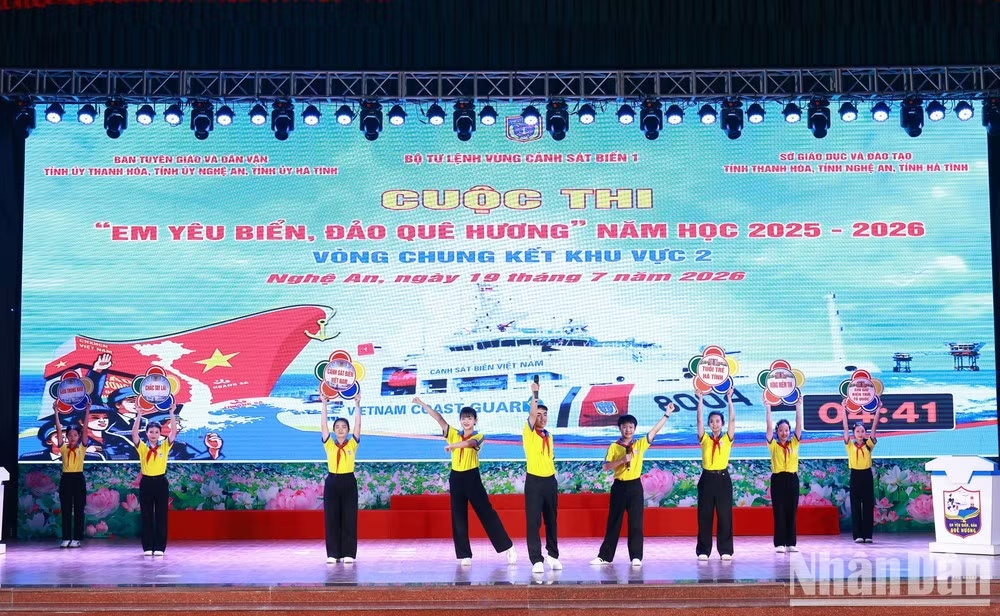
For nearly 15 years, the “I love my homeland’s seas and islands” contest, organised by the Viet Nam Coast Guard, has been instrumental in establishing such an approach. From knowledge of history, geography, and maritime and island sovereignty to legal regulations, citizens’ responsibilities in safeguarding sovereignty and maintaining security, order, and safety at sea, as well as combating illegal, unreported, and unregulated (IUU) fishing, all have been imparted in formats that are suitable for students’ age.
Students do not simply sit and listen; they actively participate, think, choose answers, and respond to specific situations. This active engagement helps them retain knowledge more deeply while affording them an opportunity to develop a proper understanding of the sea and islands and their responsibilities.
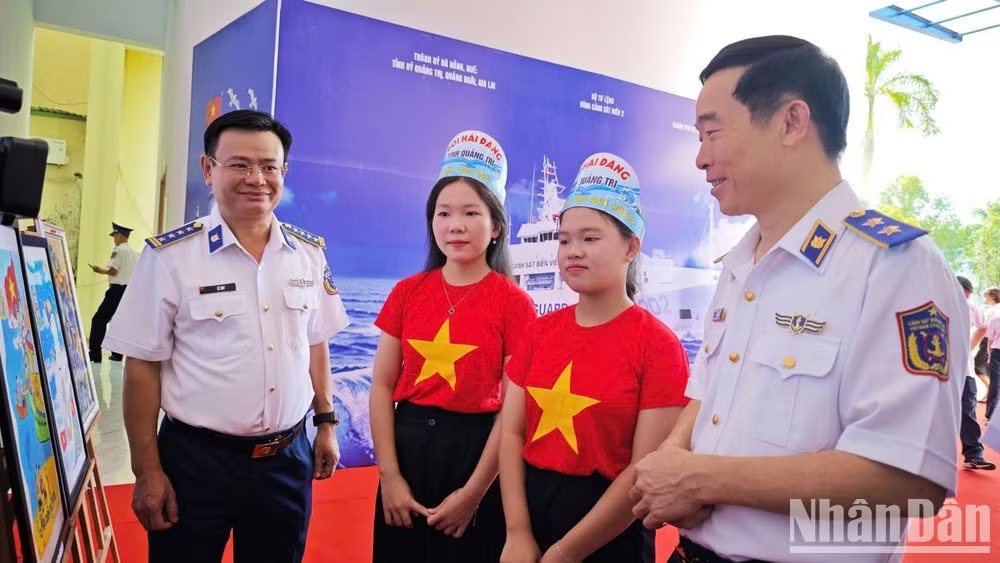
According to Lieutenant General Bui Quoc Oai, Political Commissar of the Viet Nam Coast Guard, observations of the contest show that students’ knowledge and awareness of the sea and islands have markedly improved.
Encouragingly, students are not only acquiring a firm grasp of the knowledge but are also able to apply it and relate it to practical realities. This growth shows that when educational content is carefully selected, conveyed through appropriate methods, and presented in engaging ways, issues that may seem grand and distant can still become close to students.
Bringing the sea closer to students
One of the factors that renders activities promoting awareness of the sea and islands at school so engaging is the combination of knowledge and experience. While classroom lessons provide students with a foundational knowledge base, practical activities help them gain a clearer understanding of what they have learned.
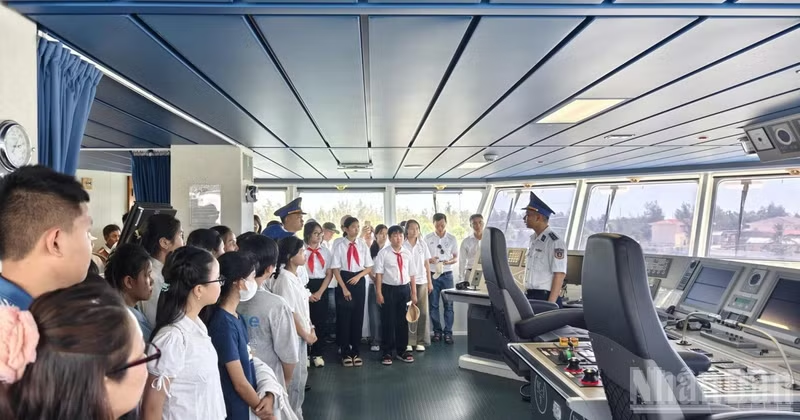
By visiting Coast Guard vessels, learning about the work of officers and soldiers, and hearing stories of maritime patrols, search and rescue operations, and efforts to combat crime at sea, students acquire a more concrete understanding of the lives and duties of those who work day and night to safeguard the nation’s seas.
Through these experiences, the sea is no longer simply a shade of blue on a map or place names mentioned in textbooks. Behind every sea and every island lies the history of national constructiong and defence, the livelihoods and economic activities of fishermen, the vessels carrying out their duties day and night, and the responsibility to safeguard sovereignty and maintain peace and stability at sea.
When students grasp these realities, their love for the sea and islands goes beyond mere emotion and gradually becomes intertwined with a sense of responsibility.
This is particularly significant for legal education among younger generations. Regulations on fisheries exploitation, marine resource protection, combating IUU fishing, and citizens’ responsibilities when engaging in activities at sea are not easy to render engaging when taught solely through theoretical methods.
However, when presented through specific questions and situations and linked to real-life stories, the law becomes significantly easier to understand, remember, and apply. Students realise that complying with the law is not some distant requirement, but begins with concrete actions, from respecting regulations when engaging in activities at sea to protecting the marine environment, benefits, and resources.
As Viet Nam endeavours to become a strong maritime nation, building a younger generation with knowledge, love, and responsibility for the sea is becoming increasingly important. A maritime nation needs not only modern vessels, major seaports, and a developed marine economy, but also citizens who understand clearly the value of the sea, are committed to protecting marine resources and the environment, and are ready to join efforts to safeguard national sovereignty and interests at sea.
Therefore, bringing the sea and islands closer to students serves as preparation for the country’s future. What is nurtured in schools today may not bring about major changes immediately, but it will quietly stay with students throughout their journey into adulthood.
From the first questions about the sea and islands, stories of soldiers stationed at the nation’s maritime frontiers, experiences aboard Coast Guard vessels, and lessons on responsibility, love for the homeland is forged naturally and endures over time.
Nearly 15 years of organising the contest have also been nearly 15 years of cultivating such seeds in schools. Today, the students may simply be enthusiastic participants in a competition; but tomorrow, they will become citizens working in different fields, carrying with them the knowledge and connection nurtured since their school days.
Then, love for the sea and islands will no longer be confined to a contest, a lesson, or an extracurricular activity, but will become an intrinsic part of each person’s awareness and responsibility.