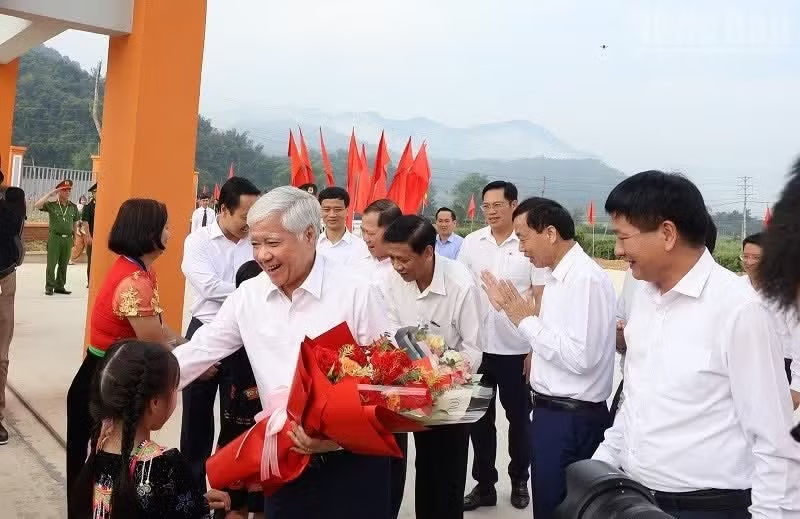
Reporting to Chien and the accompanying delegation, Principal Nguyen Trong Son stated that the school was established pursuant to Decision No. 468/QĐ-UBND dated July 3, 2026, issued by the Sam Mun Commune People’s Committee.
It officially commenced operations in the 2026–2027 academic year, tasked with providing primary and lower secondary education as well as managing, caring for, and providing for boarding and day-boarding students.
Located in a border commune sharing a 28.1-kilometre border with the Lao People’s Democratic Republic, the school comprises 31 classes with 1,010 students—618 of whom belong to ethnic minority groups—for the current academic year.
Regarding personnel, the school employs a total of 66 staff members—including administrators, teachers, and educational support staff—comprising 3 administrators, 60 teachers, and 3 support staff; an additional 18 contracted staff handle security, sanitation, and student care services.
Student management and care have been conducted in a safe and systematic manner; the school kitchen operates using a “one-way flow” process and a three-step food inspection protocol, placing a strong emphasis on hygiene, nutrition, and food safety.
Simultaneously, the school has prioritised life skills education and fosters self-discipline, self-management, and self-reliance, helping students establish structured study and daily routines while developing a sense of responsibility within the collective environment.
Facilities supporting instruction, boarding, day-boarding, and student care have largely been put into operation. The school has proactively managed and maximised the utility of existing resources while identifying and proposing the completion of any missing components, thereby gradually meeting the requirements for organising educational activities.
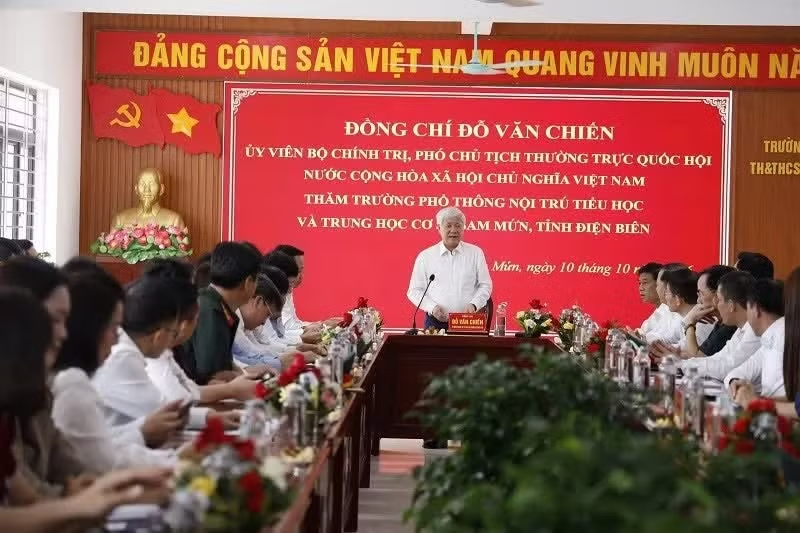
Acknowledging the efforts of the staff and teachers at Sam Mun Primary and Secondary Ethnic Boarding School in quickly commencing operations and ensuring the continuity of education for local students, the NA Standing Vice President highlighted the deep commitment of General Secretary and President To Lam and other Party and State leaders to the policy of developing a nationwide system of ethnic boarding schools.
This initiative reflected their desire to provide increasingly better learning, dining, and living conditions for the children of ethnic minority communities in remote, mountainous, and border areas.
He emphasised that, thanks to the high political resolve and decisive action of the entire political system and border provinces, 107 multi-level ethnic boarding schools have been completed and put into operation nationwide.
Notably, Dien Bien province alone has completed 10 out of 15 planned schools, thereby providing improved learning, dining, and living facilities for nearly ten thousand students from poor and extremely disadvantaged households, he noted.
With the aim of ensuring that teachers and students at the Sam Mun Boarding School (serving both primary and lower secondary levels) successfully fulfill their educational mission, Chien urged the school administration to devise a well-structured schedule for boarding students.
This schedule should ensure appropriate study time while also allowing for extracurricular activities—such as arts and sports—tailored to students’ abilities and interests, thereby enabling them to cultivate their talents and preserve their ethnic cultural traditions, he added.
The NA Standing Vice President also emphasised that the school could consider inviting artisans specialising in the cultural and artistic practices of various ethnic groups to teach the students—organising sessions based on ethnic background or shared interests—so that the children can develop their talents and preserve their own ethnic cultures.

![[Video] Renewal and growth milestones of Ha Noi through the lens](https://en-cdn.nhandan.vn/images/1XgBTSIw0KyfD4abQsg-hd4ly6fBUHXC7_OAKyN4YwPfAhBw0Xs6rVX3rF0up9Tr6rLNn30Muc4bzp90E7yOqg/10-10-hanoi-cover.jpg.avif)