The appearance of border communes has gradually changed, the living conditions of border residents have improved markedly, and national defence and security in border areas have been maintained...
Frankly assessing the situation
Senior Colonel Giang Pao Sinh, Deputy Director of the Dien Bien Provincial Police, said that nine years ago, Dien Bien had 29 border communes, but only four communes (13%) met the new-style rural development standards; six communes (20%) met the socio-economic infrastructure criteria; and 21 communes (72.41%) met the national defence and security criteria.
At that time, in the same 29 border communes, hostile elements sought to entice residents into establishing a “Hmong Kingdom”. Some individuals took advantage of border residents’ limited understanding to incite divisions among people of the same ethnic group or between different ethnic groups. The mass gathering in 2011, in which some active participants continued to harbour schemes to entice residents into carrying out their malicious intentions, had also left potential sources of instability in several border areas of the former Muong Nhe and Nam Po districts.
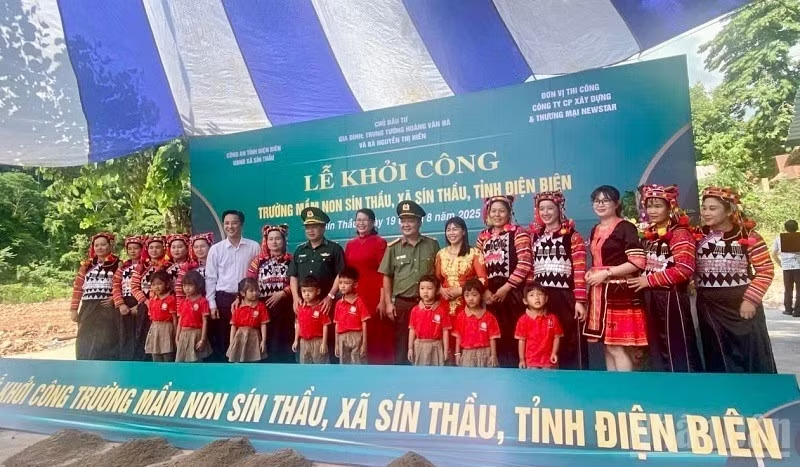
Under these circumstances, the Politburo issued Resolution No. 16, identifying key tasks focused specifically on socio-economic development in mainland border communes in combination with strengthening and consolidating national defence, security and external relations. This created favourable conditions for Party committees and authorities in border provinces, as well as sectors and localities, to implement the resolution.
“The Dien Bien Provincial Police proactively advised the Provincial Party Committee and Provincial People’s Committee to issue specialised resolutions to address issues, resolve land-for-production issues following Project 79 on the reorganisation and stabilisation of residential areas, and settle land disputes in border areas. These measures helped stabilise people’s thinking and maintain security, safety and public order among border residents,” Senior Colonel Giang Pao Sinh said.
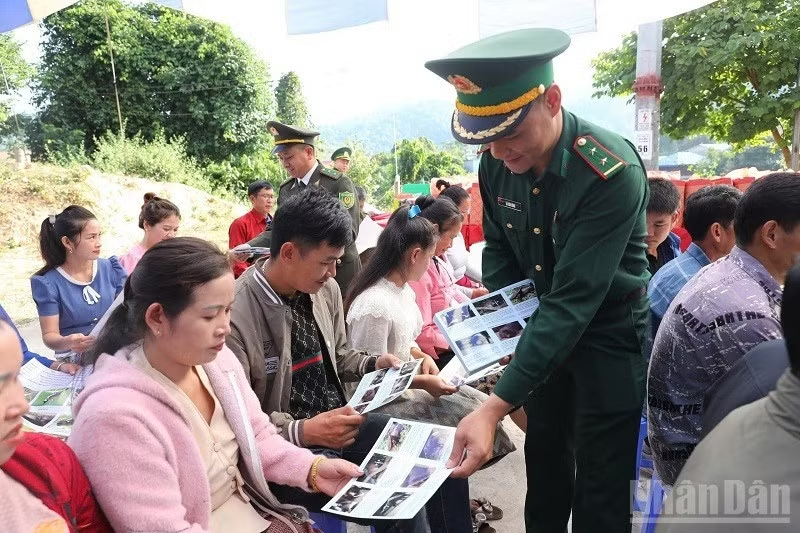
Senior Colonel Phan Van Hoa, Commander of the Dien Bien Provincial Border Guard Command, said that, in implementing Resolution No. 16, the Dien Bien Border Guard had instructed all its forces to regard socio-economic development in conjunction with the consolidation of national defence and security in border communes as a continuous political task. Taking into account the distinctive geopolitical, geo-economic and demographic characteristics of the border areas, the Dien Bien Border Guard has focused on implementing Resolution No. 16 in four specific areas: firmly managing and safeguarding national border sovereignty and security, as well as national boundary markers; effectively managing border gates and carrying out defence and border guard external relations and people-to-people diplomacy; resolutely combating and preventing all types of crime along the border; and helping border residents develop their economy and escape hunger and poverty.
Na Hy, a Viet Nam–Laos border commune established through the merger of four communes in the former Nam Po District - Na Hy, Nam Chua, Na Khoa and Nam Nhu - is home to numerous ethnic minority communities. The commune faces many difficulties and has a high poverty rate. Taking advantage of residents’ limited understanding and difficulties in production, various hostile elements have enticed people into believing in heterodox religious practices, posing a potential risk to local stability.
Comrade Tran Van Thuong, Secretary of the Na Hy Commune Party Committee, said that, in implementing Resolution No. 16, the commune had identified the effective implementation of economic development models and the allocation of resources to support ethnic communities in escaping poverty as key priorities. At the same time, it has maintained six models: self-managed religious groups for security and public order; self-managed clans for security and public order and participation in new-style rural development; neighbourhood groups for fire safety; fire-safety warning gong systems; farmers’ clubs on the law; and safe and secure schools to ensure security and public order and support teaching and learning. These models aim to encourage people from all walks of life to participate in safeguarding national security and maintaining social order and safety in the area.
Comprehensive transformation in border areas
Acknowledging the specific, innovative and responsible approaches adopted by authorities and sectors at all levels in implementing Resolution No. 16, comrade Mua A Vang, Alternate Member of the Party Central Committee, Deputy Secretary of the Provincial Party Committee and President of the Viet Nam Fatherland Front Committee of Dien Bien Province, affirmed that after nearly nine years of implementation, Dien Bien had achieved many important and relatively comprehensive results across various fields. The most visible progress was the increase in the number of communes meeting new-style rural development standards, from four in 2017 to six in 2025, and the rise in the number of communes meeting socio-economic infrastructure criteria, from six in 2017 to 12 in 2025. As for national defence and security, by June 30, 2025, all 29 communes (100%) met the relevant criteria.
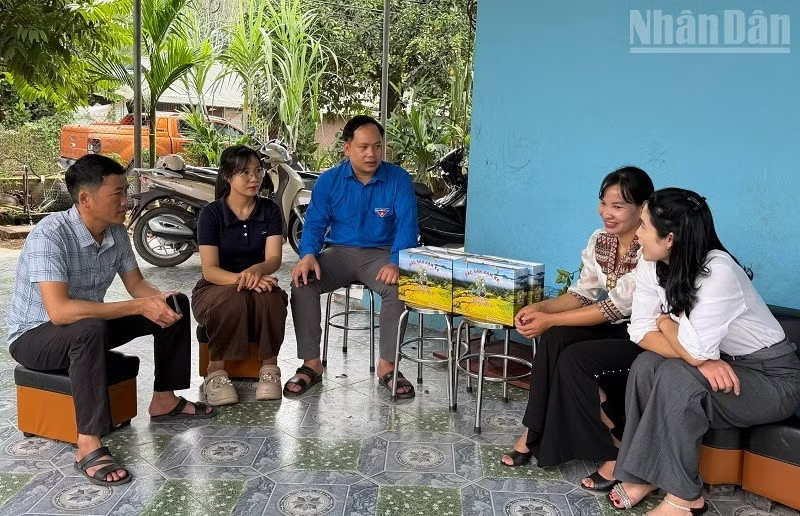
The cultural, social, educational, healthcare and social welfare sectors have made positive progress; national defence and security have been maintained; and territorial sovereignty, border lines and boundary markers have been firmly managed and protected. The posture of all-people national defence, people’s security and all-people border guard work has continued to be strengthened. External relations conducted by the Party, government diplomacy and people-to-people diplomacy have been implemented in a coordinated manner.
“In 2021, the border areas had 40,377 households, with the multidimensional poverty rate standing at 44.39%. Of these, 14,837 were poor households (36.75%) and 3,087 were near-poor households (7.65%). By the end of 2025, the multidimensional poverty rate among households in border communes had fallen to 35.77%. This result provides concrete evidence of comprehensive progress in implementing poverty reduction policies and of border residents’ efforts to escape poverty,” said comrade Nguyen Phi Song, Director of the Dien Bien Provincial Department of Finance.
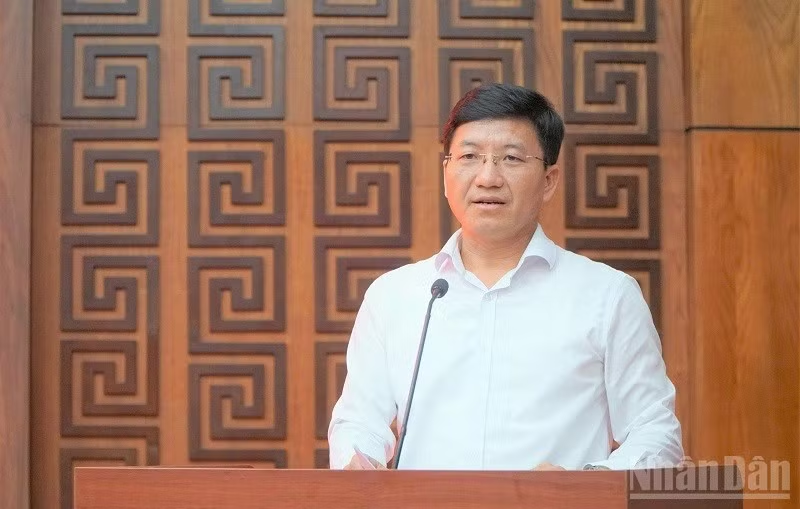
However, alongside the achievements, comrade Mua A Vang also frankly pointed out shortcomings in the implementation of Resolution No. 16 in Dien Bien. The resolution’s target was that, by 2025, 50% of border communes nationwide would meet new-style rural development standards, with an average of 15 criteria met per commune, and that 100% of border communes would meet the new-style rural development criteria for the socio-economic infrastructure group. Compared with these targets, Dien Bien had yet to achieve the required results.
To further build on the achievements and address shortcomings in implementing Resolution No. 16, comrade Mua A Vang called on Party committees, Party organisations, authorities, agencies and units to draw lessons from their leadership and direction in implementing resolutions tailored to their respective localities and to keep a firm grasp of implementation progress. He urged them to continue thoroughly disseminating and effectively implementing the policies, resolutions and conclusions of the Party Central Committee and the Provincial Party Committee on socio-economic development in border areas in conjunction with strengthening national defence, security and external relations. He stressed that building strong border areas must be regarded as a regular, long-term task for the entire political system, and that investment in border communes was investment in national defence and security.
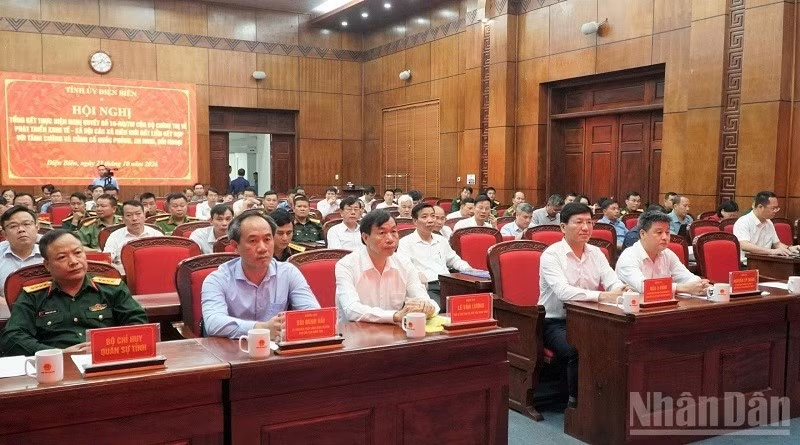
Comrade Mua A Vang emphasised that, while awaiting the Central Government’s review and issuance of new directives, agencies, units and localities should continue to pay due attention to leading and directing the effective implementation of Resolution No. 16 in their respective localities and sectors, ensuring that ongoing mechanisms, policies, programmes and projects were not interrupted.
The role of the Border Guard, the Viet Nam Fatherland Front, mass organisations, respected village elders, village heads and reputable individuals should be promoted to continue effectively implementing initiatives to establish twinning arrangements and provide support for border communes through partnerships with localities outside the province, corporations and businesses, in line with the spirit of Politburo Resolution No. 16.
Authorities should proactively maintain a firm grasp of the situation and promptly resolve emerging issues at the grassroots level; strengthen patrols and inspections at border gates, along trails and through unofficial crossings; and resolutely combat all forms of cross-border crime. External communications should be strengthened to promote Dien Bien as a safe, friendly destination rich in cultural identity and as a trade bridge between Viet Nam, Laos and China.