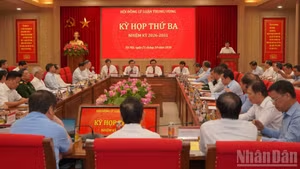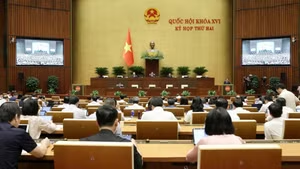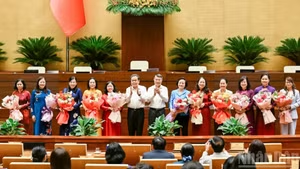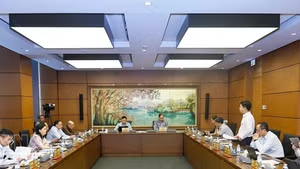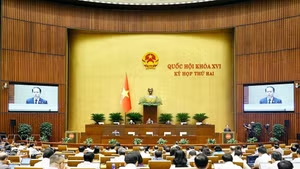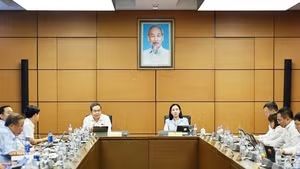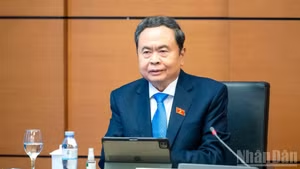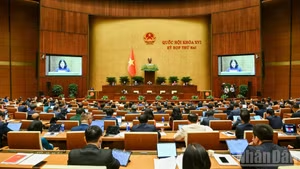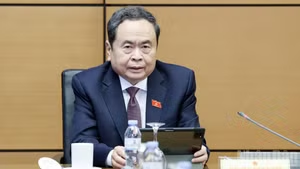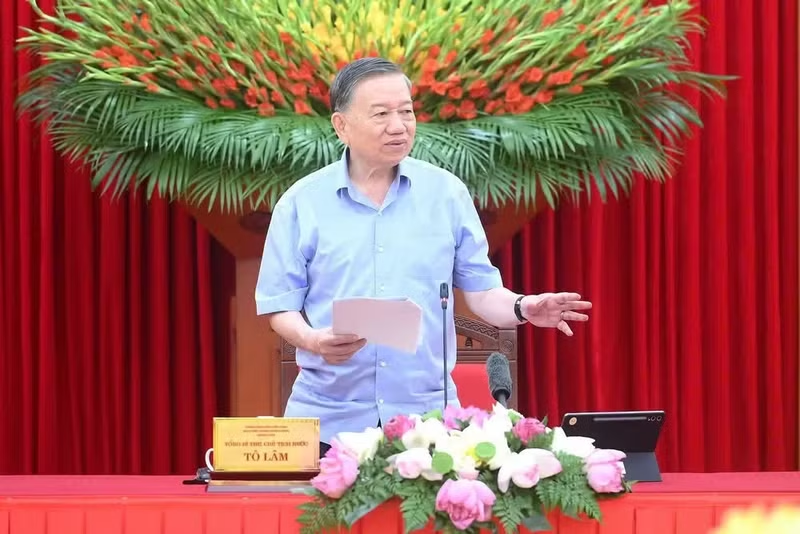
Chairing a working session with the education sector in Ha Noi on June 15 to review preparations for the 2026–2027 academic year and progress in implementing the Politburo's Resolution No. 71-NQ/TW on breakthroughs in education and training, the Party and State leader acknowledged positive progress in both of the tasks.
However, he noted that improvements have so far been concentrated in policy awareness and preparation, while tangible changes in schools, teachers’ livelihoods and students’ learning experiences remain insufficient.
Teacher shortages continue to be a major challenge, while facilities and teaching equipment remain inadequate. Education-related expenses, including tutoring, examinations and admissions, continue to place pressure on families. Vocational and higher education have yet to achieve significant breakthroughs, while education governance remains overly administrative and digital transformation uneven, he noted.
To prepare for the 2026–2027 academic year, General Secretary and President Lam stressed the need for sufficient schools, classrooms and teachers, stressing the principle that “where there are students, there must be teachers.”
He urged authorities to pilot new governance models for public and private schools, consider multi-campus school structures where appropriate, and ensure that no child is denied access to education because of financial hardship. He also called for accelerated construction of boarding schools in border communes to support both education and social welfare objectives.
Local authorities were instructed to integrate school development into urban planning and new residential projects, while addressing land and investment bottlenecks affecting school construction in rapidly growing urban areas, industrial zones and disadvantaged localities.
The leader pointed to the need for special mechanisms to attract leading experts and scientists to teaching and research, as well as policies encouraging outstanding graduates and high-performing teachers from cities to work in rural and disadvantaged regions.
Addressing social issues in education, General Secretary and State President Lam stressed the need to tackle school violence and strengthen moral and lifestyle education, describing these as key priorities for the coming academic year. Educational institutions, he said, must foster healthy, disciplined and humane learning environments while tightening control over education-related costs and curbing excessive tutoring and achievement-driven practices.
He urged the Government to quickly introduce policies allowing redundant public office buildings and surplus state facilities to be converted into schools, healthcare centres and other public-service facilities, preventing waste while meeting social needs.
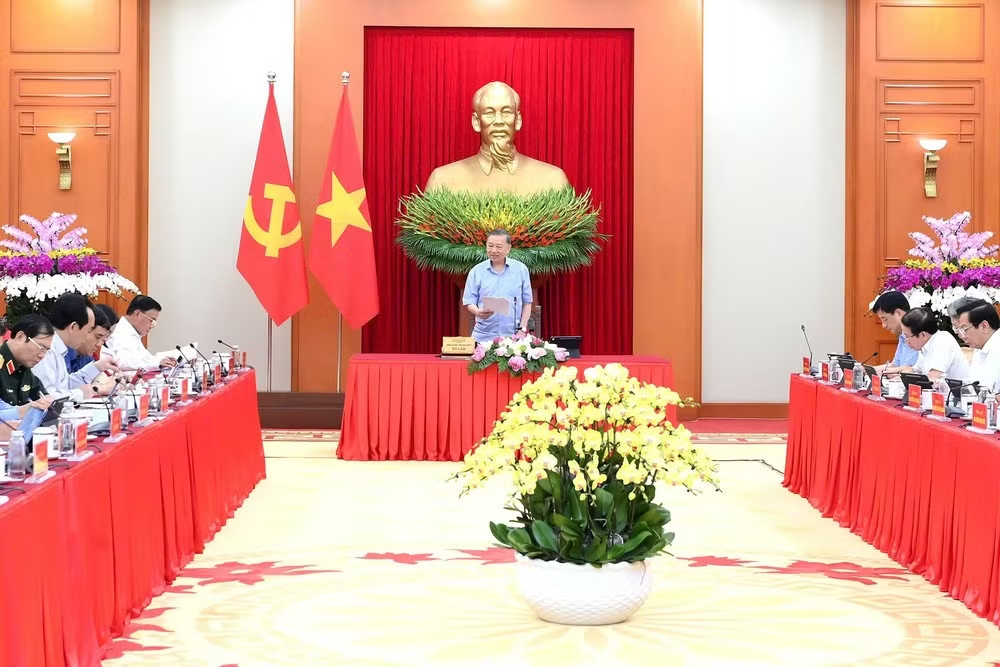
Outlining the future direction for education and training development, the top leader stressed that educational reform must be aligned with the overarching goal of fostering rapid, sustainable, self-reliant and resilient development in the new era.
Education management should shift decisively from an administrative approach to a development-oriented governance model, he noted, saying that the sector must take the lead in preparing high-quality human resources, skilled workers, science and technology personnel, innovators, and experts in digital transformation, artificial intelligence and other strategic fields.
Education and training must also anticipate emerging professions and those likely to disappear due to the boom of science and technology, he added.
The Ministry of Education and Training should maintain its central role in setting professional standards, ensuring quality, developing teaching personnel and guiding the overall system. At the same time, greater autonomy should be granted to schools, principals and teachers, coupled with stronger accountability, he said.
According to him, outdated regulations and administrative procedures should be reviewed for cutting and procedures should be streamlined to allow teachers to focus more on teaching and student development. A unified and regularly updated education database should be established to help identify shortages of teachers and classrooms, overcrowded schools, students at risk of dropping out and irrational educational spending. Digital transformation in education must deliver tangible benefits by improving teaching, learning and management, with special attention paid to disadvantaged and vulnerable groups.
The Party General Secretary and State President also called for substantial improvements in vocational education and student career orientation, alongside reforms in higher education aimed at building elite universities and centres of excellence.
He said that universities must lead in training high-quality human resources, conducting scientific research, driving innovation and developing strategic technologies. University autonomy should encompass not only financial independence and tuition-setting authority but also academic, organisational, personnel, research and international cooperation autonomy, while ensuring accountability, quality accreditation, transparency and equal access to education.
Selective investment should be directed toward a number of universities, research institutes, centres of excellence and key laboratories based on performance and effectiveness. The Government should encourage task-based funding linked to national priorities, measurable outputs and efficient resource use. Universities must strengthen links with businesses, research institutions and local development needs. Adequate investment should also be made in basic sciences, social sciences and humanities to ensure that technological advancement goes hand in hand with human development, cultural values and institutional progress.
He tasked the Ministry of Education and Training with developing a set of indicators to monitor educational equity across regions, population groups and disadvantaged communities. He said policies should follow the principle that areas facing greater difficulties receive greater support, while teachers working in challenging locations receive better incentives.
Priority should be given to preschool education, Vietnamese-language preparation before the first grade, boarding facilities, school meals, teacher housing and safe school access in ethnic minority, mountainous, border and island areas. In these regions, he said, schools should serve not only as educational institutions but also as community centres that help preserve cultural identity, strengthen public trust and safeguard the national sovereignty. For children with disabilities and those in special circumstances, inclusive education must be implemented effectively through teachers’ support, assistive equipment, appropriate curricula and stronger links between education, healthcare and social services.
The Party and State leader also called for improvements to education financing mechanisms and more focused investment, saying that education spending should be viewed as an investment in development. Increased funding must be accompanied by proper allocation, transparency and measurable outcomes. Resources should prioritise urgent needs such as recruiting more teachers, expanding school infrastructure, developing preschool and boarding education, improving digital infrastructure, strengthening vocational training and key universities, and supporting disadvantaged learners.
Implementation of Resolution 71 must be carried out with strict discipline, regular inspections and continuous monitoring. The Ministry of Education and Training should establish a transparent system for tracking implementation through specific and regularly updated indicators. Each objective must be translated into concrete tasks, resources, timelines and responsible agencies.
Successful models should be recognised and replicated, while delays should be addressed through supervision and corrective measures. Cases of formalism, wastefulness or misconduct must be dealt with strictly, and relevant agencies should be assigned clear responsibilities in advancing education and training, he said.
The top leader instructed the Ministry of Education and Training to fully incorporate opinions raised at the meeting, finalise its report, promptly translate recommendations into action plans, submit issues beyond its authority to higher-level bodies, and ensure determined, substantive and effective implementation to achieve noticeable improvements right from the 2026–2027 academic year.