This is helping localities gradually narrow development gaps and laying the foundation for rapid and sustainable development in border areas.
Coordinated development of digital infrastructure
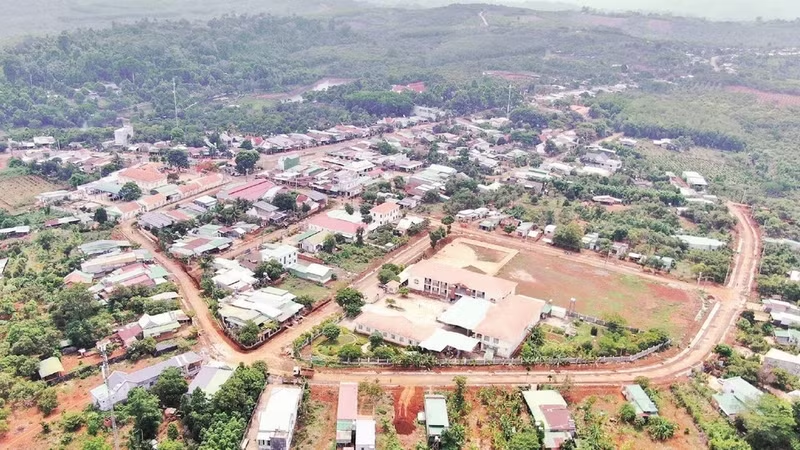
Dong Nai City has nearly 259km of border with Cambodia, with eight communes and more than 145,000 people living along the border. The local economy relies mainly on agriculture and forestry, while the area is vast and its population dispersed.
Therefore, the development of digital infrastructure has been identified as one of the key solutions to create momentum for socio-economic development while serving national defence and security.
To date, Dong Nai has 6,587 mobile base stations, including more than 50 stations built along the border, ensuring coverage for more than 96% of border guard stations and around 90% of populated areas.
According to Nguyen Tan Vien, Director of the Loc Ninh Regional VNPT Centre, the unit manages more than 130 mobile base stations in border areas, including 13 stations along the border patrol road.
The border province of Tay Ninh is also stepping up the development of digital infrastructure and human resources.
The locality has invested in 5G coverage in 19 border communes while developing digital government, the digital economy, and digital society, with a view to establishing digital customs and smart border areas.
The target is for at least 50% of border-gate border guard stations to complete digital transformation by 2030, gradually forming a smart and modern border.
At the public service reception desk of the Tan Hong Commune Public Administration Service Centre in the border area of Dong Thap Province, Nguyen Tan Thanh, an official in charge of socio-cultural affairs, said he regularly assists elderly people with operations on the system before guiding them to check and sign their documents.
Nguyen Thi Ngan Ha, from Phuoc Hung Hamlet in Phuoc Chi Commune, Tay Ninh Province, expressed her delight: Many administrative procedures are now handled under the "four on-the-spot" model, including receiving, appraising, approving, and returning results at the public administration service centre. This makes procedures more accessible and convenient, giving people more time for production and caring for their families.
Developing digital human resources
Digital infrastructure can only deliver its full potential when officials and people have the ability to use technology. This is also one of the major bottlenecks in digital transformation in border areas, where people’s levels of technological proficiency remain uneven, particularly among middle-aged and elderly people.
Accordingly, border localities have identified the building of "digital citizens" as a priority before developing "digital government" and "digital society".
The approach is being implemented on a rolling basis, with at least one person in each family who can access technology selected for training and then supported in helping other family members.
At the same time, the roles of officials, Party members, Youth Union members, and members of mass organisations are being promoted through models such as women’s digital transformation groups, farmers’ digital transformation groups, veterans’ branches and youth forces.
Specifically, in Tan Hong, the commune Women’s Union has organised digital skills training, established women’s groups linked with self-governance groups, and connected households via Zalo to disseminate official information. It has also worked with border guards and Public Security forces to conduct direct communications campaigns in residential areas.
Nguyen Thi Ngoc Tuyen, Chairwoman of the Tan Hong Commune Women’s Union, said: "The goal is to help women improve their technology skills, recognise online scams, and proactively access official information. In this way, digital transformation is not limited to the use of public services but also helps protect people in the digital environment."
Bu Gia Map is an extremely disadvantaged border commune in Dong Nai, with ethnic minority people accounting for 75% of its population.
Thanks to the determined and sustained involvement of the political system and community digital technology teams, local people’s habits in handling administrative procedures have gradually changed.
Dieu Khen, from Bu Nga Hamlet in Bu Gia Map Commune, said: "While many people were initially hesitant to use smartphones, they can now complete online administrative procedures themselves or with assistance, reducing the time and travel costs involved."
New momentum in border areas
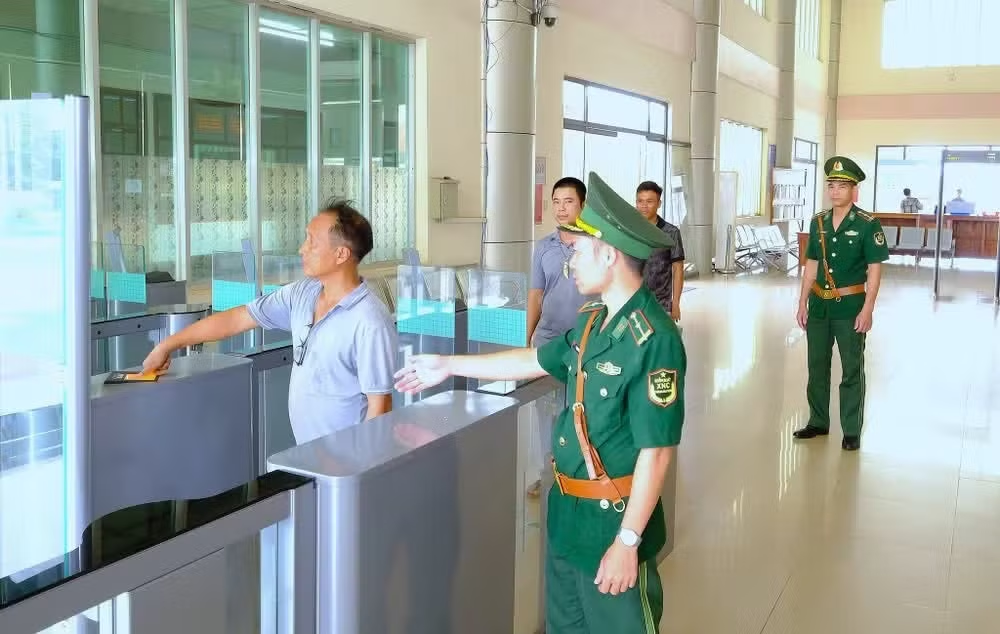
At the Moc Bai International Border Gate in Tay Ninh, Hoa Lu in Dong Nai, and Thuong Phuoc in Dong Thap, where large volumes of vehicles and goods pass through the border, more than 99% of customs declarations are processed electronically.
Businesses can make declarations, submit documents, and complete procedures remotely via online systems and digital signatures.
According to Nguyen Van Khanh, Deputy Head of Customs Sub-Department No. XVII, the development of digital and smart customs is an inevitable requirement in the modernisation of the customs sector.
In the coming time, the unit will continue connecting databases, researching the application of artificial intelligence in risk management, and completing a chain-based management model, both facilitating trade and improving the effectiveness of preventing and combating smuggling, trade fraud, and the illegal transportation of goods across the border.
The digital environment is also making a significant contribution to developing livelihoods in border areas, increasing household incomes, and contributing to local socio-economic development.
One example is Duong Thi Hong Chuyen, a resident of Tan Ho Co Commune in Dong Thap, who has built a relatively prosperous business producing dried fish, snakehead fish sausages, and crab sausages. She said provincial Women’s Union training and entrepreneurship programmes had helped her develop business ideas, analyse the market, design packaging and labels, and apply equipment and technology to production.
As a result, she has developed a range of products certified under the OCOP programme at the three-star level, which are sold in many provinces and cities nationwide. With an average output of one tonne per month and revenue of around 120 million VND, the business provides jobs for about 10 local workers, with an average income of 250,000 VND per person per day.
The Training Company of the Mobile Training Battalion under the Dong Thap Border Guard Command launched the "Digital Specialities of the Border Region" model in April 2026.
The model focuses on guiding local people in using smartphones to take photographs and record videos, create promotional content, set up and manage shops on e-commerce platforms, livestream sales, and provide customer care.
Captain Ha Van Thuong, the model’s creator, said: "The guidance follows a hands-on approach, combining theory with practice so that people can immediately apply what they learn to production and business. This not only expands market access for their products but also helps improve digital skills, create livelihoods, and promote economic development in border areas."
Digital transformation is opening up new development opportunities for localities. As technology gradually becomes part of everyday life, development gaps are narrowing, trade is expanding, and national defence and security are being strengthened, contributing to the building of modern, safe, and sustainably developing border areas.