Today, Ho Chi Minh City's education and training sector stands as one of the country's leading education systems. Building on these achievements, the city aims to attain an advanced educational standard comparable to leading Asian countries by 2030 and to reach world-class standards by 2045.
Prioritising investment in education
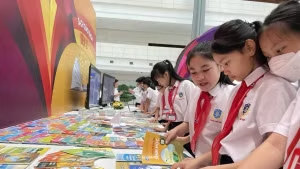
Recently, Tran Dai Nghia Primary School in Binh Hung Hoa Ward, Ho Chi Minh City, was opened in preparation for the 2026–2027 academic year. The school comprises a ground floor and three upper storeys and is fully equipped with modern teaching facilities. Each class is expected to accommodate 35 pupils and is fitted with advanced educational equipment, including a 65-inch interactive display that enables teachers to integrate digital technologies and artificial intelligence (AI) into classroom teaching.
Le Thi Ngoc Ngan, a resident of Binh Hung Hoa Ward, expressed her delight at having a new, spacious, and modern school in her neighbourhood. She said her child would begin studying there in the 2026–2027 academic year.
"I am truly delighted a large school opened close to my home. I hope my child will study and develop in a modern, advanced learning environment, where teachers can provide new knowledge and valuable lessons that will prepare the city's younger generation for international integration," she said.
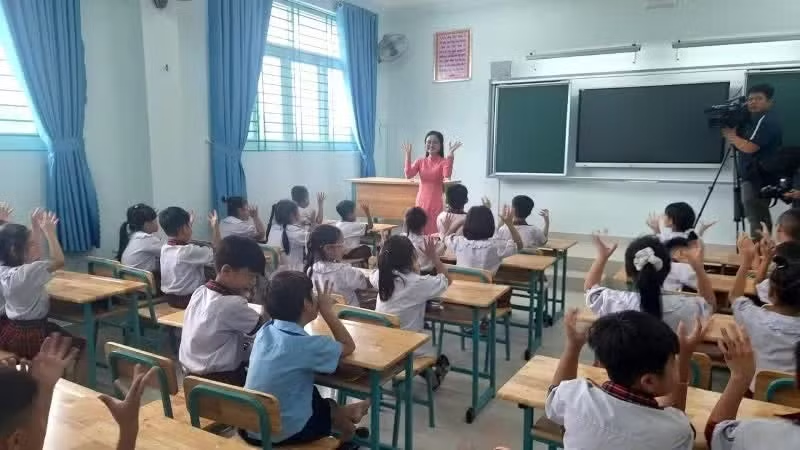
Over the past 50 years, Ho Chi Minh City has consistently regarded education as a top priority. Special mechanisms and policies for the education sector have been implemented consistently, driving fundamental and comprehensive reforms targeting modernisation and international integration.
From only a few hundred schools in its early years, the city now has the largest education system in the country, with around 3,500 educational institutions serving nearly 2.6 million students.
Ho Chi Minh City is also accelerating new school construction to achieve a target of at least 300 classrooms per 10,000 residents of school age (3–18 years) by 2030. This will provide a solid foundation for the city's strategy of building a modern, advanced education system on par with leading regional standards.

Vo Thai Trung, a resident of Tan Phu Ward, said the city has consistently sought to provide children with the best possible learning environment.
"In recent years, many new schools have been built with modern facilities, while teaching equipment has been comprehensively upgraded to meet the increasingly high educational needs of the city's students," he said.
Five decades of pioneering innovation
In pursuit of deeper international integration in education, Ho Chi Minh City's education sector has consistently introduced advanced educational models to meet the demands of developing a high-quality workforce for the new era. Among the initiatives pioneered by the city are digital schools, smart schools, internationally integrated advanced schools, and happy schools.
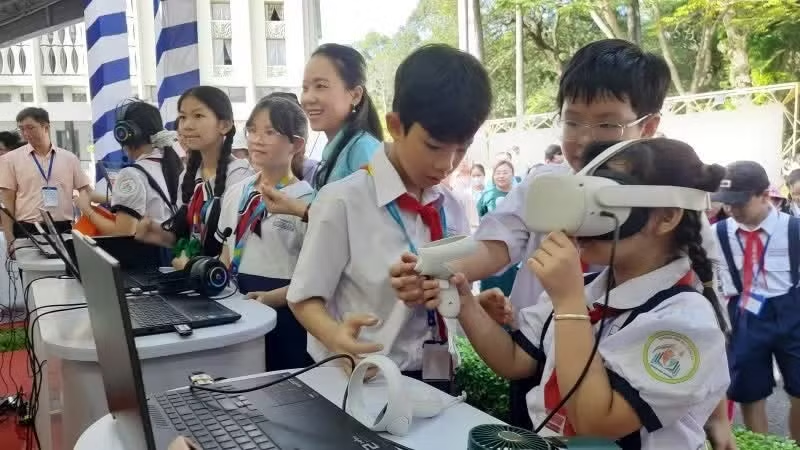
The city has also led the country in introducing internationally benchmarked student assessment programmes and incorporating internationally recognised English-language and information technology qualifications into schools. It has also integrated artificial intelligence into educational management and teaching activities, launched AI Education accounts for students and embedded advanced AI tools into the learning process.
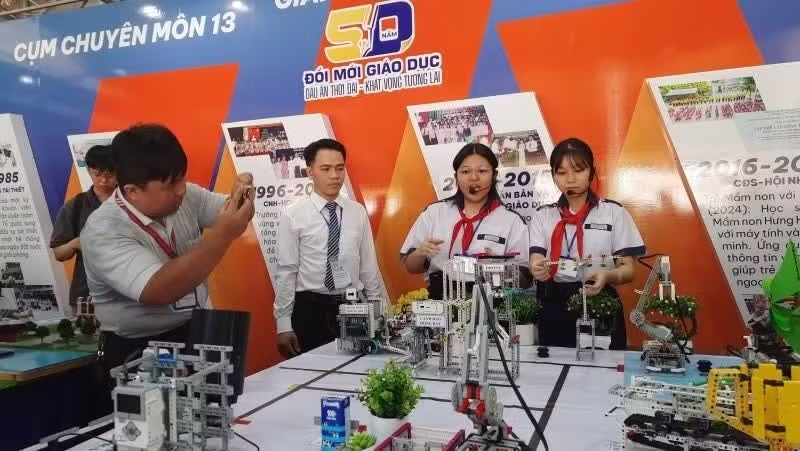
To further improve the quality of education and training, Ho Chi Minh City has consistently focused on modernising teaching methods, applying information technology, expanding STEM education, strengthening life-skills education, and enhancing career guidance programmes, thereby supporting the holistic development of students' competencies and personal qualities.
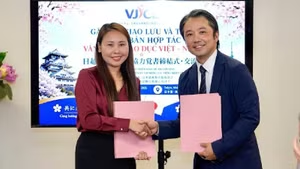
The city's education sector has also expanded joint training programmes and partnerships with international educational organisations to enhance educational quality and promote global integration.
In addition, the Ho Chi Minh City Party Committee, People's Council, and People's Committee have issued directives, resolutions, and action plans to enable the education sector to implement its tasks more flexibly and efficiently. These measures have accelerated fundamental and comprehensive educational reform, mobilised resources across society, and ensured opportunities for lifelong learning for all residents of Ho Chi Minh City.
According to Permanent Deputy Minister of Education and Training Pham Ngoc Thuong, Ho Chi Minh City's education sector has achieved outstanding results in digital transformation by proactively implementing numerous large-scale, in-depth professional initiatives.
He particularly commended the city's teachers for demonstrating responsibility, creativity, and dedication under all circumstances — from the difficult early years to the current period of international integration. This quiet but unwavering commitment, he said, provides the firm foundation for the continued development of education in Ho Chi Minh City.