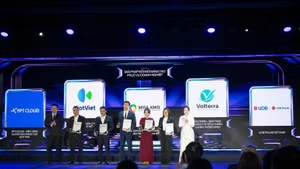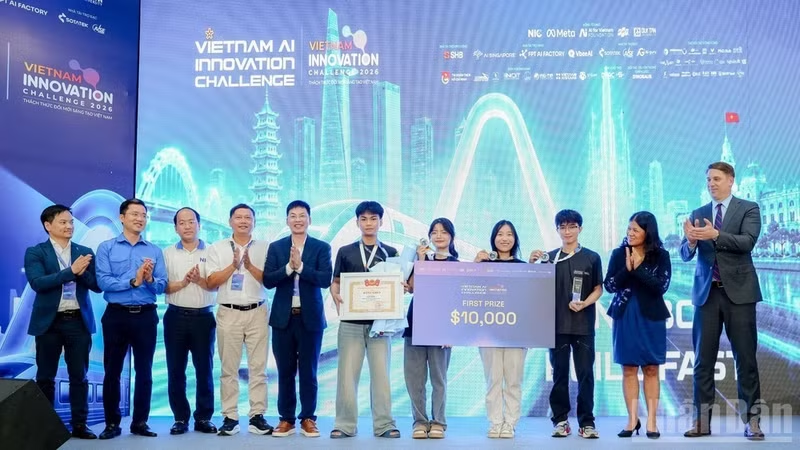
Team L GPT 6.7 emerged as champion with their project “Lawgic — Legal Analysis with Graph Integrated Cognition”, receiving a prize of 10,000 USD. The project was praised for its outstanding technological solution, originality, and practical applicability.
The second prize of 5,000 USD went to team Genation for “Tangent — AI That Turns Questions into Visual Lectures”. Meanwhile, Team SenAI secured third place with “SenAI – Real Time English‑Vietnamese Bilingual Translation”, earning 1,000 USD.
Beyond the main prizes, organisers presented seven additional awards and support packages to help teams refine their products, access technology infrastructure, expand research collaboration, and connect with the domestic and international AI ecosystem.
Members of the three top teams also received certificates of merit from the Ho Chi Minh Communist Youth Union Central Committee, along with scholarships for the “AI Engineering Foundation” course sponsored by AI Guru.
Held from July 17 to 19, VAIC 2026 was co‑organised by the National Innovation Centre (NIC), Meta Group, AI for Viet Nam, FPT Corporation, and Duy Tan University, with backing from international organisations, businesses, and major technology corporations.
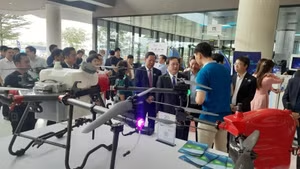
This year’s event became a large‑scale arena for the AI community, attracting nearly 1,500 contestants from 340 teams nationwide. Over the intensive 48‑hour hackathon, teams developed solutions, built product prototypes, and finalised presentations under the guidance of leading mentors and experts from Viet Nam and abroad.
The products showcased a clear shift from research to application, focusing on solving specific challenges for businesses, localities, and the wider economy, while also demonstrating strong potential for real‑world deployment and market expansion.