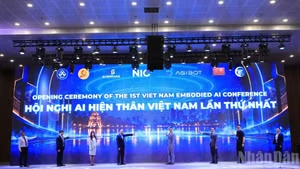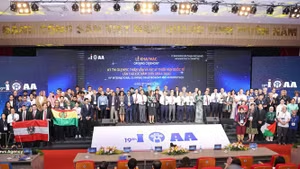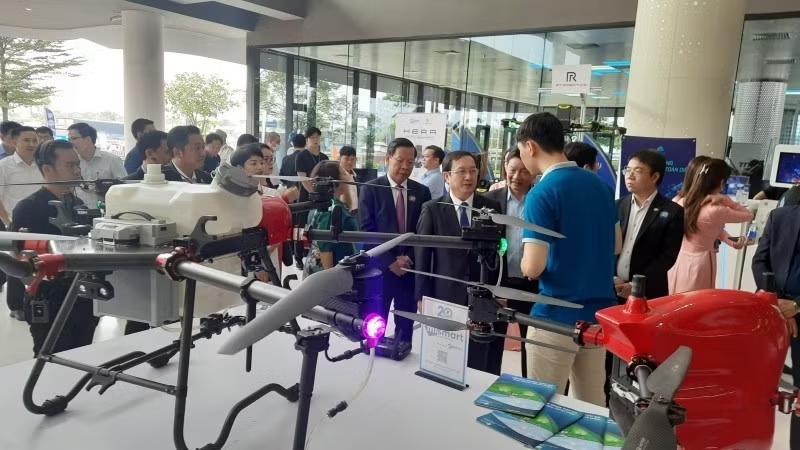
According to the Ho Chi Minh City Department of Science and Technology, this result, alongside achievements made in science, technology, innovation, and digital transformation, shows that the city is gradually leveraging the role of science and technology as an important driver of development.
Nguyen Huu Yen, Deputy Director of the Ho Chi Minh City Department of Science and Technology, noted that in the new phase, the city has identified science, technology, innovation, and digital transformation as new growth drivers, laying the foundation for higher productivity and competitiveness while promoting rapid, sustainable socio-economic development.
Accordingly, the city is focusing on translating these goals into reality, with science, technology, innovation, and digital transformation playing an increasingly central role in its development model.
According to experts, although Ho Chi Minh City boasts one of the country’s leading innovative startup ecosystems, it still faces many challenges. In particular, the survival rate of startups remains low. Across the country, only about 10% of startups survive after five years, while just 3% are considered truly successful.
In addition, bottlenecks pesist ranging from access to capital and human resources to institutions, administrative procedures, and infrastructure. Access to capital remains the biggest barrier for startups, particularly small and medium-sized enterprises. Digital transformation, innovation, and technological development all require long-term investment, but access to credit remains difficult.
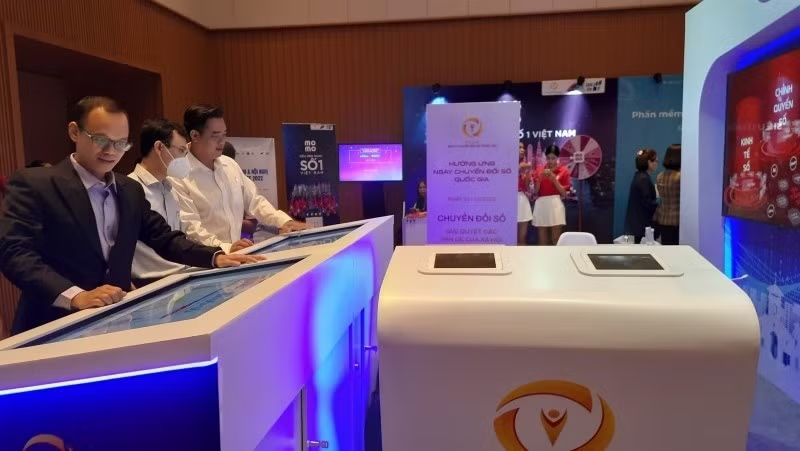
Therefore, Ho Chi Minh City needs to introduce clear tax incentives for startups and reduce administrative barriers to facilitate market access. Investment in startup-support infrastructure, such as co-working spaces, public-private investment funds, and digital technology platforms, must also be holistically coordinated. At the same time, strengthening links between businesses, universities, and research institutes is vital.
In response to these challenges, Ho Chi Minh City has introduced a range of measures. Notably, the city issued a plan to implement Action Programme No. 63-CTrHD/TU dated February 27, 2025, of the Ho Chi Minh City Party Committee on implementing Politburo Resolution No. 57-NQ/TW dated December 22, 2024, on breakthroughs in the development of national science, technology, innovation, and digital transformation.
Ho Chi Minh City aims to raise expenditure on research and development (R&D) to 2% of GRDP by 2030, while allocating at least 3% of its total annual budget expenditure to the development of science, technology, innovation, and digital transformation, with these figures scaling up in line with development needs.
The city has also set the goal of ensuring that by 2030, science, technology, innovation, and digital transformation are robustly established, contributing to the city’s development and helping propel its per capita income into the highest bracket nationwide. The city strives to become one of the country’s digital technology industrial centres, rank among the top three provinces and cities nationwide in innovation and digital transformation, and host the highest proportion of digital technology enterprises in the country.
By 2030, Ho Chi Minh City also aims to become a national leader in science, technology, and innovation capabilities. Specifically, it aims to establish 5,000 innovative startups and at least five research, application, and innovation centres approaching international standards (CoEs) in key fields.
At the same time, the city will promote and support the establishment of 5–10 major technology enterprises; increase the workforce engaged in scientific research, technological development, and innovation to 12 per 10,000 people; raise the number of international scientific publications by an average of 10% annually; increase the number of patent applications and granted patent protection titles by an average of 16–18% annually; and achieve a rate of 8–10% in the commercial exploitation and commercialisation of results from scientific research, technological development, and innovation.
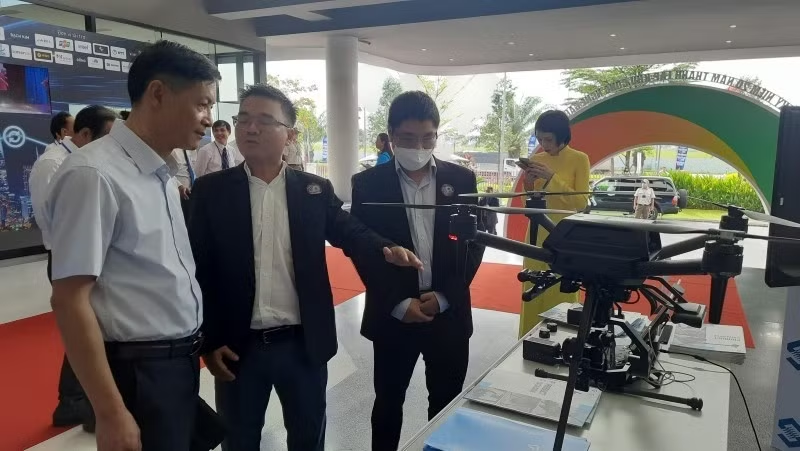
Ho Chi Minh City ranks among the country’s top five provinces and cities in terms of competitiveness and digital government development. The proportion of people and businesses using online public services exceeds 80%, while the proportion of businesses engaged in innovation exceeds 40%.
Ho Chi Minh City is also focusing on investing in advanced and modern digital infrastructure, gradually mastering a number of strategic and digital technologies such as artificial intelligence, the Internet of Things (IoT), big data, cloud computing, blockchain, semiconductor chips, 5G and 6G mobile communications, satellite communications, and a number of emerging technologies.
At the same time, the city is maintaining its leading position in computing infrastructure, telecommunications, and data-centre infrastructure, while focusing on developing itself into a smart city.
Tran Ninh Dong, Acting Head of the Division of Intellectual Property Management and Innovation under the Ho Chi Minh City Department of Science and Technology, noted that Ho Chi Minh City currently ranks third in Southeast Asia in terms of startup ecosystem value, with an economic impact of up to 5.22 billion USD, behind Singapore and Jakarta (Indonesia).
In terms of policy, the city is implementing the Intellectual Property Development Programme for 2025–2030; developing a framework to pilot mechanisms and policies to promote the development of the Startup and Innovation Hub of Ho Chi Minh City – SIHUB; and preparing an initiative to establish a venture capital fund for innovative startups, technology incubation, and digital transformation.
Regarding human resource development, the city is piloting an entrepreneurial university model for 2025–2028; developing and enhancing the capacity of stakeholders within the innovative startup ecosystem; and strengthening STEM education and career guidance.