Resolution No. 57-NQ/TW, issued by the Politburo on December 22, 2024, sets the goal for Viet Nam to gradually master several strategic technologies, including quantum technology, by 2030. It also calls for stronger research cooperation with countries possessing advanced scientific and technological capabilities in this field.
The resolution identifies human resources as a central priority, calling for special mechanisms and policies to attract and nurture talent, encourage outstanding students to pursue mathematics, physics, engineering and key technologies, and build, connect and develop networks of domestic and international experts and scientists.
Resolution No. 71-NQ/TW, issued on August 22, 2025, on breakthroughs in education and training, builds on this direction by focusing on talent development. It identifies higher education as the cornerstone of developing highly qualified human resources and nurturing talent. By 2030, the resolution aims to have at least 6,000 doctoral researchers and 20,000 students enrolled in talent development programmes, prioritising strategic technology disciplines and expanding partnerships with reputable foreign universities and businesses.
The common direction of these two resolutions demonstrates that mastering quantum technology is, above all, a challenge of human capital. Addressing this challenge requires answers to two fundamental questions: What conditions are needed to develop a quantum technology workforce, and how can those conditions be created?
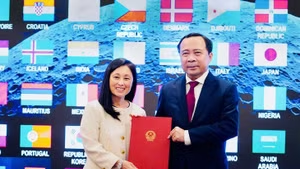
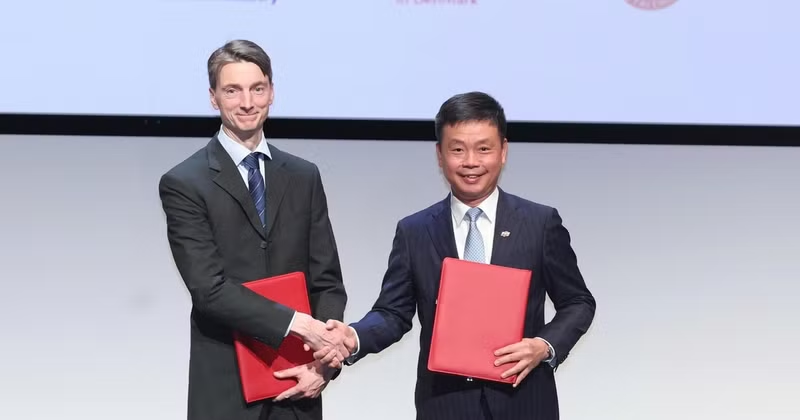
In the presence of Party General Secretary and State President To Lam and King Frederik X of Denmark, FPT Corporation, a Vietnamese technology company operating in 31 countries and territories, and the Niels Bohr Institute at the University of Copenhagen, one of the world's leading centres for quantum technology research and development, exchanged a memorandum of understanding on cooperation in quantum information science and technology.
Three essential conditions for developing quantum talent
Unlike many other technology disciplines, quantum technology requires a workforce that cannot be trained quickly. Developing such talent depends on three essential conditions.
The first is a strong foundation in mathematics, physics and computer science. Quantum computers process information according to the principles of quantum mechanics. Professionals working in this field need a solid understanding of linear algebra, probability and quantum physics, alongside programming and algorithm design skills and specialised knowledge of optics, materials science or electronics.
The second condition is an advanced research environment. Theoretical knowledge can only be translated into practical capabilities when tested on real systems and applied to real-world problems. Quantum infrastructure is expensive and technically complex, and is currently concentrated in a limited number of countries, research institutes and companies. Researchers need access to quantum hardware, either directly or through cloud platforms, as well as laboratories and sufficiently strong research teams to develop their expertise.
The third condition is the ability to participate in international scientific networks. Quantum knowledge has accumulated over decades at major scientific centres and continues to advance through cross-border collaboration. For young scientists, opportunities for academic exchanges, joint research and participation in specialist conferences alongside leading research groups are essential to keeping pace with emerging research directions. For Vietnamese experts working overseas, a domestic research environment with strong international connections could also encourage them to return without disrupting their professional development.
Creating opportunities for quantum talent through international cooperation
In the business sector, FPT is addressing the challenge of developing quantum talent by creating these essential conditions. In December 2025, the corporation established the Quantum AI & Cyber Security Institute (QACI), committing 100 million USD in investment. By 2041, the institute aims to train 100 PhD holders and develop and nurture 2,000 technology experts. FPT's recent international partnerships illustrate how the corporation is translating these ambitions into practice.
In a field where knowledge has accumulated over more than a century, the shortest route to acquiring expertise is to establish direct connections with the institutions where that knowledge has been developed. On October 20, 2026, at the Viet Nam–Denmark Business Forum in Copenhagen, FPT and the Niels Bohr Institute at the University of Copenhagen, one of the world's leading centres for quantum technology research and development, exchanged a memorandum of understanding on cooperation in quantum information science and technology. The exchange took place in the presence of Party General Secretary and State President To Lam and King Frederik X of Denmark.
Under the agreement, the two sides will facilitate exchanges of doctoral researchers, scientists, lecturers and experts, while exploring opportunities for joint research in quantum materials, chip components and photonics.
The agreement was concluded during the state visit to Denmark by the Party General Secretary and State President, on the same day that the two countries adopted a joint statement upgrading their relations to a Comprehensive Strategic Partnership.
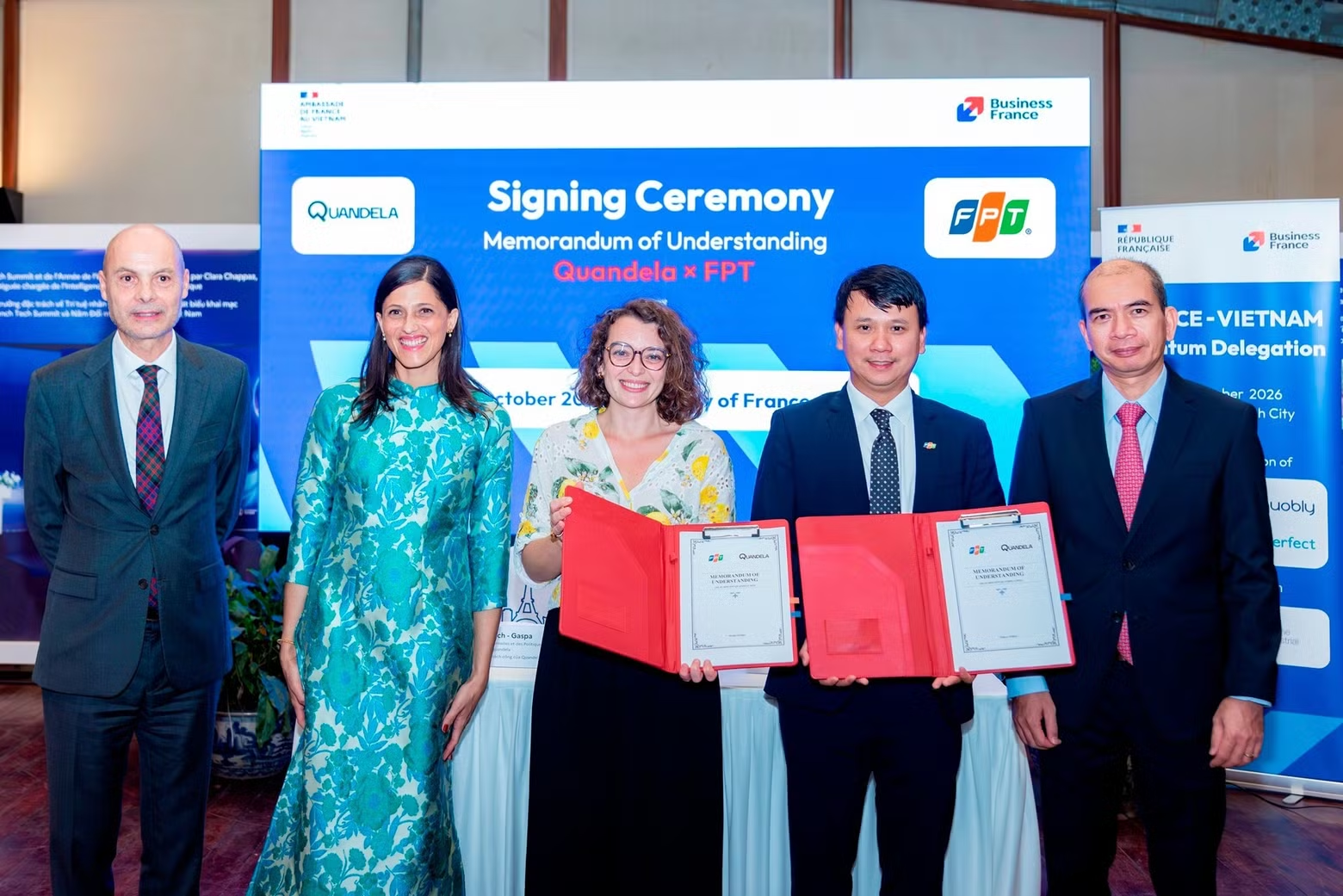
Theoretical knowledge can only become practical capability when tested on hardware. For the first time, FPT has partnered with a company specialising in quantum hardware development through a memorandum of understanding with Quandela, a French company established in 2017. In April 2026, the Lucy computer developed by Quandela was announced by the French Alternative Energies and Atomic Energy Commission (CEA) as the world's most powerful photonic quantum computer. The partnership opens up opportunities for initial experiments, expert exchanges and access to research laboratories, equipment and software for joint activities.
Éléonore Caroit, French Minister Delegate for Francophonie, International Partnerships and French Nationals Abroad, described the agreement as a concrete step towards implementing high-level commitments between Viet Nam and France following the September 2026 visit to France by Party General Secretary and State President To Lam, during which human resource development was emphasised.
Meanwhile, FPT is also holding discussions with Pasqal, a quantum computing company co-founded by Professor Alain Aspect, the 2022 Nobel Prize laureate in Physics. These discussions aim to bring quantum computing capabilities to Vietnamese universities, research institutes and businesses, while developing quantum computing infrastructure located in Viet Nam.
Quantum technology capabilities can only be developed when research, experimental infrastructure, software, algorithms and application development are connected into an integrated system. For a country entering the field later than others, cooperation with leading international institutions and companies offers a way to bridge missing links and narrow the technological gap.