Meeting the specific requirements of pilot testing
Under the 2026 Capital Law, Hoa Lac Hi-Tech Park is a key national centre for research, development, testing and application of high technologies and innovation, as well as a designated area for piloting mechanisms and policies on the management and development of high technologies.
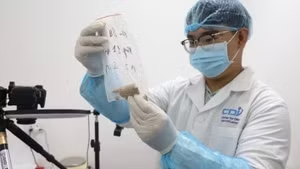
On this basis, and under the controlled testing mechanism stipulated in the 2026 Capital Law and Resolution No. 26/2026/NQHDND of the Ha Noi People's Council, Hoa Lac Hi-Tech Park has been selected as the site for the capital's first two controlled pilot projects: an intelligent autonomous transport system developed by Phenikaa-X Joint Stock Company, and the semi-industrial-scale production of mixed rare earth oxides with a purity of over 95% by Mining Technology and Construction Consultancy Joint Stock Company. Both projects involve the testing of strategic technologies and technology products.
Under the plan, Phenikaa-X's intelligent autonomous transport system project is authorised to undergo a 24-month trial, while the project to produce mixed rare earth oxides with a purity of over 95% is permitted an 18-month trial, starting from September 10, when the two projects were launched.
According to Phenikaa-X executives, traffic conditions in Viet Nam present one of the world's most challenging environments for autonomous vehicles. The high density of motorbikes, mixed and constantly changing traffic flows, and flexible, less predictable road-user behaviour pose greater challenges than those found in cities with strictly segregated traffic lanes.
This presents three simultaneous requirements for the technology: algorithms must be accurate enough to identify objects in densely populated moving scenes; fast enough to complete calculations within milliseconds; and flexible enough to make safe decisions in situations never encountered in training datasets. Reconciling these three requirements calls for in-depth research into core technologies. This is why Vietnamese traffic data has become a valuable asset for engineering teams researching and developing autonomous vehicles.
To gradually verify the system's ability to meet these requirements, the internal road network at Hoa Lac Hi-Tech Park offers favourable conditions for pilot testing. Its wide roads, moderate traffic density and limited conflict points allow trial routes, speed limits, operating hours, passenger numbers and participants to be clearly defined and controlled. The network can also be connected to the Viet Nam National University, Ha Noi campus in Hoa Lac to diversify testing scenarios.
For the rare earth project, Hoa Lac Hi-Tech Park offers synchronised technical infrastructure, including electricity, water supply, centralised wastewater collection and treatment, transport networks and fire prevention and fighting systems. These facilities meet the requirements for setting up a semi-industrial-scale experimental workshop, with production capacity and raw material volumes strictly limited in accordance with the municipal People's Committee's decision.
Le Thanh Son, Deputy Head of the Ha Noi Management Board of Hi-Tech Parks and Industrial Parks, said the board was implementing a plan to complete priority digital infrastructure at Hoa Lac Hi-Tech Park, focusing on passive telecommunications infrastructure, ensuring 5G coverage throughout the park and piloting smart poles integrated with IoT technology along several internal roads. This infrastructure will provide an important foundation for transmitting sensor data, high-precision positioning and real-time monitoring of autonomous vehicles.
During the operational phase, the management board conducts regular and unscheduled monitoring of the autonomous transport trial. It also coordinates with relevant departments and agencies to supervise the rare earth project against a set of technical, environmental and radiation safety indicators in accordance with regulations. At the same time, it receives feedback on difficulties and obstacles and promptly consults relevant authorities to identify appropriate solutions.
Improving infrastructure and testing mechanisms
The controlled trials at Hoa Lac provide a concrete example of the “three-party” cooperation model involving the State, universities and businesses, which the Party and State are promoting in the country's new development phase.
Based on data collected during trials of the intelligent autonomous transport system, Phenikaa-X Joint Stock Company can quantify system performance, identify its limitations and optimise algorithms and control models. This will help improve vehicle stability and safety while identifying the conditions required for wider application.
Phenikaa-X is a start-up originating from Phenikaa University. Under this project, the university provides the academic foundation, research teams and technical workforce, while Phenikaa Group contributes industrial capacity, testing infrastructure and long-term capital to accelerate the technology's commercialisation.
The provision of a controlled testing mechanism, together with joint supervision of operations, demonstrates a shift in Ha Noi's approach from managing emerging technologies to proactively creating an environment in which they can be tested and put into practice. This will give the city further grounds to assess different models, refine its management approaches and gradually expand the scope for applying new technologies.
According to Associate Professor and Doctor Le Anh Son, Director of Phenikaa-X Joint Stock Company and President of Phenikaa University, Resolution No. 57-NQ/TW has opened up room for experimentation, for making mistakes within controlled conditions and for learning. When the State creates such an environment, scientists can truly dare to take on difficult challenges, pursue core technologies rather than stop at integration, and commit to long-term efforts to develop new technologies under Vietnamese brands.
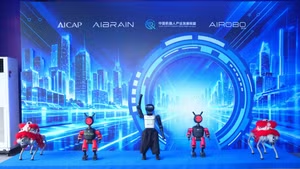
With the first two projects now under way, Hoa Lac Hi-Tech Park is gradually becoming a testing, demonstration and validation ground for the capital's strategic technologies. Le Thanh Son said the management board would prioritise attracting and supporting pilot activities in areas aligned with the park's strengths and strategic technology sectors, including autonomous transport, robotics, artificial intelligence, semiconductors, digital infrastructure, data centres, new materials and rare earths, biotechnology, clean energy, smart manufacturing and smart cities.
To achieve this goal, the management board is focusing on completing shared infrastructure for pilot testing and standardising procedures for receiving and guiding businesses submitting proposals for trials at the park. It will also review the practical experience gained from ongoing projects to advise and propose improvements to the city's mechanisms and the wider adoption of suitable models.