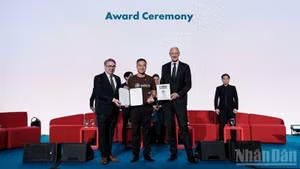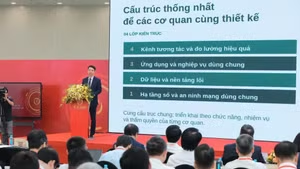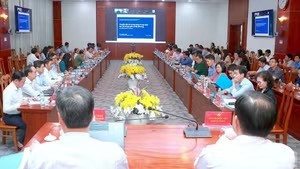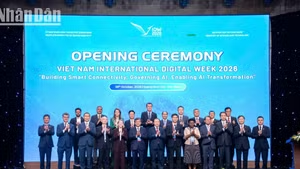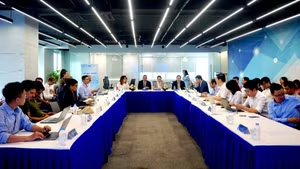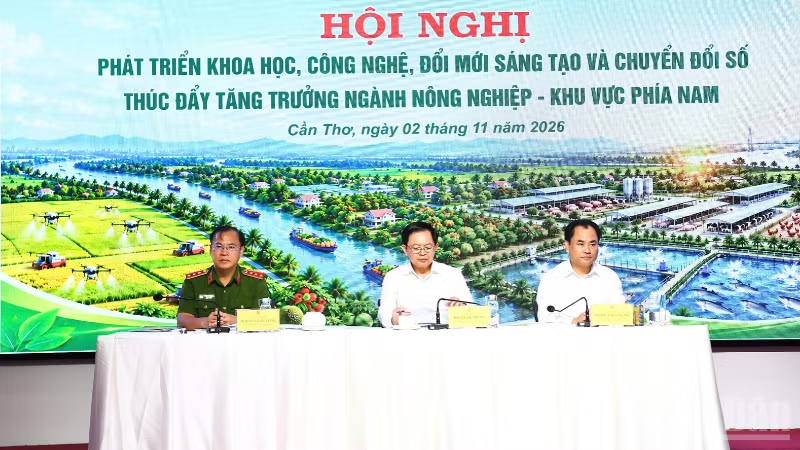
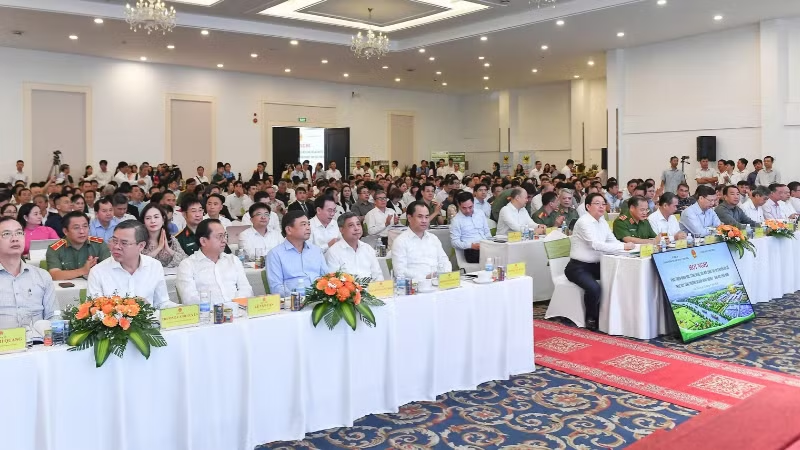
The conference was co-chaired by Deputy Prime Minister Ho Quoc Dung, Minister of Agriculture and Environment Trinh Viet Hung, and Senior Lieutenant General Nguyen Van Long, Deputy Minister of Public Security.
Speaking at the opening ceremony of the conference, Minister Trinh Viet Hung said the agriculture, forestry and fisheries sector grew by 3.78% in 2025, with export turnover reaching 70.63 billion USD. In the first nine months of 2026, the sector expanded by 4.02%, while exports of agricultural, forestry, and fishery products exceeded 63 billion USD in the first 10 months.
Advances in crop and livestock varieties, biotechnology, mechanisation, preservation, processing, and traceability have improved production efficiency. However, the traditional growth model, which relies heavily on expanding production and exploiting natural resources, is showing limitations. High production costs, substantial post-harvest losses, low added value and inadequate deep processing and value-chain integration remain major challenges.
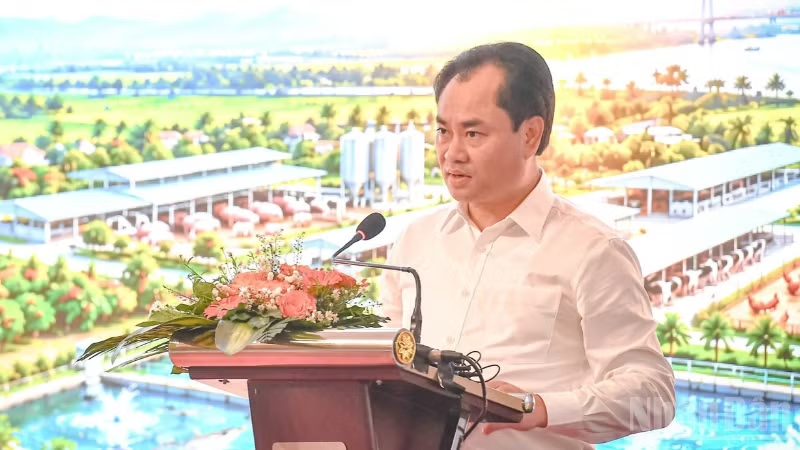
According to him, Southern region plays a particularly important role in agricultural production, processing and exports, benefiting from large-scale raw material areas, key commodity sectors, and research institutes, universities, and businesses with scientific and technological capabilities.
The region’s shrimp and tra fish value chains alone generated approximately 6.84 billion USD in export revenue, accounting for 60.5% of the country’s total seafood exports.
However, many product chains still face limitations in productivity, quality, production links, deep processing, preservation, and traceability. Processed fruit and vegetable products account for only around 22-25% of the sector, indicating considerable potential to increase added value.
The conference identified three key agricultural economic regions of the Central Highlands and South-Central coast, the Southeastern region, and the Mekong Delta.
Development priorities include improving rice quality through high-quality, low-emission production; sustainably developing coffee, pepper, rubber, cashew, and fruit sectors; promoting biosecure and high-tech livestock farming; and developing sustainable aquaculture, particularly shrimp, tra fish and modern marine farming.
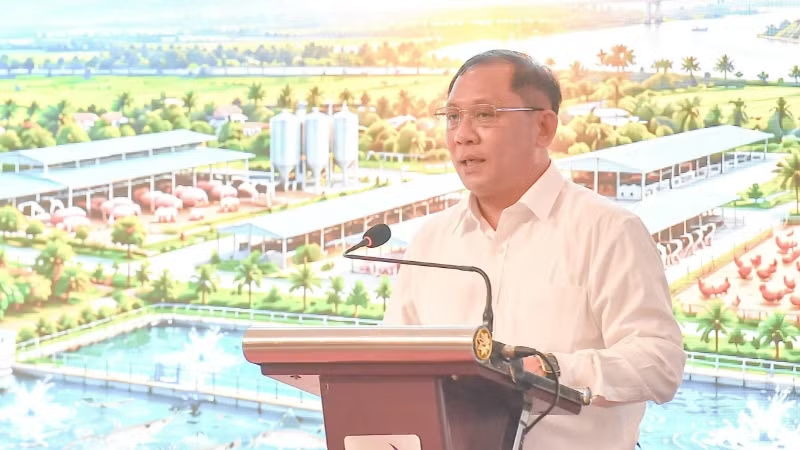
Speaking at the conference, Tran Chi Hung, Vice Chairman of the Can Tho City People's Committee, said that in implementing Resolution No. 57-NQ/TW of the Politburo, the city has identified science, technology, innovation, and digital transformation as key drivers of agricultural restructuring. In the first nine months of 2026, the city’s agriculture, forestry and fisheries sector grew by 4.30% year on year.
The city is strengthening cooperation between research institutes, universities, businesses, and cooperatives to transfer technology into production. Solutions include the platforms of FarMoRe, Rice Crop Manager (RCM), Internet of Things (IoT) sensors for alternate wetting and drying (AWD), electronic farming diaries and digital maps for measuring, reporting and verifying emissions reductions (MRV).
RCM models have helped reduce nitrogen fertiliser use by more than 30%, cut seeding rates to around 60kg per hectare and reduce pesticide spraying by two to three applications. Yields increased by 0.3-0.7 tonnes per hectare, while profits rose by at least 20% compared with traditional farming methods.
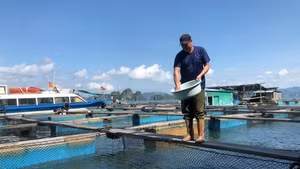
Under the one-million-hectare high-quality, low-emission rice project, Can Tho is promoting mechanisation, biological treatment of rice straw and the use of agricultural by-products to produce mushrooms and organic microbial fertiliser. In aquaculture, recirculating aquaculture systems (RAS), waste treatment, biogas, IoT and artificial intelligence (AI) are being applied to conserve resources, monitor the environment, and improve production efficiency.
The city is also promoting VietGAP standards, product traceability and OCOP products linked to digital commerce. It currently has 551 registered growing-area codes covering a total of 11,281 hectares.
In his address, Deputy Prime Minister Ho Quoc Dung stressed that the Southern region is a strategically important region for the country’s key agricultural commodities, with favourable natural conditions, large-scale production areas, major export sectors and relatively developed processing, trading and logistics businesses.
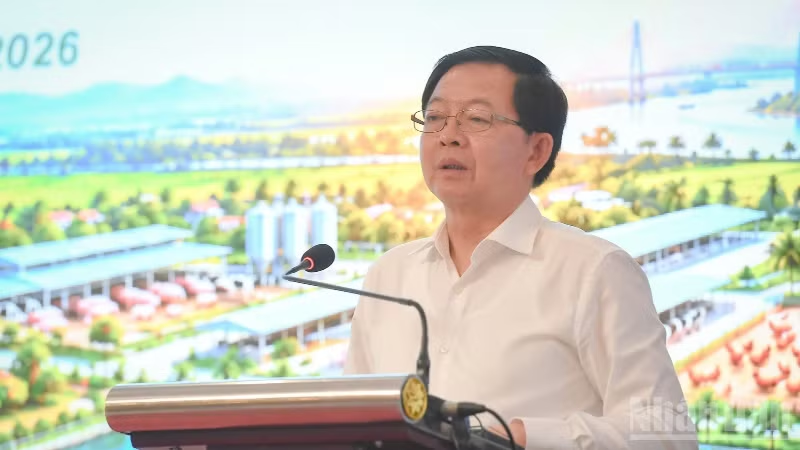
However, the sector faces major bottlenecks. Growth based on expanding production has nearly reached its limits, while land availability is difficult to increase. Production remains fragmented, and links between farmers, cooperatives, businesses, processors, and logistics providers are not sustainable. Productivity, quality, and added value also vary considerably between regions.
Research capacity and technologies for seeds production, agricultural inputs, equipment, preservation, cold storage, and deep processing fail to meet requirements. The utilisation of agricultural by-products to create higher-value products is also limited.
The Deputy Prime Minister called for research, technological application, innovation, and digital transformation to become direct drivers of agricultural growth, alongside stronger efforts to commercialise research results. Their effectiveness should be measured by improvements in productivity and product quality, lower production costs, higher added value, emissions control, and better incomes for farmers.
He urged a new approach to scientific research, starting with growth targets and practical production and business needs. Businesses, cooperatives, and producers should be at the centre of technology application, while scientists and research institutions should serve as the driving force behind knowledge and technological development. Every research task must deliver tangible results, have clearly identified applications, offer potential for wider adoption and make a practical contribution to the agricultural sector.
He assigned the Ministry of Agriculture and Environment to coordinate with other ministries, sectors and localities to review the current state of scientific and technological research, application and digital transformation, and identify urgent tasks with a direct impact on growth and competitiveness.
Priority areas include crop and livestock varieties; fertilisers, animal feed, and plant protection products; machinery and technologies for agricultural, forestry and fishery production; and agricultural product traceability systems.
The Ministry of Science and Technology was also tasked with reviewing research projects, removing obstacles and prioritising those with the potential to develop finished products and reach commercialisation, thereby addressing the waste of resources caused by research lacking clearly identified applications.
The Deputy Prime Minister emphasised that science, technology and digital transformation must be integrated into every stage of the production chain, from breeding and cultivation to harvesting, processing, preservation, and distribution. This will provide the foundation for a modern, sustainable, and more competitive agricultural sector in the Southern region, better equipped to meet domestic and international market demands.