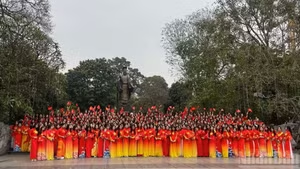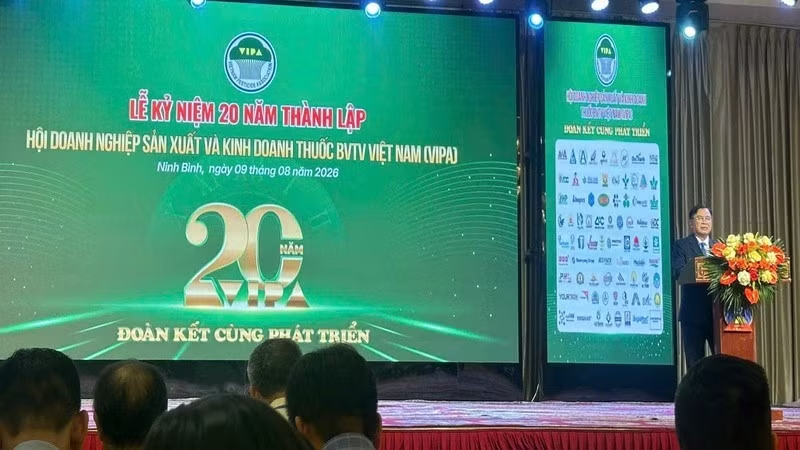
Speaking at the event, VIPA Chairman Nguyen Van Son said that pesticides are a vital input for modern agriculture, helping to control pests and safeguard crop yields and food security. Aligning with the trends of green, circular, and sustainable development, the pesticide industry is undergoing a strong shift toward high-tech, biological, safe, and eco-friendly solutions.
Established in 2006 in response to the industry's practical needs, the VIPA has grown significantly over the past two decades, firmly establishing itself as a bridge between the business community and state management agencies. From a small-scale organisation, the VIPA now brings together 86 members (comprising 76 organisations and 10 individuals). These members not only supply the majority of inputs for agricultural production nationwide but also provide stable employment for approximately 30,000 workers.
A standout achievement for the VIPA over the past 20 years has been its proactive role in policy consultation, critical review, and the completion of the legal framework for plant protection products. The association consistently encourages its members to innovate technology and develop new-generation and biological plant protection products. Consequently, many products from Vietnamese enterprises not only meet domestic demand but have also successfully expanded into international markets.
In addition to production and business activities, the VIPA places special emphasis on training and technical knowledge transfer. In collaboration with localities, the association has organised nearly 50,000 training sessions and established safe production models — such as Integrated Pest Management (IPM), Integrated Plant Health Management (IPHM), VietGAP, and GlobalGAP — while promoting the "four rights" principle — right product, right dosage, right time, and right method.
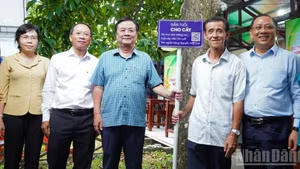
Simultaneously, numerous effective community-oriented programmes have been implemented, including the collection of used pesticide packaging, the publication of the "Plant Protection Products Handbook," and various activities such as disaster relief and the construction of charity housing.
Entering a new phase driven by the demands of digital transformation and integration, Chairman Nguyen Van Son affirmed that the VIPA would continue to participate in building, reviewing, and refining policies and regulations regarding plant protection products to ensure transparency, consistency, and practical applicability. The association aims to promote the research, production, and use of biological plant protection products, as well as the application of high-tech solutions and digital transformation in production and business operations.
At the same time, the association will intensify training and communication efforts regarding the safe, effective, and responsible use of plant protection products, while also developing online training platforms and finalising a comprehensive system of specialised technical documentation.
Furthermore, the association will strengthen international cooperation, facilitate access to advanced technologies, expand market reach, and enhance the competitiveness of Vietnamese enterprises. It remains committed to partnering with the agricultural sector to implement programmes focused on green agriculture, the circular economy, and sustainable development.