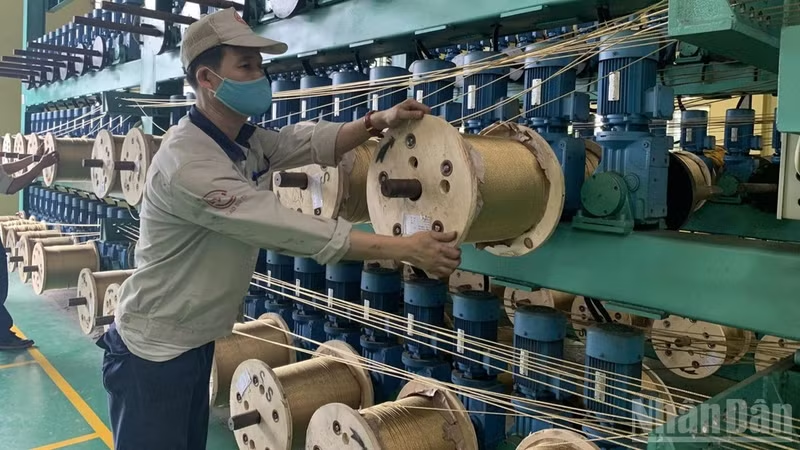
Manufacturing remains one of the main drivers of foreign direct investment (FDI) inflows into Viet Nam.
Industrial real estate: Benefiting from the wave of large-scale manufacturing
Data from the National Statistics Office under the Ministry of Finance show that the sector attracted 18.47 billion USD in registered FDI in the first half of 2026, accounting for more than half of total registered capital. Notably, newly registered FDI in manufacturing reached 10.71 billion USD, despite the number of projects falling from 759 to 468 compared with the same period in 2025.
This development indicates that investment is increasingly concentrated in larger-scale projects with higher technological content and a more significant role in supply chains.
The computers, electronics and optical products sector alone attracted more than 7.03 billion USD in newly registered capital. As manufacturing projects expand in scale and adopt higher standards, demand for industrial premises is increasingly focused on infrastructure quality and the ability to commence operations quickly.
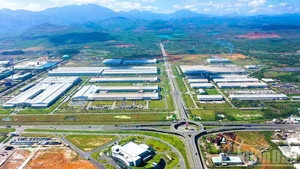
Over the past five years, the supply of ready-built factories and warehouses in southern Viet Nam has expanded rapidly, with approximately 2 million square metres of completed space and an occupancy rate of around 90%. Opportunities therefore come not only from major manufacturers but also from networks of businesses supplying components, products and services throughout the production chain.
“Manufacturing remains a pillar of Viet Nam’s economy, and much of investors’ interest stems from this core strength. As supply chains continue to expand, demand for ready-built factories that allow businesses to commence operations quickly will remain high,” said Neil MacGregor, Managing Director of Savills Viet Nam.
Hotels and resorts: Tapping demand from an increasingly diverse visitor base
The hotel and resort market is benefiting from the recovery in international tourism. In the first half of 2026, Viet Nam welcomed 12.3 million international visitors, up 15% year on year. The outlook is further supported by year-end travel demand and the recovery of the Asia-Pacific market.
Alongside traditional source markets such as China and the Republic of Korea, visitor numbers from Southeast Asia, Japan, Europe and the US are becoming increasingly diverse. This creates further opportunities for properties capable of serving multiple visitor segments rather than relying on a single market.
In Ho Chi Minh City, the target of welcoming 61 million visitors and generating 330 trillion VND (12,74 billion USD) in tourism revenue in 2026 also points to continued growth in demand. Against this backdrop, investment opportunities are increasingly concentrated in branded projects that meet high quality standards, particularly properties capable of serving international visitors and business travellers, as well as hosting meetings, incentives, conferences and exhibitions (MICE). By contrast, older properties and those operated independently will face pressure to renovate, upgrade or reposition themselves to remain competitive.
“Tourism has performed very well in Viet Nam. The key attraction for investors lies in the diversity of visitor markets. Demand from China and the Republic of Korea remains strong, while other markets, including Southeast Asia, Japan, Europe and the US, are also growing. For foreign investors and institutional investors, Ha Noi and Ho Chi Minh City remain focal points, as the supply of high-quality five-star hotels is still limited,” MacGregor said.
Opportunities in the high-quality segment
In the first eight months of 2026, the total office supply in Ho Chi Minh City stood at approximately 2.99 million square metres, including around 553,000 square metres of Grade A space. As of June 2026, occupancy had reached 88%, while average rents stood at 870,000 VND per square metre per month.
Controlled supply has helped the market maintain positive operating performance, while demand remains concentrated in high-quality buildings, particularly green-certified projects and those completed within the past three years.
By 2029, approximately 72% of future office supply is expected to be located outside the central area, mainly in new urban developments. This trend reflects the market’s expansion into areas with larger land reserves and increasingly developed infrastructure.
Meanwhile, leasing activity continues to be driven by the finance, insurance, real estate, information technology, retail and distribution sectors. Alongside the growth of manufacturing and its supporting service ecosystem, demand for high-quality office space is expected to remain stable.