Resolving long-standing issues
In early March 2026, at a meeting with National Assembly deputies to hear voters’ concerns, Phan Thi Vinh Tien, head of Residential Quarter 6 in Cau Ong Lanh Ward, raised the issue of numerous stalled projects in the area with Tran Luu Quang, Secretary of the Ho Chi Minh City Party Committee.
One example was the Ma Lang area, where severe housing overcrowding had remained a difficult problem for years, with some families of nine or ten people living in houses measuring just 10–15 sq m. The city had held several tenders to select an investor for the project but had yet to reach common ground.
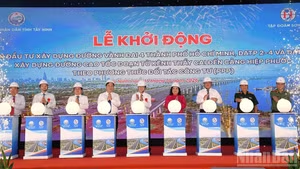
Responding to concerns raised by city leaders and adopting a new approach, the Ma Lang and Ga–Gao Market redevelopment project broke ground in late August 2026, just over five months after the Party Committee Secretary made his commitment. More encouragingly, residents are being provided with resettlement housing that is more spacious and better equipped in the very area where they have lived for many years.
This approach is also reflected in the city’s decision to halt the commercial project at Nha Rong–Khanh Hoi Port and instead create a historical and cultural space, together with green parks, for long-term public use. Previously, Ho Chi Minh City had also moved swiftly and effectively to turn long-abandoned project sites into parks and public recreational spaces for residents.
The decision to change the development direction for sites of exceptional value shows that the city is viewing urban planning not merely in terms of land exploitation, but through a long-term vision for urban quality. A site may generate immediate economic value, but when considered within the broader context of long-term development, its cultural, historical, and environmental significance, as well as its role as public space, must be assessed from a different perspective.
Unlocking infrastructure to support development
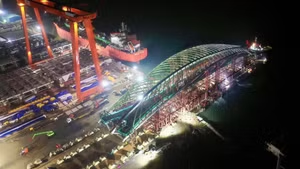
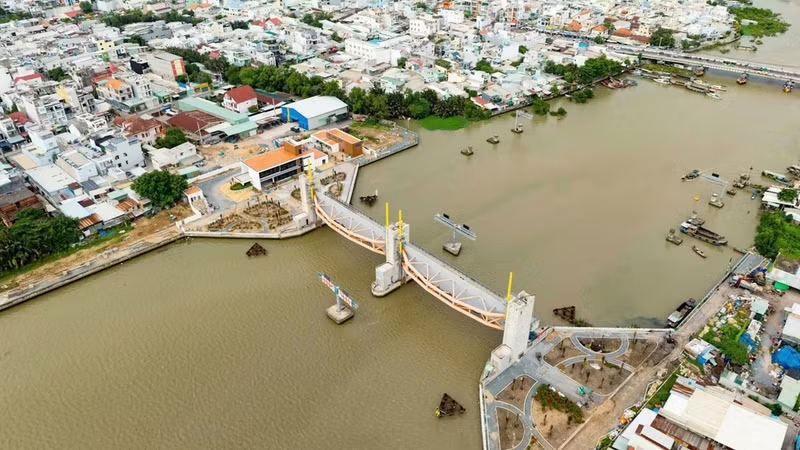
While urban redevelopment tests the city’s ability to resolve long-standing problems, the current wave of infrastructure investment even more clearly demonstrates Ho Chi Minh City’s resolve to act. According to the City People’s Committee, since the beginning of the year, the city has focused on accelerating progress and breaking ground on numerous strategic infrastructure projects with total investment of approximately 30 billion USD, equivalent to more than 782 trillion VND.
These projects span transport, urban development, social housing, the environment, and education, and include major long-term initiatives such as the Rach Chiec National Sports Complex, with investment of 145.63 trillion VND; Metro Line No. 2, on the Ben Thanh–Tham Luong section, with investment of 55.18 trillion VND; and the Ben Nha Rong–Khanh Hoi Cultural Park and public green spaces at Ben Bach Dang, worth more than 29.3 trillion VND.
Beyond the substantial funding involved, accelerating and implementing these projects on a large scale will improve connectivity between areas and gradually establish an integrated infrastructure network in the near future.
Dr Pham Viet Thuan, Director of the Ho Chi Minh City Institute of Natural Resources and Environmental Economics, said the pace of infrastructure investment and project groundbreaking in the city since early 2026 had reached a record high and represented a breakthrough.
The launch of mega-projects demonstrates strong political resolve and shows that the city is making use of special mechanisms to mobilise diverse resources, from the State budget to public-private partnerships (PPPs), and new forms of cooperation.
From another perspective, Ma Xuan Tuan, Director of the Ho Chi Minh City Real Estate Investment Research and Consultancy Centre, said the projects being launched clearly reflected the city leadership’s political determination and a markedly new action-oriented mindset.
The composition of the project portfolio also demonstrates a balance between addressing traffic bottlenecks, developing housing, redeveloping urban areas, and completing technical infrastructure and public services. More broadly, infrastructure investment at this stage is not simply about building more roads, metro lines, or parks; it is a way for the city to expand its development space, create momentum for production and business, improve regional connectivity, and enhance the quality of life.
Public investment results also point to clear progress. To date, the city has allocated 147.6 trillion VND in public investment capital, equivalent to 100% of the plan assigned by the Prime Minister. It aims to fulfil 100% of the plan by the end of the year.
These positive figures show that public investment is acting as seed capital to guide and unlock social resources, helping the city achieve its target of mobilising more than 1 quadrillion VND in total social investment.
This includes a commitment to disbursing approximately 150 trillion VND in public investment capital and mobilising nearly 2 quadrillion VND from the non-State sector, particularly private enterprises.
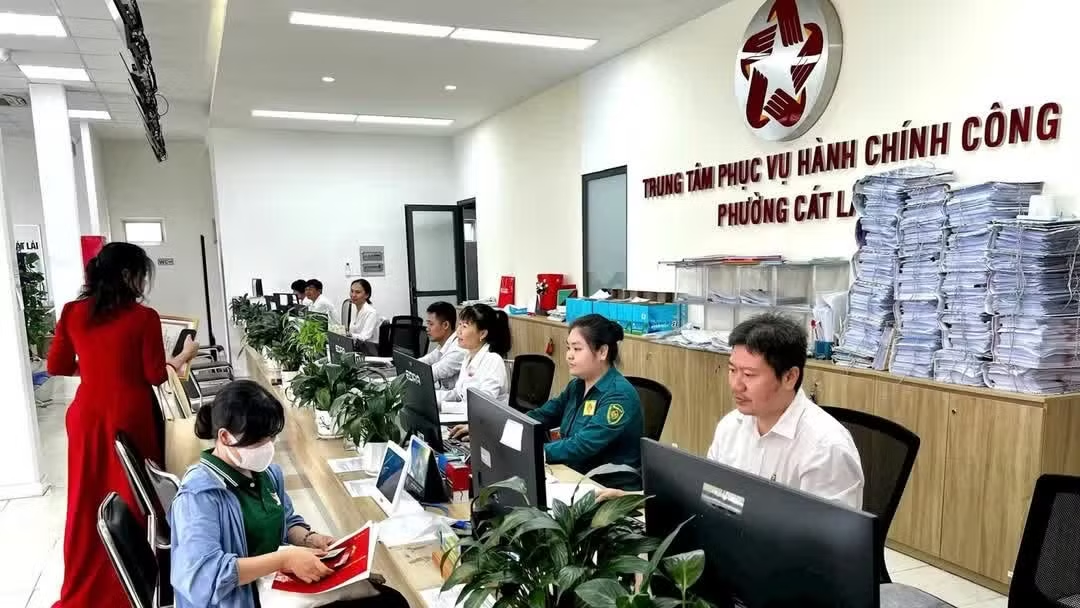
Within this new development space, governance requirements are also undergoing fundamental changes. A megacity cannot operate using outdated methods, nor can it allow administrative bottlenecks to slow down development opportunities. Ho Chi Minh City People’s Committee Chairman Nguyen Van Duoc stressed that the double-digit growth target was ambitious and placed considerable pressure on the city, requiring new methods, fresh thinking, and strong political resolve.
The city has called for policies to be translated into clear action programmes with specific tasks, responsibilities, and timelines. Officials must dare to think, act, and take responsibility, with concrete results serving as the measure of their performance.
Party Committee Secretary Tran Luu Quang has also called on officials to “surpass themselves,” change their thinking and working methods, shifting from administrative management to development-oriented governance, and from a “request-and-grant” mindset to autonomy and accountability under appropriate oversight.
City leaders have emphasised that major challenges remain, but these will provide an accurate test of the city’s new thinking and governance capacity. If Ho Chi Minh City is to achieve double-digit growth, it cannot rely solely on large investment figures. What matters is turning resources into tangible projects, transforming those projects into development capacity, and ultimately translating that capacity into a better quality of life for residents.