Shaping a new development space
Nguyen Viet Hung, Chairman of the Khanh Hoa Provincial People’s Committee, said that with its geo-economic advantages, coastal urban system, and potential in industry, energy, and the marine economy, Khanh Hoa faces the need to reorganise its development space towards greater connectivity, coordination, and more efficient resource utilisation. Adjusting the provincial plan following the 2025 administrative unit reorganisation represents more than an amendment to a strategic document; it introduces a new approach to organising economic space and distributing growth drivers.
The plan’s highlight is the model of “one shared vision – two connectivity axes – three growth poles – four key growth pillars”, which aims to establish a unified development structure across the province, capitalising on the strengths of individual areas while preventing fragmented development.
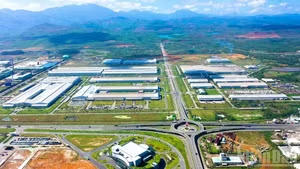
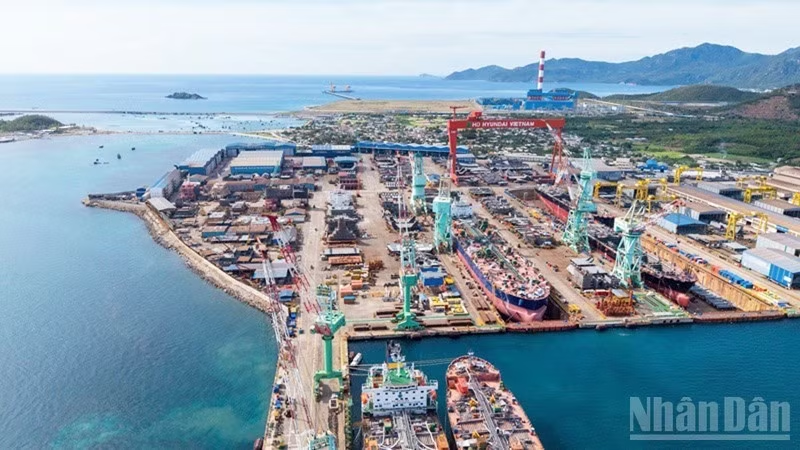
Within this structure, the northern growth pole will be centred on Van Phong Economic Zone, with a focus on industry and marine logistics. The central area encompassing Nha Trang, Cam Lam, and Cam Ranh is envisioned as an integrated development space for administration, services, knowledge, and innovation. Nha Trang will continue to serve as the province’s administrative and political centre, while Cam Lam is expected to develop into an airport city, generating new momentum for growth.
In the south, Phan Rang-Ca Na is positioned as a growth-driving region for clean energy, green industry, logistics, and tourism. The allocation of growth poles is not simply about identifying priority areas for investment; it is intended to create an interconnected economic network in which each area builds on its distinctive strengths while complementing others across shared value chains.
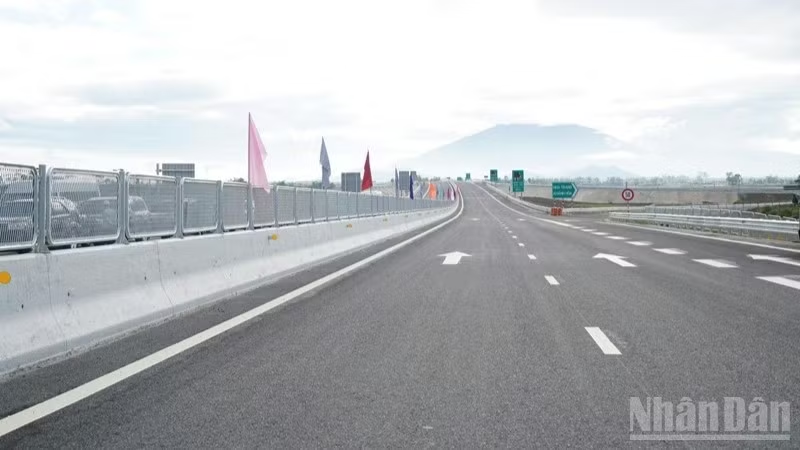
The growth poles will be connected through one north-south economic corridor and three east-west economic corridors, strengthening links between coastal areas, the Central Highlands, and key economic regions. Only when transport infrastructure, logistics, and urban networks are seamlessly connected can geographical advantages be translated into genuine competitiveness and tangible economic value.
The plan also identifies innovation, digital transformation, the green economy, and the circular economy as cross-cutting drivers of development. This is a necessary direction for Khanh Hoa to expand its economic growth scale, improve the quality of development, and reduce pressure on natural resources and the environment, while it strives to become a centrally governed city.
Aspiration to reach new heights from the sea and islands
With a vision to 2050, Khanh Hoa aims to become one of the country’s major marine economic centres, a smart and environmentally friendly urban area, and one of Asia’s leading places to live. Digital infrastructure is expected to become deeply embedded in governance and socio-economic activities, alongside the goal of achieving net-zero emissions.
Within this development vision, the sea and islands are not merely economically promising areas; they are also closely linked to the task of safeguarding national sovereignty. Truong Sa Special Zone holds particular strategic importance in protecting national sovereignty, sovereign rights, and jurisdictional rights. At the same time, it is intended to develop in a manner consistent with its role as a maritime space for economic, cultural, and social activities.
Marine economic development must therefore go hand in hand with strengthening national defence and security, protecting the environment, and ensuring the sustainable use of resources. Every advance in infrastructure, logistics services, and the marine economy will not only generate additional economic value but also help reinforce the foundations for safeguarding national sovereignty proactively and from a distance.
Turning the plan into a driver of growth
For Khanh Hoa, the challenge lies not only in choosing the right development direction but also in mobilising resources, removing existing bottlenecks, and ensuring consistent implementation across the province.
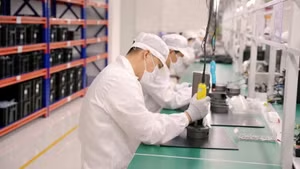
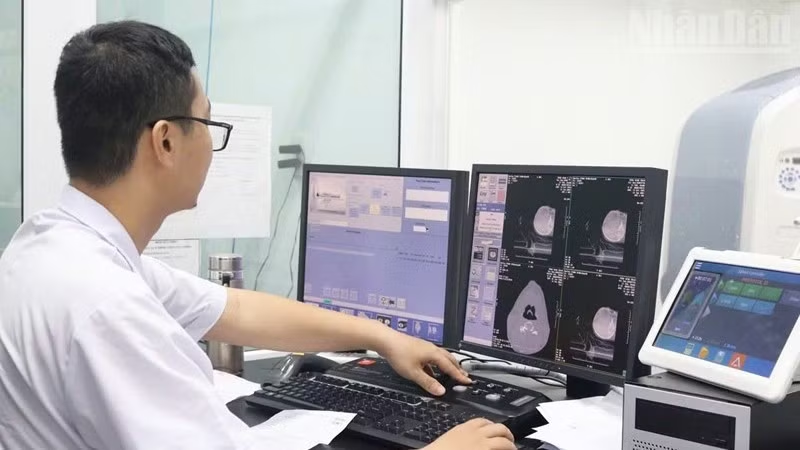
The province regards internal resources as its foundation and external resources as a catalyst for breakthroughs. It is focusing on resolving prolonged and delayed projects to unlock land resources and investment capital, accelerating administrative reform, and prioritising budget allocations for development investment. At the same time, training highly skilled personnel in cutting-edge fields such as artificial intelligence (AI), semiconductors, and ocean technology is considered one of the keys to enhancing the province’s competitiveness.
Nguyen Viet Hung said provincial leaders had required departments, sectors, and localities to urgently review sectoral plans, urban and rural development plans, and land-use plans to ensure consistency and coordination. They were also required to translate the provincial plan into action programmes with clearly defined timelines, products, and responsibilities. Obstacles relating to planning, land, site clearance, and administrative procedures must be addressed as a priority to create favourable conditions for projects to get under way promptly.
Turning a plan into reality requires a long-term vision, coordinated efforts, and a firm commitment to action. New development space has been opened, however, opportunities will only become reality when they are translated into tangible infrastructure projects, effective investment projects, quality employment, and steadily improving living standards.
“The ultimate measure of the plan’s success lies not in the targets set out on paper, but in the vitality of the economy, the appearance of urban areas, the quality of the investment environment and the tangible benefits enjoyed by local people. These are also the foundations that will enable Khanh Hoa to capitalise effectively on its maritime and island advantages, consolidate its role as a regional growth pole and gradually realise its ambition for sustainable development in this new phase,” Nguyen Viet Hung emphasised.