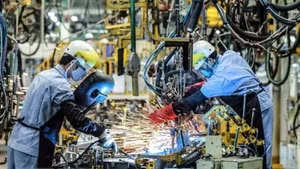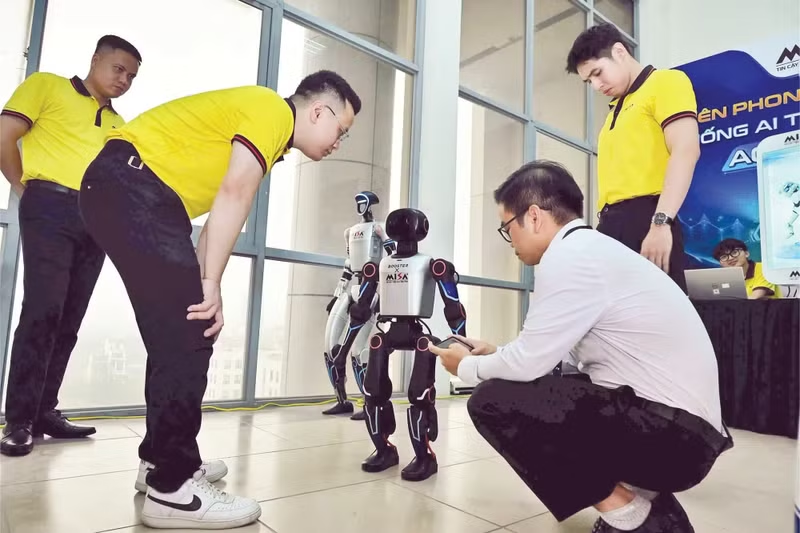
As the cost of generating text, code, or design drafts plummets, the labor market has entered a period of intense self-adjustment: while routine, formulaic tasks are being replaced, human intelligence is being elevated—placing a greater premium on judgment, aesthetic sensibility, and the capacity to take responsibility.
Could history be repeating itself? Just as photography once “threatened” painting—only to serve as the foundation for the birth of cinema—how is AI today reshaping the skills required by the labour market?
The reality of cccupational shifts
According to an index on occupational exposure to generative AI (GenAI) published by the International Labour Organization (ILO) in 2025, one in four workers globally holds a job with some level of exposure to the technology. Approximately 3.3% of jobs fall into the highest-exposure category—primarily office-based roles such as data entry, typing, and bookkeeping.
Compared to 2023, exposure levels have risen for specialised professions, including translation, software programming, and financial analysis. The ILO clarified that this metric reflects the degree of exposure rather than the number of jobs destined to be lost; however, it warns that if roles do not evolve to incorporate new tasks, partial automation could lead to a decline in hiring demand.
At the Department of Finance and Investment under Viet Nam National University, Ha Noi, Le Ngoc Thu’s daily tasks revolve around processing and reviewing documentation—ranging from investment policy proposals and feasibility studies to contractor selection plans.
Before the advent of AI, the most time-consuming phase was verifying the legal validity of regulations; given that the regulatory framework for public investment and procurement is in constant flux, even a seemingly simple inquiry could take hours to resolve. Since integrating AI as a professional “assistant”, tasks such as comparing old and new regulations or drafting the framework for official proposals—which once took an entire day—can now be completed in just a few hours.
Since integrating AI as a professional “assistant”, tasks such as comparing old and new regulations or drafting the framework for official proposals—which once took an entire day—can now be completed in just a few hours.
However, the use of AI also carries significant risks, primarily due to the “hallucinations” inherent in these tools. AI may occasionally invent non-existent legal clauses or cite regulations that are no longer in effect, necessitating extreme caution from the user.
According to Thu, while reliance on AI is notably high during the drafting, synthesising, and preliminary review stages, the fundamental rule remains: AI may generate the content, but humans must personally verify it and assume full responsibility.
AI support is also transforming the pace of work within the architecture industry. Architect Le Quang Thach, Director and Lead Designer at AVALO Interior Joint Stock Company, noted that during the project research and initial conceptual sketching phases, AI can save up to a full work-week per person—enabling the completion of a workload that would typically require three people over 5–7 days in just a single day.
However, saving on human resources does not necessarily translate to higher profits, as competitive pressure is mounting from an increasing number of firms that use AI for “imitative creation”—allowing them to offer extremely low bids.
Nevertheless, Thach asserted that AI cannot yet interpret specialised software files; more importantly, it struggles to replace humans in tasks requiring precise technical expertise or genuine creative thinking—the core competencies of the architectural profession.
In the information technology sector, similar pressure weighs on repetitive, routine roles—such as basic coding or manual testing—since a single individual proficient in AI tools can now handle a workload that once required an entire team.
Security engineer Nguyen Hong Quang explains that this pressure is economic rather than intellectual, directly impacting the software outsourcing industry—a pillar of the domestic tech sector for many years.
As the cost of generating raw output continues to fall, the value of critical judgment and aesthetic taste rises; the industry is shifting toward the ability to identify errors, determine the necessary course of action, and take personal responsibility for the final result.
The intellectual anchor of humanity
Practical applications showed that while AI excels at storing, synthesising, and processing information based on established patterns, it lacks an understanding of project history, collaborative dynamics, or real-world site conditions. Notably, the automation of entry-level tasks creates a paradox: professional judgment and aesthetic sensibility do not emerge spontaneously—they are cultivated through years of performing foundational work. If young professionals lose the space to learn these basics, the market faces a future shortage of high-level experts.
The AI wave does not eliminate jobs; rather, it raises the market’s standard, compelling educational institutions to shift from training individuals to follow templates toward developing professionals with systems thinking and critical reasoning skills.
Dr. Le Dai Duong, former lecturer at Ha Noi University of Science and Technology
Reflecting on the challenges of training and workforce adaptability, Dr. Le Dai Duong, a former lecturer at the Ha Noi University of Science and Technology, emphasised that the AI wave does not destroy jobs but instead elevates market standards. This forces training institutions to move away from teaching people to work from templates and toward fostering individuals with systems thinking and critical inquiry.
Mastering processes, enhancing the ability to evaluate outputs, thinking creatively beyond existing—or “pre-trained”—paradigms, and—most importantly—possessing the courage to take responsibility for one’s work, are the core factors that will ensure humans remain irreplaceable.
The final boundary between humans and machines lies in the capacity to assume legal and ethical responsibility. AI can generate a multitude of solutions in a short span of time, yet it cannot sign off on work or be held accountable before regulatory, inspection, or audit authorities.
While AI can be trained to perform tasks with the speed of a skilled worker, a “master craftsman”—a human—is still required to oversee the process: to discern which details are correct, identify errors, and determine which proposed solutions are truly viable.
The ultimate boundary between humans and machines lies in the capacity to assume legal and ethical responsibility.
The paradox, however, is that no master craftsman ever emerged without first serving as an apprentice. Addressing this gap directly, engineer Nguyen Hong Quang warned: “If the entry-level, apprentice-style roles disappear, where will the next generation—those who need to develop sound judgment—learn their trade? This is a challenge that businesses, educational institutions, and individuals must proactively address, rather than assuming the market will simply take care of it.”
As foundational tasks—those essential for honing one’s craft—are increasingly delegated to AI, the question of who will become the “master craftsman” of the next decade has become a critical issue in today’s labor market. Before that can happen, however, workers must elevate their own capabilities to master their fields and maintain full control over the final output.
While AI helps accelerate processing times, the ability to make sound strategic judgments, uphold aesthetic standards, and ensure regulatory compliance remains entirely dependent on human intellect and the courage to take responsibility.