At the event, the organising committee officially launched the 12th Green Startup Competition for 2026.
After more than a decade of implementation, the competition has become one of Viet Nam’s most influential startup support programmes in the fields of agriculture, food, indigenous products, the circular economy and the green economy.
Launched in 2015, the Green Startup Competition aims to identify, support and accompany projects that harness local resources to create added value through the application of science, technology and sustainable development models.
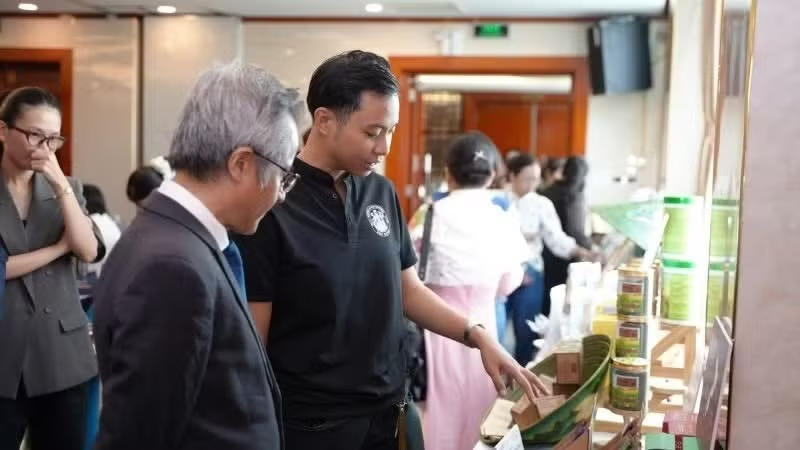
To date, the programme has developed a relatively comprehensive startup support ecosystem, including training, coaching, mentoring, trade promotion, investment matching, market connections and communications support.
Over the past 10 years, the programme has organised 49 forums and more than 450 training courses, attracting over 32,000 businesses and startup projects. It has also held 11 competition seasons, drawing nearly 1,800 projects from 32 provinces and cities nationwide, alongside practical networking programmes aimed at helping businesses broaden their perspectives and access new markets.
Many projects emerging from the competition have gone on to become successful enterprises, earning recognition as High-Quality Vietnamese Goods brands voted for by consumers, as well as High-Quality Vietnamese Goods meeting international integration standards. In particular, many have helped agricultural products and local specialties integrate more deeply into domestic and international value chains.
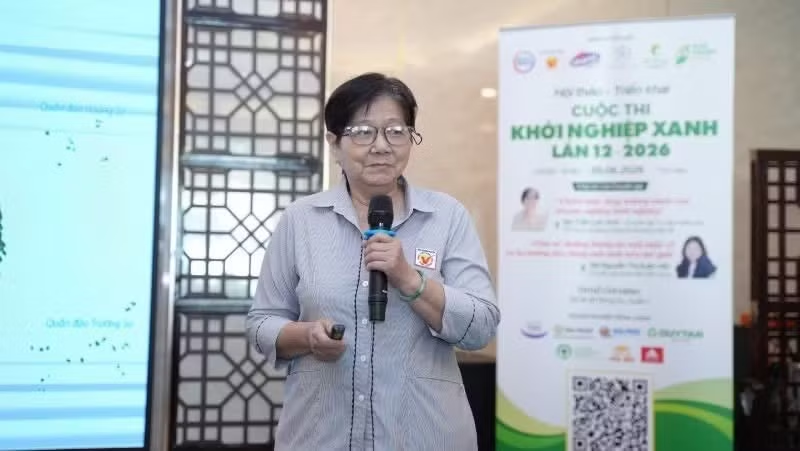
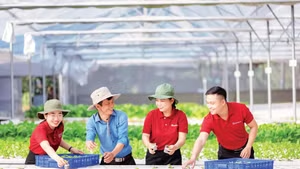
Vu Kim Anh, Deputy Director of the BSA Centre and Head of the Organising Committee of the Green Startup Competition, said that what the organisers are most proud of after more than 11 years is not the number of participating projects, but rather the emergence of a new generation of young agri-entrepreneurs who know how to leverage local resources through innovative thinking, create added value for agricultural products through technology, standards and sustainable business models.
Many projects that once took part in the competition have now grown into fully-fledged businesses with established markets and export capacity, while also generating positive impacts for local communities, Vu Kim Anh emphasised.