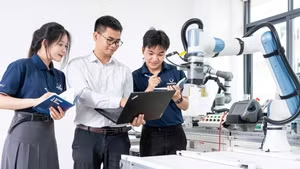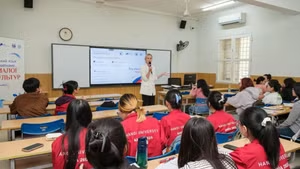
In recent years, cooperation between Viet Nam and Japan in human resource development has expanded significantly, moving beyond labour recruitment towards training models closely aligned with the practical needs of businesses. This approach is considered mutually beneficial: Japan gains access to a pool of highly skilled workers to help offset labour shortages caused by demographic ageing, while Vietnamese workers receive systematic training, clear career pathways and stable employment opportunities in an international working environment.
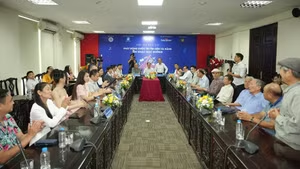
A notable example is the driver training programme under Japan's Specified Skilled Worker (SSW) scheme, jointly implemented by Japanese companies and FPT Polytechnic. During a recent visit to Viet Nam, executives of Yamato Transport met with representatives of the institution and the first group of trainees to discuss the transport industry's workforce needs in the years ahead.
Unlike traditional vocational training programmes, this initiative involves businesses from the very beginning. Employers participate in designing the curriculum, defining learning outcomes, providing professional training materials, sharing workplace procedures and assessing students' competencies.
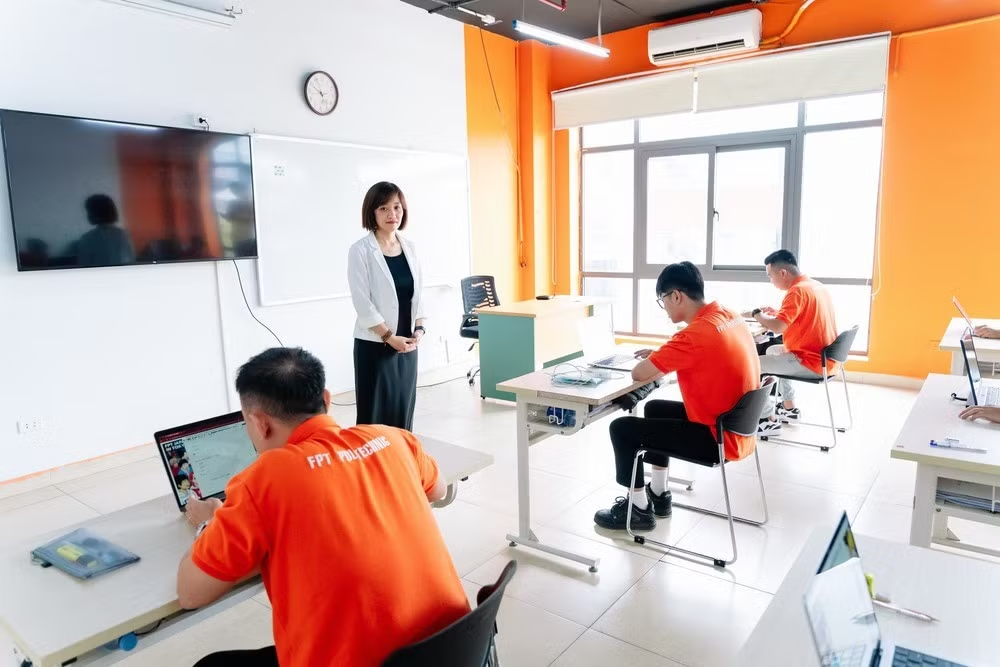
The educational institution is responsible for language training, technical knowledge and vocational skills, while businesses contribute practical job requirements. This close collaboration ensures that training remains closely aligned with labour market demand and enables graduates to adapt quickly to working life in Japan.
Huynh Vu Khanh, one of the first trainees enrolled in the programme, said his decision to participate was made after careful consideration, as he already had a family and a stable job in Viet Nam. However, what ultimately convinced him was not only the opportunity to work in Japan but also the clearly defined training and career pathway offered by the programme.
"I knew that if I wanted to work in Japan, I would need thorough preparation in Japanese language skills, professional competence and workplace discipline," Khanh said. "The programme clearly tells me what I need to study, the standards I must meet and the kind of working environment I will enter after graduation. That gives me confidence and motivation to pursue my long-term goals."

According to Khanh, the involvement of employers throughout the training process helps students gain a clearer understanding of the practical requirements of the job, enabling them to develop the necessary skills instead of focusing solely on theoretical knowledge.
"When we know exactly what employers expect, we also know what we need to do to meet those expectations from the moment we begin work," he added.
Khanh's experience highlights the value of employer-integrated training. Students are equipped not only with knowledge and skills that meet Japanese occupational standards, but also with a clear career direction, while businesses play an active role in developing a workforce tailored to their operational needs.
This model is regarded as beneficial for learners, educational institutions and employers alike, while also contributing to stronger cooperation between Viet Nam and Japan in human resource development.
The model is designed to align training with employers' actual workforce requirements while meeting learners' career aspirations. From the outset of the course, participants are provided with a clear roadmap covering their studies, future employment and long-term career development.
For businesses, partnering with educational institutions from the beginning also helps build a highly qualified workforce, reducing the need for retraining and improving labour productivity after recruitment.
As Viet Nam accelerates efforts to develop high-quality human resources to meet the demands of international integration, cooperation between educational institutions and foreign enterprises is helping not only to improve the quality of vocational training but also to create a direct link between education and the labour market. It also represents an appropriate pathway for Viet Nam–Japan labour cooperation to evolve from supplying general workers to developing a skilled workforce capable of meeting the demands of the knowledge economy and global value chains.
Japan currently transports around four billion tonnes of freight each year, with more than 90% carried by road using trucks. Truck drivers play a vital role in maintaining supply chains, ensuring the smooth movement of goods and meeting the public's essential needs. According to the Immigration Services Agency (ISA), Japan plans to admit up to 24,500 foreign workers in the automobile transport sector under the Specified Skilled Worker (SSW) programme between April 2024 and March 2029. The programme covers truck, bus and taxi drivers as part of the country's efforts to gradually address labour shortages in the sector.
According to the Immigration Services Agency (ISA), Japan plans to admit up to 24,500 foreign workers under the Specified Skilled Worker programme in the automobile transport sector between April 2024 and March 2029. The programme covers truck, bus and taxi drivers as part of efforts to address the industry's growing labour shortage.
Yamato Transport is also facing increasing long-term recruitment needs. The company currently employs around 1,600 medium- and heavy-duty truck drivers. However, it estimates that this workforce will decline by between 35 and 50% over the next decade as a result of Japan's ageing population.