The project will be carried out in two phases, beginning with pilot programmes in several urban areas in the 2026-2028 period before being rolled out nationwide from 2029 to 2035.
Specifically, during the 2026-2028 phase, the ministry will prioritise the completion of a national technical standards system for IoT in smart transport, with the aim of having around 90% of relevant regulatory documents issued or submitted for promulgation.
The ministry will select at least two cities to pilot smart operations centres that integrate real-time IoT transport data. At the same time, all sections of the North-South Expressway are expected to have electronic toll collection (ETC) systems fully installed.
During the 2029-2035 phase, the scope of implementation will expand further, with at least five cities and ten provinces operating smart operations centres.
The target is to ensure that 100% of IoT transport data is standardised and ready for seamless connectivity and data sharing among the Ministry of Construction, the Ministry of Public Security, and local authorities.
A key feature of the plan is the application of advanced technologies such as artificial intelligence, edge computing, and 5G networks for big data processing and analysis.
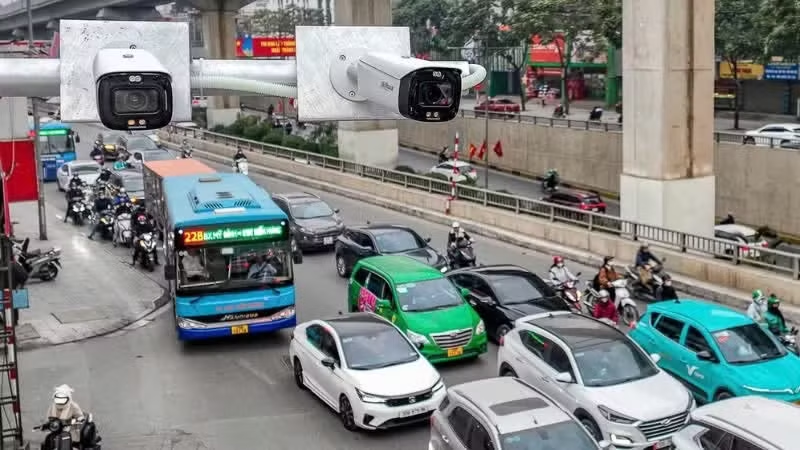
Through sensor systems, IoT cameras, and radar, management agencies will be able to control traffic signals in real time, forecast congestion risks, and promptly detect and respond to traffic violations and infrastructure incidents.
In addition to improving the management and monitoring of infrastructure such as bridges, tunnels, and expressways, IoT applications are also intended to serve the public and businesses directly.
Open data platforms will provide real-time information on traffic conditions, parking facilities, and public transport, enabling residents to make informed choices about their travel routes.
The Ministry of Construction is also encouraging research and pilot projects on autonomous vehicles in new urban areas and industrial parks, while promoting green transport development by expanding the management of electric vehicle charging infrastructure.
To ensure feasibility, the ministry will seek to mobilise resources through a combination of state budget funding, official development assistance, and public-private partnership investment.
Domestic technology enterprises are being encouraged to develop IoT equipment and platforms, with a view towards gradually mastering core technologies and cutting reliance on imported components.