Rising cost pressures on transport
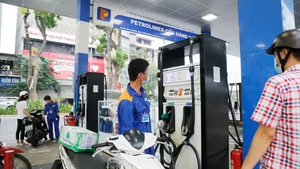
According to the Ministry of Construction’s report, tensions in the Middle East have caused sharp rises in crude oil and petroleum product prices, placing direct pressure on the operating costs of several key transport sectors.
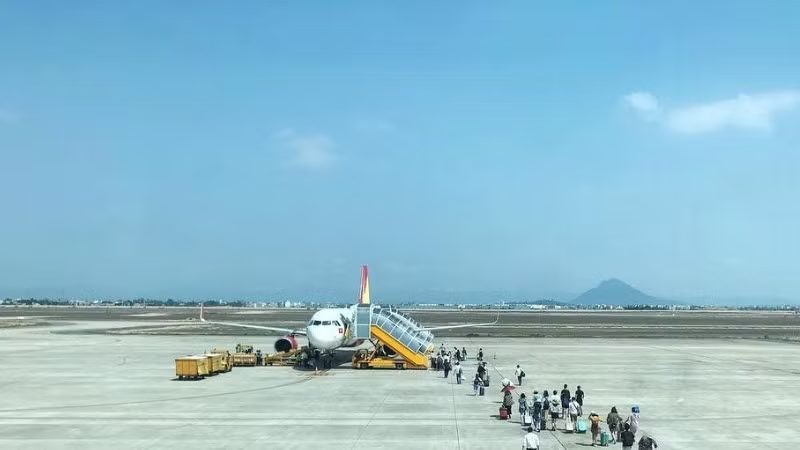
In aviation, fuel costs currently account for around 35-40% of airlines’ total operating expenses. The closure or restriction of airspace by several countries in the Middle East has forced airlines to adjust flight routes, resulting in additional charges. Jet fuel prices are forecast to remain high in March, at about 170 USD per barrel, pushing airlines’ operating costs up by 50-60%.
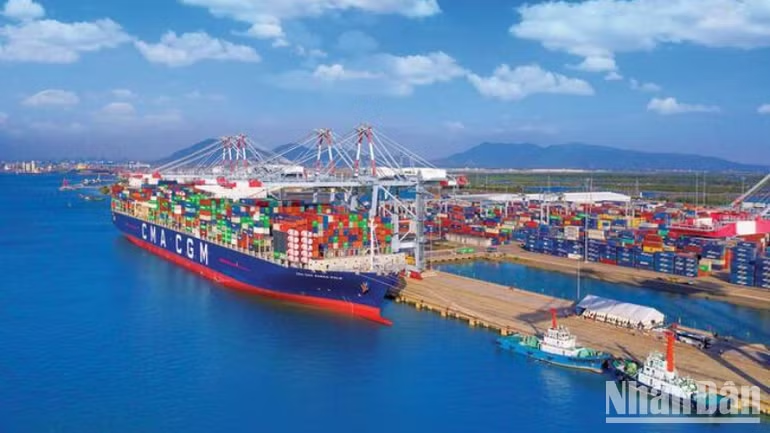
The maritime and inland waterway transport sectors have also been significantly affected, as fuel costs account for roughly 30-40% of their cost structures. For international sea routes forced to bypass conflict zones, voyage times may be extended by 14-20 days, while war-risk surcharges have risen by between 2,000 USD and 4,000 USD per container. Notably, transport service prices on several routes to the United Arab Emirates, the United States, and the European Union have increased two- to threefold compared with previous levels.
Meanwhile, road transport is also facing significant pressure from fuel price rises. Many enterprises have raised freight charges to offset rising logistics costs. Localities experiencing sharp price increases of more than 30% include Ninh Binh, Quang Ninh, Vinh Long, and Tuyen Quang, with Ninh Binh recording an increase of up to 50%. However, in Ho Chi Minh City, electric taxis, which now account for around 83% of the market share, have reduced fares by about 10% to support users.
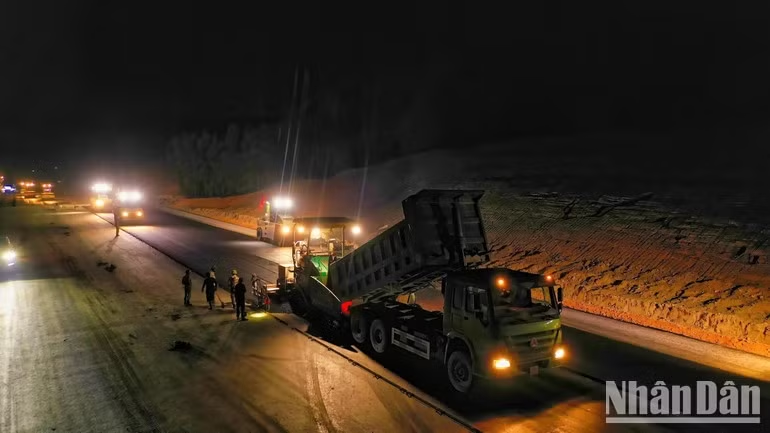
In the railway sector, freight transport charges have increased by approximately 15% since March 8, while passenger ticket prices have risen by around 10%. Meanwhile, the construction sector has been less directly affected, as fuel costs account for only about 3-5% of total project expenses and currently remain within contingency provisions in construction estimates.
Comprehensive measures taken to stabilise the market
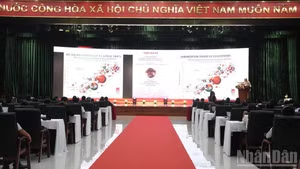
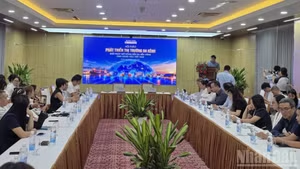
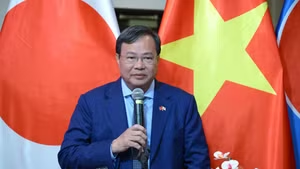
Deputy Minister of Construction Nguyen Xuan Sang said that in response to the situation, the ministry has recommended that the government, ministries and agencies implement a range of coordinated measures to ensure fuel supply and stabilise market prices.
Specifically, the ministry has proposed that the government continue directing the implementation of urgent solutions, with particular emphasis on diversifying crude supply sources for domestic oil refineries.
At the same time, a high-level working mechanism should be established with partners such as Thailand and China to facilitate Vietnamese enterprises in signing and implementing contracts to import jet fuel.
Regarding financial policies, the ministry has proposed that the Ministry of Finance consider reducing the special consumption tax and environmental protection tax on petroleum products.
It has also recommended a 50% reduction in aircraft take-off and landing fees, air navigation service charges, and the waiver or reduction of port and waterway entry fees.
The State Bank of Viet Nam has been requested to introduce credit support policies and increase L/C guarantee limits for petroleum importers.
In addition, the Ministry of Construction has suggested that the Ministry of Industry and Trade instruct oil refineries and major distributors to prioritise fuel supply for key transport and construction operators when supply difficulties arise.
The Ministry of Foreign Affairs should coordinate support for Vietnamese seafarers and vessels operating abroad, while also working with international aviation authorities to maintain “historical slots” for domestic airlines.
For its part, the Ministry of Construction stated that it will continue closely monitoring fuel price developments and strengthening inspections and supervision of transport enterprises’ price declarations and fare listings to ensure transparency and compliance with regulations.
At the same time, businesses will be encouraged to intensify the application of science and technology and transition to clean, environmentally friendly energy sources in order to enhance sustainable adaptability.
Information and communication efforts will also be strengthened to encourage the public to share the difficulties faced by the transport sector, based on the principle of harmonising interests and sharing risks among the state, enterprises and citizens.