Within just half a month, from February 28 to March 10, regulated fuel prices rose by between 40% and 60% compared with the base period for two key products —RON 95-III petrol and 0.05S diesel. In particular, the price of DO diesel, the primary fuel used to operate construction machinery, at one point increased from just over 17,000 per litre VND to more than VND 30,000 per litre, excluding transport costs to construction sites.
Slow construction and stalled progress
In transport infrastructure projects, fuel typically accounts for between 30% and 50% of the total operating cost of construction machinery. Such large fluctuations have therefore had a direct and serious impact on the entire cost structure. Of particular concern is that rising fuel prices have pushed up transport costs, which in turn have led to sharp increases in the prices of materials such as stone, sand, steel, and cement. In the first quarter of 2026 alone, the prices of basic construction materials have risen by more than 10%. Contractors are also facing a simultaneous shortage of fuel supplies at many construction sites nationwide.
At the Huu Nghi–Chi Lang Expressway project in Lang Son Province, daily demand for DO diesel averages around 90,000 litres, with each contractor requiring between 5,000 and 20,000 litres per day. However, petrol stations allow purchases of only about 500 litres at a time. Even though contractors have agreed to pay an additional 20–30% in transport charges compared with the state-regulated rate, supplies remain insufficient. Transport costs for materials from quarries to construction sites have also risen by 30–40% compared with early February 2026.
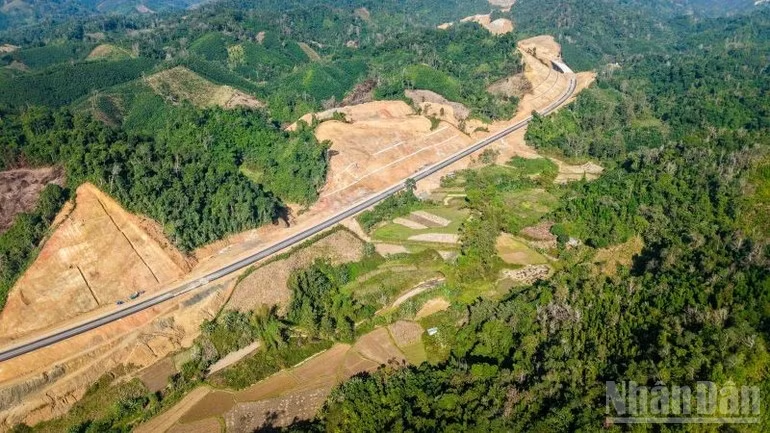
At the Dong Dang–Tra Linh Expressway project in Cao Bang Province, daily diesel consumption averages 150,000 litres, yet supplies in both Lang Son and Cao Bang are not always able to meet demand. Many petrol stations refuse to sell fuel in barrels or small tanker loads used to supply stationary machinery at construction sites. At certain times, the price of DO diesel, excluding transportation costs, has increased by as much as 72% compared with January 2026.
In the south, at the construction site of the Ho Chi Minh City–Long Thanh–Dau Giay Expressway expansion project, contractors have had to assign staff to take turns visiting multiple petrol stations to collect small amounts of diesel for the numerous machines operating at the site. As a result, many construction fronts across projects have had to slow down or temporarily halt operations, making it impossible to maintain the “three shifts, four crews” working schedule as directed by the government.
The goal of completing projects on schedule now faces significant risks, as most construction contracts were signed based on unit prices at the time the projects were formulated, without any mechanism to absorb such extraordinary fluctuations. Consequently, the actual total investment costs risk exceeding the originally approved budgets on a wide scale.
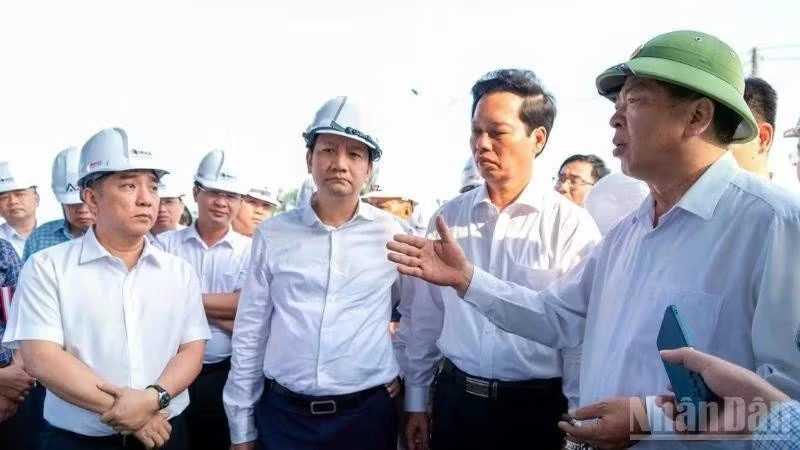
During an inspection of the Ho Chi Minh City–Long Thanh–Dau Giay Expressway expansion project, Minister of Construction Tran Hong Minh affirmed that he would report the situation to the government in order to seek solutions. The minister also requested that local authorities adopt flexible measures in granting mining licences and increasing extraction capacity to ensure sufficient material supplies for the project’s construction.
“Extracted sand must be prioritised for this key project and must not be used for outside commercial purposes. Any violations discovered must be strictly handled, even to the extent of suspending operations,” Minister Tran Hong Minh emphasised.
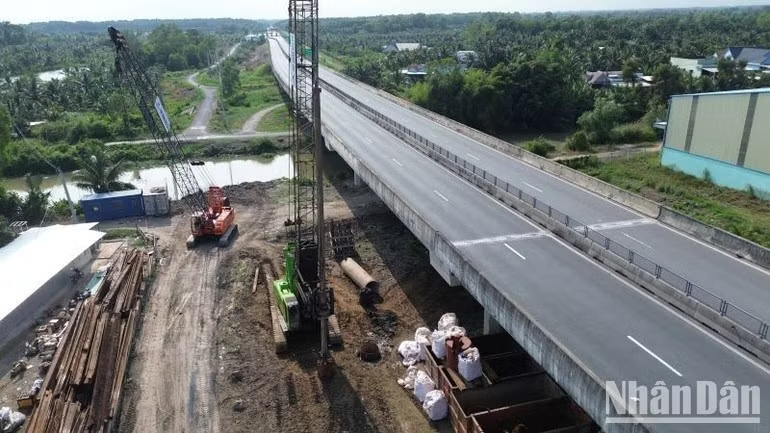
Nguyen Quang Huy, Chief Executive Officer of Deo Ca Group, which is investing in and constructing several major expressway projects, said that to address the shortage of fuel supplies, the company has proactively sought additional suppliers and increased fuel reserves at construction sites. At the same time, construction plans have been reorganised, prioritising the available fuel for key work fronts rather than spreading resources thinly. The enterprise is also actively working with contractors to develop plans to accelerate progress once fuel supplies improve.
Comprehensive and coordinated solutions needed
On March 9, 2026, Cao Bang Province issued an urgent directive requiring departments, agencies, local authorities,and project investors to promptly review, update, and publish prices of construction materials, fuel, and labour in line with market developments. Following the directive, the enterprise managing the Dong Dang–Tra Linh Expressway project proposed that the Cao Bang Provincial People’s Committee instruct fuel suppliers to prioritise supply for construction contractors. At the same time, it urged provincial departments, agencies, and businesses to share difficulties and coordinate efforts to stabilise fuel prices, input materials, and labour costs, preventing speculation and unreasonable price hikes that could affect project implementation costs.
The enterprise also recommended that the province report to and propose that the government, relevant ministries andagencies, and the Viet Nam National Petroleum Group introduce prompt measures to stabilise fuel prices. It further called for timely updates of market fluctuations in official announcements of material prices and construction price indices in the locality as a basis for adjusting contract prices in accordance with regulations.
Facing “dual pressure” from rising costs and supply shortages, contractors, and project enterprises have proactively adopted various response measures in an effort to maintain progress as far as possible. They have worked directly with local authorities and the industry and trade sector, requesting priority allocation of fuel supplies and accepting additional transportation charges above the state-regulated rates in order to secure fuel sources.
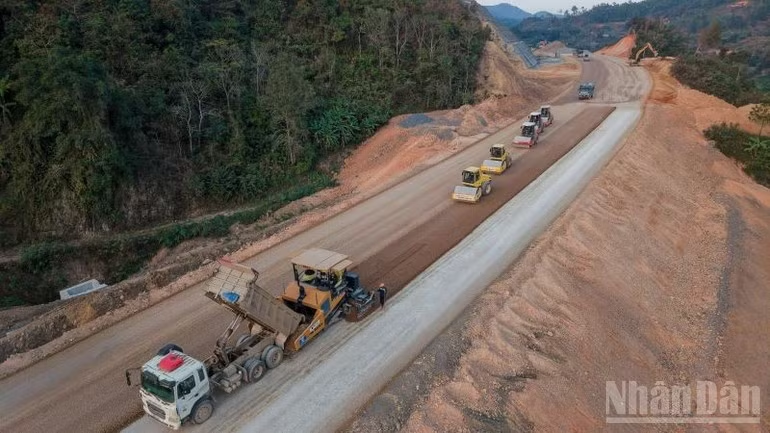
From a technical perspective, contractors have adjusted operational plans to ensure that machinery runs as efficiently as possible, while maintaining the highest possible output for tasks that do not rely heavily on equipment. Notably, project enterprises and contractors are currently absorbing the additional costs themselves, as no specific compensation mechanism has been introduced yet. While these efforts demonstrate the determination of businesses, contractors may find it difficult to sustain operations for long without timely intervention and support from the state. This situation is placing heavy pressure on cash flow and long-term financial capacity.
In response to the sharp fluctuations in the fuel market, state management agencies have introduced measures to stabilise the market and ensure supply. The Ministry of Industry and Trade has officially applied mechanisms to contribute to and utilise the Petrol Price Stabilisation Fund, while committing to coordinate with relevant authorities to inspect and supervise the responsibility of petroleum traders in ensuring supply. The ministry is also closely monitoring market developments to introduce appropriate regulatory measures.
The implementation of these steps is considered a positive signal. However, according to industry associations and project enterprises, such short-term regulatory measures do not address the root of the problem: most existing construction contracts lack flexible price adjustment mechanisms, while localised supply shortages in many areas remain unresolved. As a result, project enterprises and industry associations have submitted recommendations to the prime minister, proposing three main groups of solutions.
First, regarding supply, they propose that the Viet Nam National Petroleum Group prioritise fuel for key infrastructure projects and facilitate contractors’ ability to purchase large quantities without disruption, while directing local authorities to strictly monitor and severely penalise speculation and price manipulation.
Second, regarding contractual mechanisms, they propose allowing compensation for differences in fuel costs to be incorporated into construction estimates, bid package prices, and contract values, forming a basis for payment between contracting parties. In cases where fluctuations persist due to armed conflict, they suggest considering the application of force majeure provisions to adjust contracts.
Third, in the long term, they propose building mechanisms for the timely updating and publication of construction price indices and fuel and material prices reflecting real market conditions, thereby providing a legal basis for adjusting contract prices in accordance with regulations.
“The adjustment mechanism should allow compensation for differences in fuel costs within construction estimates, bid package prices and construction contracts as the basis for payment between contracting and contracting parties. This mechanism should be applied from March 2026 until petrol and diesel prices are stabilised,” the Viet Nam Association of Construction Contractors (VACC) recommended.