The Ministry of Industry and Trade has affirmed that petrol and oil supplies for the market will be guaranteed at least until the end of March.
Against the backdrop of continued volatility in the global energy market, the government and relevant ministries and agencies are proactively implementing various measures to expand petrol and oil supply, stabilise the market and safeguard national energy security.
Stable market
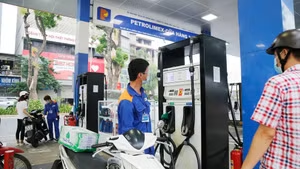
According to reports from Departments of Industry and Trade in several northern provinces, especially in Ha Noi, many residents in recent days rushed to purchase and store petrol and oil in various forms, such as buying fuel in plastic cans, drums, or even using trucks to refill fuel multiple times at different petrol stations. The sharp rise in demand within a short period has required authorities to work intensively to ensure that supply is not disrupted.
From March 8, stockpiling activities have declined. However, in some border communes in the provinces of Tay Ninh, Gia Lai and Nghe An, there have been cases of people from Laos and Cambodia crossing into Viet Nam to purchase petrol and oil because prices in Viet Nam are lower than those in their countries.
According to the Ha Noi Department of Industry and Trade, key fuel traders in the city reported that petrol and oil sales from March 4 to 8 surged by 50% compared with the average level in January. Nevertheless, current supply and forecasts for the coming days indicate that the market will remain stable.
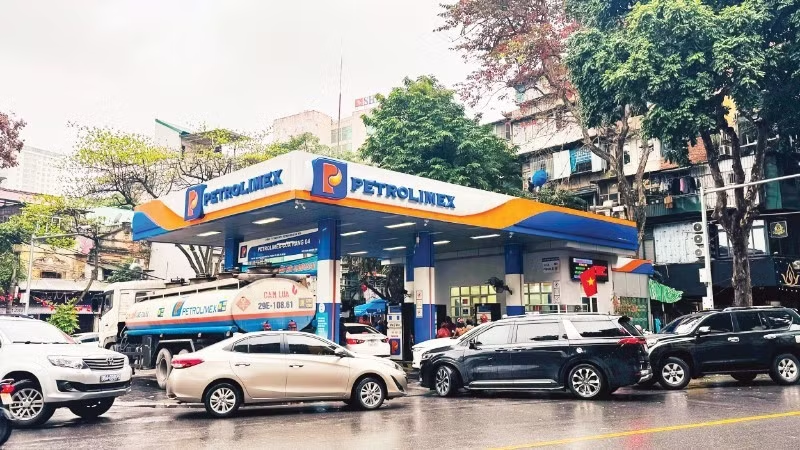
In Ho Chi Minh City, Da Nang and Can Tho, petrol stations are operating normally to meet the production and consumption needs of residents and businesses, and no cases of speculation, hoarding or unreasonable price increases have been detected.
In Thanh Hoa, the volume of fuel sold at retail petrol stations has increased sharply by around 80%-100% compared with the previous period. At present, petrol and oil supply in the province is basically being ensured by key traders and distribution companies to meet consumer demand until the end of March.
The Energy Security Task Force reported that domestic crude oil production currently reaches about 180,000 barrels per day, of which around 150,000 barrels are supplied to the Dung Quat Oil Refinery. Therefore, the supply of crude oil feedstock for the plant is essentially unaffected and sufficient for production until the end of April.
Crude oil supply for the Nghi Son Refinery carries higher risks because it depends on imports from Kuwait. However, existing inventories and shipments already in transit can still maintain production for the time being, while the refinery is actively seeking additional supply sources.
In addition, Viet Nam currently imports around 30% of its domestic petrol and oil consumption. Key fuel traders report that imported petrol and oil supplies in March are basically secured, though from April the outlook is expected to become more challenging due to rising prices and some countries discouraging fuel exports.
Diversifying crude oil supply
Global petrol and oil prices have risen sharply in recent days due to the impact of conflict in the Middle East. For example, petrol prices in the United States have increased by around 11%, while diesel prices have risen by 15%. In Laos, petrol prices have increased by between 11% and 15% depending on the grade, and diesel prices by about 33%. In Thailand, petrol prices have risen by around 4% to 8% depending on the type, while diesel prices have increased by about 14%.
Given forecasts that crude oil supplies may gradually tighten and prices continue to rise, the Energy Security Task Force has proposed that the government take immediate measures to diversify crude oil supply for the Nghi Son Refinery, while maximising domestic extraction to enhance supply autonomy and limit the impact of price fluctuations and logistics costs.
In addition, the Ministry of Public Security, in coordination with the Ministry of Industry and Trade, is strengthening inspections and strictly handling acts of hoarding petrol and oil in anticipation of price rises for profiteering purposes, thereby stabilising the market and ensuring energy security.
In the long term, the Ministry of Science and Technology should urgently work with relevant ministries, agencies and enterprises in facilitating the early application and use of additives in petrol and oil production, processing and blending in order to promote fuel efficiency.
The State Bank of Viet Nam should also prepare foreign currency resources to support imports, prioritising foreign exchange and credit for enterprises involved in the production and trading of petrol and oil to import crude oil and refined products. This would encourage businesses to secure import supplies and ensure adequate fuel supply for the domestic market.
The Ministry of Industry and Trade is also proposing coordination with the Ministry of Finance to submit a petrol and oil price stabilisation plan to the government, which may include further adjustments to certain taxes and the use of the price stabilisation fund to keep domestic fuel prices in check.
Deputy Minister of Industry and Trade Nguyen Sinh Nhat Tan said: “The ministry is urging key fuel traders to strengthen the signing of long-term contracts with partners in markets such as the United States and Southeast Asia to gradually compensate for supply disruptions from the Middle East. At the same time, enterprises must strictly maintain circulating reserve levels in accordance with regulations and be ready to respond if global supply tightens.”
Petrol and oil are strategic commodities that play an especially important role in economic activities. Therefore, every litre of fuel used efficiently and economically not only carries economic significance but also represents a practical contribution to ensuring national energy security.
The Ministry of Industry and Trade recommends that people proactively practise energy conservation, prioritise the use of public transport, electric vehicles and biofuels to reduce dependence on mineral petrol.
Residents should remain calm amid market fluctuations, avoid panic and refrain from unnecessary fuel stockpiling, thereby contributing to market stability and ensuring adequate supply for the essential needs of the economy.
Fuel trading enterprises should enhance their sense of responsibility, refrain from hoarding or restricting sales in anticipation of price increases, and proactively maintain supply for distribution systems.



![[Infographic] Viet Nam's 16 Comprehensive Strategic Partners](https://en-cdn.nhandan.vn/images/nyM650OGFWrOVWc-xajqN-rTZ68Rlmc1fiGJOhBRYHHdkBILL2hAdMw_FHcqH-128bTaQBSOAMd0_NcTypwz7H-j_NBZzuSdgF8ETMmVl1xLtdcCjym8rCUyKZqQgOZtC4ouMEzxlJoQ-MllehtjehDxIkn58uqaoaCRy4fSY54/1792513260540-1528117236743671738-1528117236743671738-9e797c256fe32c7c7b9c1cc03b0ca64e.jpg.avif)