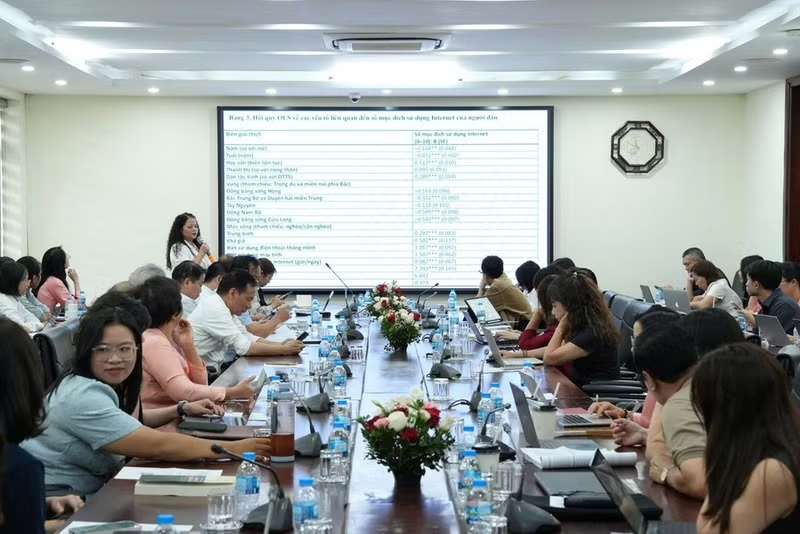
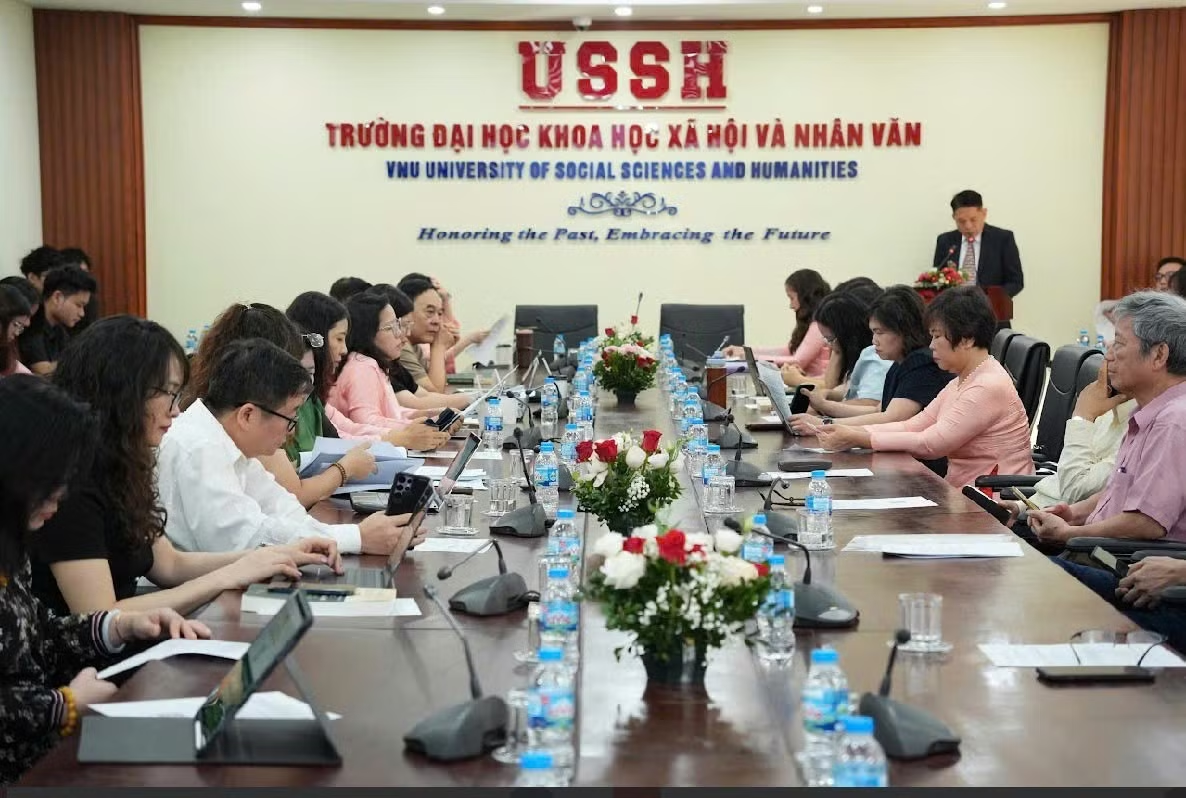
The conference served as an academic forum for scientists, lecturers, managers, practitioners and researchers to exchange research findings, share experience and discuss issues facing the two disciplines amid digital transformation and efforts towards sustainable development.
The rapid development of digital technology and artificial intelligence is changing the ways people communicate, learn, work and participate in social life. Digital spaces are opening up new forms of interaction, connection and access to information, while also affecting social relationships, community structures, individual behaviour and methods of delivering social services.
For sociology, issues such as digital inequality, social stratification, changes in value systems, digital culture and new forms of social connection require researchers to continually update their methods and broaden their analytical perspectives.

In the field of social work, digital technology and artificial intelligence can help identify needs, improve access to services and strengthen connections between social workers, clients and communities. However, the application of technology also raises issues concerning personal data security, privacy, professional responsibility, equal access and the protection of vulnerable groups.

Notably, the paper entitled “Reconstructing the Sociological Paradigm in the AI Era and Hybrid Spaces”, presented by Professor and Doctor Nguyen Quy Thanh, former Rector of the University of Education, Viet Nam National University, Ha Noi, raises questions about changes in sociological approaches and thinking in response to transformations driven by artificial intelligence and the interweaving of physical and digital spaces. It also suggests the need to develop appropriate approaches to studying contemporary society.
The paper entitled “Juvenile deviance and the role of social workers in the digital era”, presented by Associate Prof. Dr. Nguyen Thi Nhu Trang, Senior Lecturer at the Faculty of Sociology and Social Work, University of Social Sciences and Humanities, Viet Nam National University, Ha Noi, draws attention to behavioural issues among adolescents and the role of social work in identifying risks, providing support, intervening and preventing problems arising as the digital environment increasingly influences young people’s lives.

Alongside the academic presentations, the conference set aside time for delegates to exchange views, discuss issues and connect theoretical perspectives, research findings and practical experience, thereby identifying topics requiring further study in education and training, research and professional practice in the digital age.
On this occasion, the organising committee introduced a national scientific proceedings volume bearing the same title as the conference. Of the 73 papers submitted, the editorial board selected 32 for inclusion in the volume, organised into four thematic groups: sociology and social work education and training in the digital era; social change, inequality and sustainable development in the digital era; social work and social welfare amid digital transformation; and the protection and support of vulnerable groups in the digital environment.
The papers address a range of practical issues, including the development of students’ digital competencies, digital inequality, social welfare, child protection online, and support for people with disabilities and older people. The proceedings therefore provide a reference resource for research, teaching, policymaking and social work practice.