
Restructuring 100% of administrative procedures based on data
According to the Ministry of Justice, in September and the third quarter of 2026, regular and long-term administrative procedure reform tasks have continued to be implemented in a synchronous and methodical manner.
The receipt, processing and return of administrative procedure results were basically maintained continuously, openly and transparently, with people and businesses placed at the centre of service delivery.
At the same time, agencies continued to improve, connect, and exploit databases and information systems serving the settlement of administrative procedures, implement administrative procedure-related tasks under the 100-day Action Plan for implementing Politburo Resolution No. 57-NQ/TW, while expanding new initiatives and models to improve the quality of public service provision.
Notably, in the third quarter of 2026, ministries and ministerial-level agencies continued to cut 188 administrative procedures, simplified 225 administrative procedures, and cut 39 business registration procedures in legal documents submitted for promulgation under the legislative programme. This result was achieved in addition to the simplification plans already implemented under 11 thematic resolutions pursuant to Conclusion No. 18-KL/TW.
The review of administrative procedure regulations during the law-making process also received due attention. Ministries, sectors, and localities assessed the impacts of 1,005 administrative procedures and appraised 916 administrative procedures in 116 draft legal documents; at the same time, they issued 144 decisions announcing 1,098 administrative procedures.
Regarding internal administrative procedures, by September 2026, the cumulative total number of internal administrative procedures between state administrative agencies that had been announced stood at 1,191. Ministries and agencies had issued documents to implement reduction and simplification plans for 792 procedures, equivalent to 66.5%.
At the local level, the rate reached 77.21%, with reduction and simplification plans implemented for 732 out of 948 internal administrative procedures.
Another noteworthy result was the reduction and simplification of data-based administrative procedures. All 774 out of 774 administrative procedures listed in Appendix I to Government Resolution No. 66.7/2025/NQ-CP have been restructured, reaching 100%.
In addition, the Ministry of Finance, the Ministry of Home Affairs, the Ministry of Justice, and the Ministry of Health reviewed, announced, and restructured a further 77 administrative procedures outside the list, using information and data from published databases.
The rate of digitisation of dossiers and reuse of data for administrative procedure settlement remains low
Alongside the results achieved, administrative procedure reform still faces limitations that need to be addressed as a priority.
Of particular note, the public disclosure and transparency of the administrative procedure process on the National Public Service Portal remains limited. Some 47.7% of administrative procedure dossiers have not been synchronised, with the process of their receipt and settlement not publicly disclosed or made transparent. The rate of overdue dossier settlement at some ministries has remained high for many months, with no effective solutions found yet.
In addition, the rate of dossier digitisation and reuse of data for administrative procedure settlement remains low, particularly at ministries and sectors. Regarding data-based administrative procedure reform, the publication and disclosure of information from databases that can replace dossier components and documents have yet to be carried out in a timely manner. To date, only 39 out of 70 databases have completed this task, equivalent to 55.7%.
A strong shift from “reduction” towards substantive service delivery
In the coming period, the requirement is to continue the synchronous, consistent and seamless implementation of administrative procedure reform tasks, especially the 11 government resolutions on the delegation of powers, decentralisation, reduction, and simplification of administrative procedures, business registration, and conditional business investment sectors and lines. The ultimate goal is for people and businesses to genuinely benefit from the reform results.
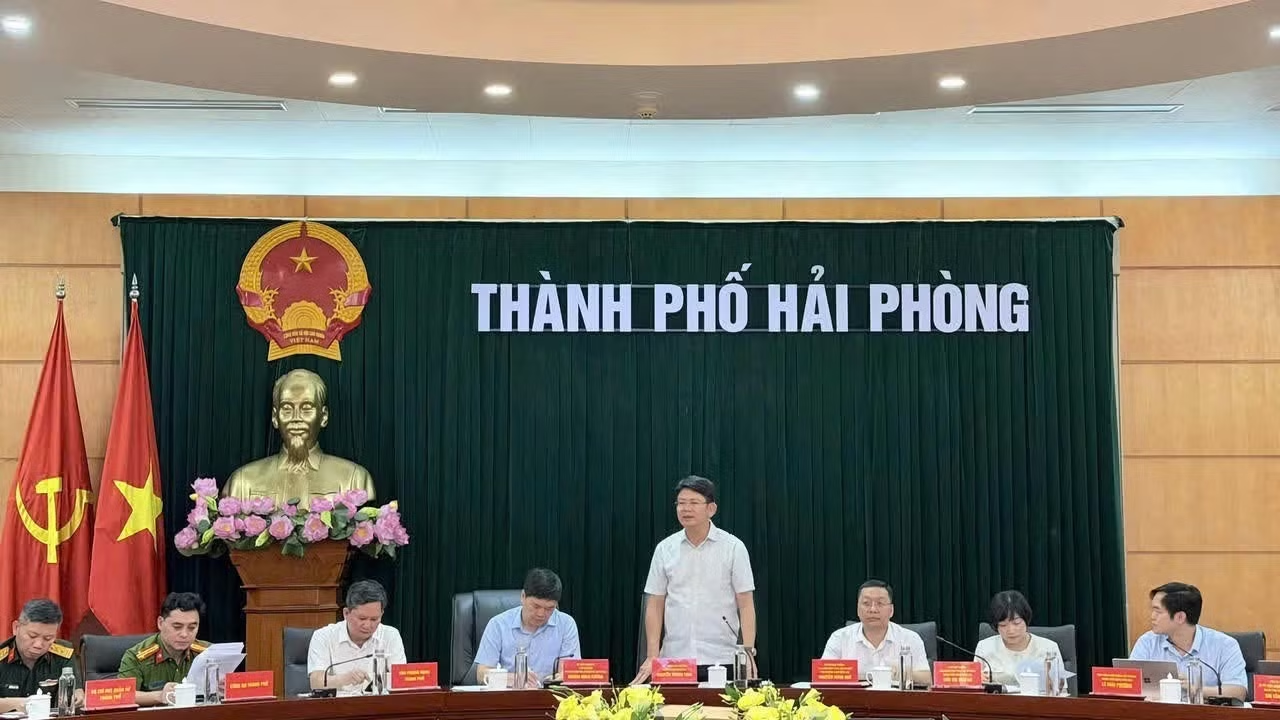
Ministries, sectors, and localities need to focus on promptly reviewing and addressing “bottlenecks” in the implementation of administrative procedures under the two-tier local government model, ensuring smooth operations and improving levels of satisfaction among people and businesses. At the same time, they must complete on schedule administrative procedure-related tasks under the 100-day action plan for implementing Resolution No. 57-NQ/TW and tasks to reduce and simplify data-based administrative procedures.
The completion of the centralised Information System for Administrative Procedure Settlement, the effective operation of the National Public Service Portal and the administrative procedure settlement coordination system should also be placed at the centre of the reform agenda.
The Ministry of Justice also recommended that 11 ministries and ministerial-level agencies and 24 provincial-level People’s Committees urgently implement Resolution No. 258/NQ-CP; strictly control administrative procedure regulations from the stages of policy proposals, project formulation, and drafting of legal documents; and prevent the emergence of additional unnecessary procedures and requirements.
Documents that need to be amended, supplemented, or repealed to ensure the results of administrative procedure reduction, delegation of powers, decentralisation, and simplification must be expedited to ensure that they take effect before March 1, 2027. This is an important condition for reform results to be maintained in a stable and sustainable manner over the long term.
Alongside the completion of the National Public Service Portal and the centralised Information System for Administrative Procedure Settlement, the status of dossiers needs to be synchronised fully and accurately in real time; the use of existing data should be expanded to replace documents already held by state agencies; and internal and electronic processes should be standardised, with administrative procedures fully configured for the provision of online public services.
For groups of administrative procedures with high frequency of use and directly related to people and businesses, agencies need to complete electronic processes and eForms, as well as plans for the exploitation, connection, and reuse of data; and conduct testing in accordance with approved plans, ensuring completion before November 30, 2026, under the 100-day action plan for implementing Resolution No. 57-NQ/TW.












![[Video] Renewal and growth milestones of Ha Noi through the lens](https://en-cdn.nhandan.vn/images/1XgBTSIw0KyfD4abQsg-hd4ly6fBUHXC7_OAKyN4YwPfAhBw0Xs6rVX3rF0up9Tr6rLNn30Muc4bzp90E7yOqg/10-10-hanoi-cover.jpg.avif)