Tracing the species with environmental DNA
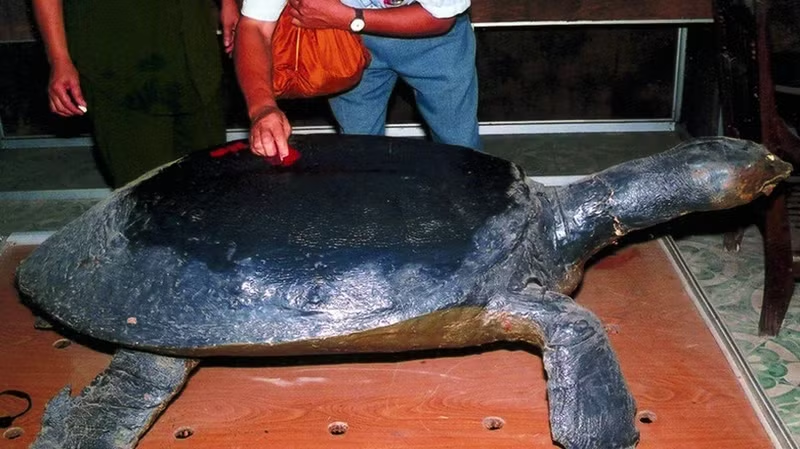
Professor Nguyen Quang Truong of the Viet Nam Academy of Science and Technology, a scientist with many years of research experience on reptiles and amphibians, including turtles, in Viet Nam, said the Hoan Kiem Lake turtle, also known as Swinhoe’s softshell turtle, has the scientific name Rafetus swinhoei. This large softshell turtle has been recorded only in the major river basins of southern China and northern Viet Nam.
Research findings on morphological and genetic characteristics, published in Vietnamese and international journals, have confirmed that turtle specimens recorded in Viet Nam and China belong to Rafetus swinhoei, including those found in Hoan Kiem Lake and Dong Mo Lake. In Viet Nam, the species has historically been recorded in Phu Tho Province (Luong Son and Ha Hoa), Ha Noi (Dong Mo, Ba Vi, Hoan Kiem Lake and Xuan Khanh) and Thanh Hoa Province (the Ma River).
In recent years, reports of Rafetus swinhoei in the wild have become increasingly scarce. Surveys by scientists have failed to record the species at most locations where it was previously known to occur. Attention is now focused on Dong Mo Lake and Xuan Khanh Lake in Ha Noi, regarded as the last places in Viet Nam where individuals might still be found.
A Swinhoe’s softshell turtle was previously recorded in Dong Mo Lake, its presence confirmed by several types of evidence, including sightings, photographs and DNA detected in water samples. The turtle died in April 2023, but reports later emerged of another individual surviving in the lake. These reports still need to be verified with further evidence.
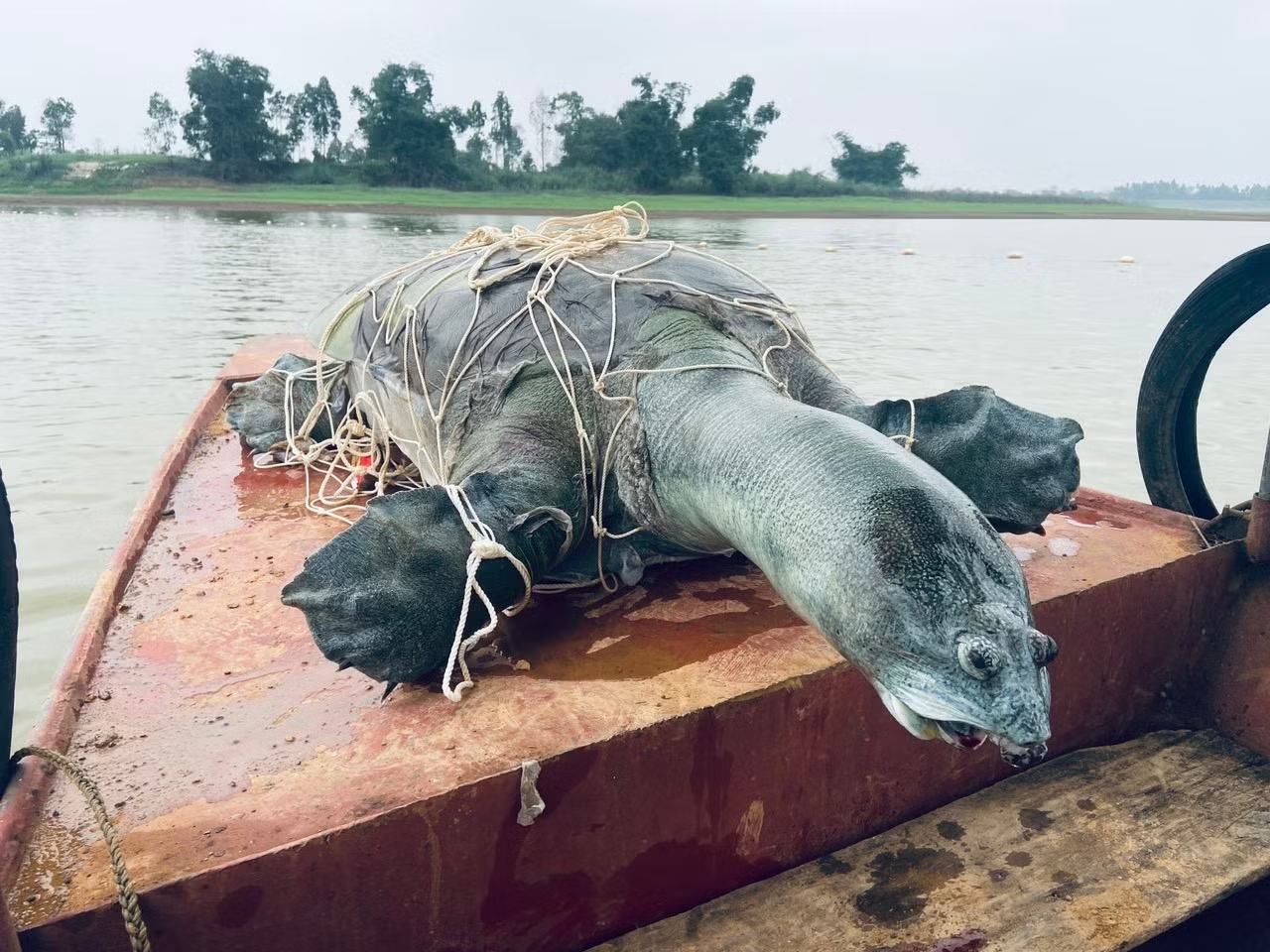
If Swinhoe’s softshell turtles do survive in Dong Mo Lake, it would be welcome news and offer considerable hope for conserving this critically endangered species, not only in Viet Nam but around the world. Such a discovery would provide an additional genetic resource to support future conservation and breeding efforts.
Determining whether any Swinhoe’s softshell turtles remain in Dong Mo Lake requires concrete scientific evidence. Environmental DNA analysis is an advanced technique that does not require turtles to be trapped or captured.
Instead, water samples are collected from places where turtles are thought to live and then analysed. A protocol for applying the technique already exists, but it is relatively costly, and some water samples may not contain enough turtle DNA for testing.
Scientists have used various methods to identify Swinhoe’s softshell turtles, including comparing the morphological characteristics of preserved specimens, examining skulls and shell bones held in museums, and conducting DNA analysis. More recently, environmental DNA has also been used to detect the species in several bodies of water in northern Viet Nam.
Practical solutions and action
Professor Nguyen Quang Truong also said that scientists and conservationists have carried out sustained surveys of bodies of water along the Red River and Ma River in northern Viet Nam since the 2000s, yet have obtained little information about Swinhoe’s softshell turtles.
“At present, we are pinning our hopes on any remaining individuals in Xuan Khanh Lake and Dong Mo Lake. The Ha Noi Department of Agriculture and Environment has been working with the Asian Turtle Conservation Centre to monitor Dong Mo Lake and gather further evidence that the species still survives there. We hope the research findings will be published soon so that timely management and conservation measures can be put in place. The continued application of modern technologies such as environmental DNA could also help quickly determine whether the species is present in the lake,” Professor Nguyen Quang Truong said.

To turn any such discovery into a genuine conservation opportunity, the first priority is to ensure that surviving individuals remain safe in their natural habitat. Immediate steps include protecting habitats, particularly feeding grounds and nesting sites; preventing water pollution and plastic waste; and controlling invasive plant and animal species in lakes where the turtles are known or suspected to survive.
Public awareness campaigns and efforts to encourage local residents to avoid harming the species are also essential. These should discourage fishing with hooks, littering and releasing non-native species into the wild, all of which can threaten this iconic animal.
In addition, any turtles in Dong Mo Lake and Xuan Khanh Lake need to be protected in situ by establishing species and habitat conservation areas. Monitoring should continue to determine their activity zones, feeding grounds and potential nesting sites, while minimising direct adverse impacts on the turtles.
Further research should also determine the sex and health of any surviving turtles to inform future breeding options.

![[In Pictures] Bridge columns and underpasses in Ha Noi begin to turn green](https://en-cdn.nhandan.vn/images/nyM650OGFWrOVWc-xajqN-rTZ68Rlmc1fiGJOhBRYHH_N-Xs0TE8Psnfce7ORTs-KVfoJaEblqjNufFrgeF3e2xFkGtLQVaXm04VcmMKBEkANUyiOkpz4zAuIKgydVrrfBxmGez0E_YJIag0u_Uil0E7jpuJXsIxeMmGjoY1-W4/1791863309074-2994714492692222878-2994714492692222878-adb9ff3f4175c70066ed8bb80cfbead9.jpg.avif)