Removing bottlenecks, creating changes through specific projects
From roads that were once delayed for a long time to projects now gradually nearing completion, Ha Noi’s transport infrastructure is seeing visible changes. The focus on removing difficulties, accelerating site clearance and organising construction shows the city’s determination to bring key projects into operation soon, enabling them to meet the capital’s development needs.
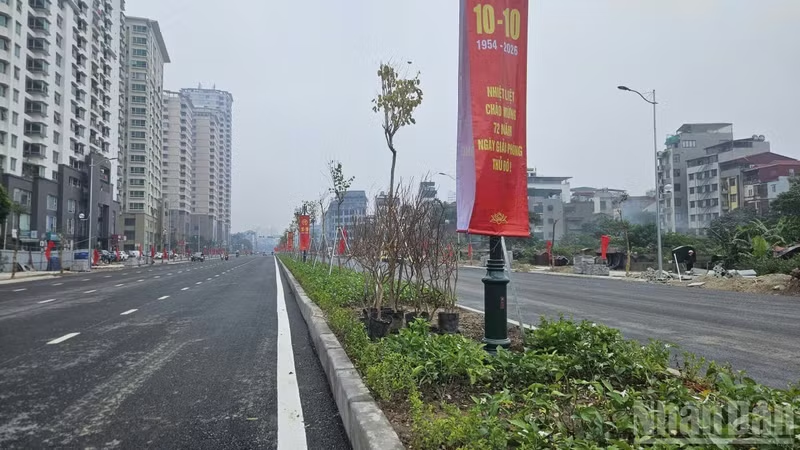
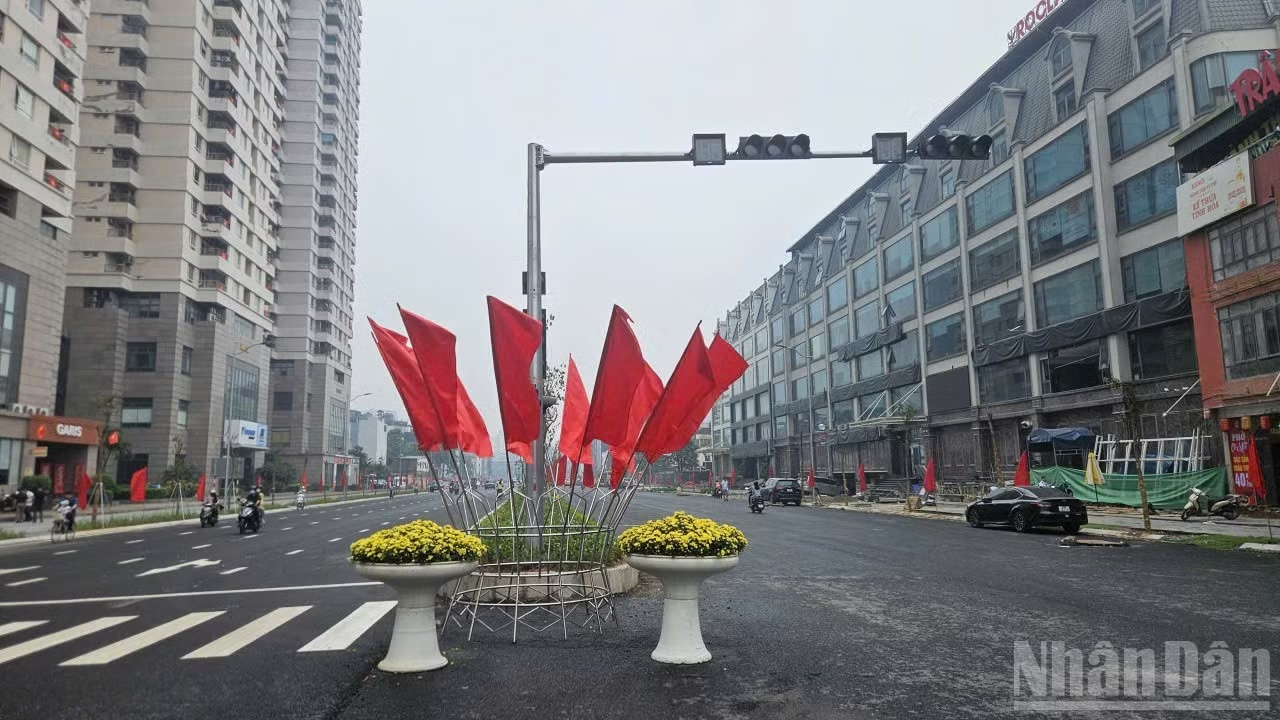
The Ring Road 2.5 project, the section from Nguy Nhu Kon Tum to Nguyen Trai, is one of the projects eagerly awaited by local residents. The road has been completed and is ready for technical opening on the occasion of October 10, helping remove an infrastructure bottleneck that had existed for many years.
Seeing the road gradually completed, Luc Tien Manh, a resident of Nhan Chinh in Thanh Xuan Ward, expressed his joy at the changes in the area. Once the project is put into operation, people’s daily travel is expected to become more convenient.
Also on Ring Road 2.5, the section connecting Cau Giay in Ha Noi to the Ciputra urban area has been opened to traffic, helping strengthen transport connectivity and open up new development space. Nguyen Thuy Hang, a resident of Cau Giay Ward, said that each completed project put into use helps people feel more clearly the development of the capital and the country.
Meanwhile, in Xuan Dinh Ward, Ha Noi, the implementation of the Ring Road 2.5 project has shown the important role of site clearance and coordination between local authorities, the investor and contractors in accelerating construction progress.
Bui Vu Hiep, Director of the Investment and Infrastructure Project Management Board of Xuan Dinh Ward, said site clearance for the section passing through the ward began in 2012, but handover was only completed in June 2026. Immediately afterwards, the investor and contractors actively coordinated with the ward People’s Committee to speed up construction, striving to complete the section in time for the 72nd anniversary of Capital Liberation Day.
According to Bui Vu Hiep, the opening of the road not only helps reduce traffic pressure but also creates conditions to improve the urban landscape, enhance the environment and raise people’s quality of life.
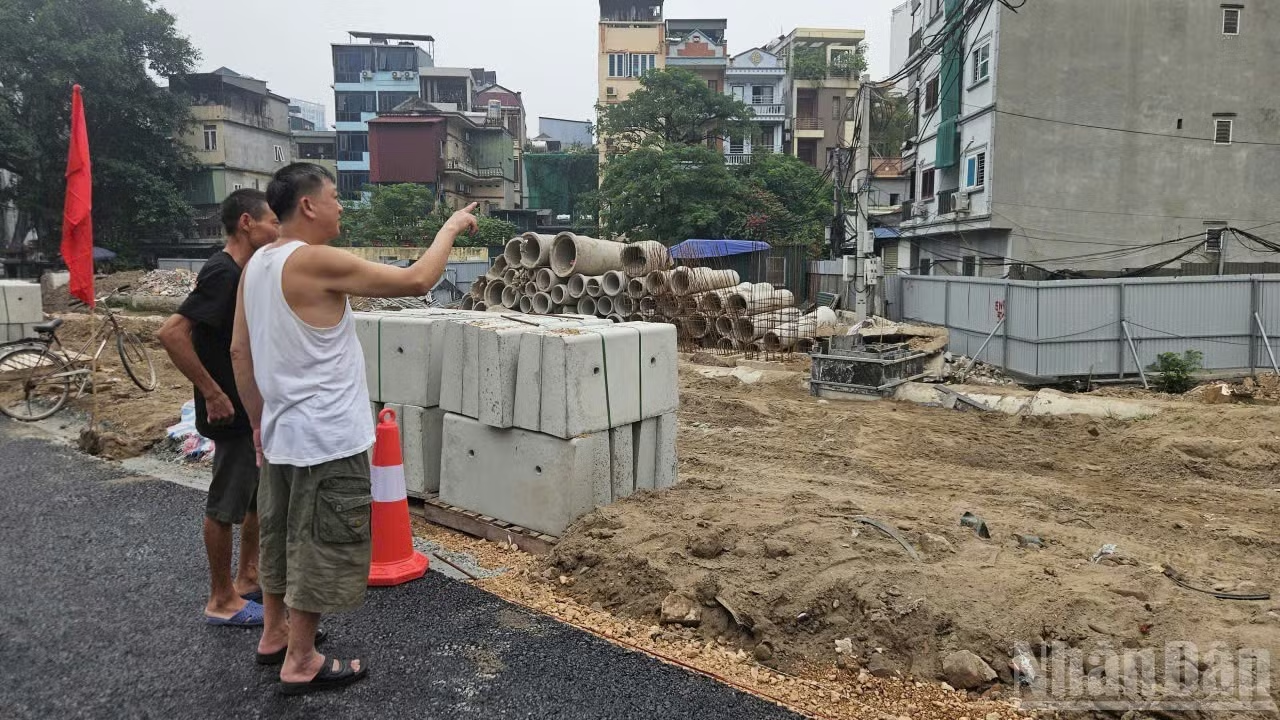
One of the notable changes has been recorded in Cau Giay Ward. A project stalled for more than 20 years has been completed and opened to traffic just one year after a meeting on compensation and site clearance. This result has brought clear changes to the area and shows that project progress can be improved when when obstacles are tackled decisively.
Le Quyet Chien, 70, who lives in Alley 110 on Dich Vong Street, said his family initially had many concerns about relocation. However, after one year, life in the new place has stabilised, while a spacious, clean and beautiful new road has gradually taken shape.
These real-life accounts show that the effectiveness of infrastructure projects is measured not only by construction progress or opening dates, but also by changes in people’s daily lives, travel conditions and living environment.
Synchronous connectivity, expanding development space
Along with sections of Ring Road 2.5 at Xuan Dinh-Ciputra, Dich Vong New Urban Area-Duong Dinh Nghe, Vu Pham Ham-Tran Duy Hung, and Nguy Nhu Kon Tum-Nguyen Trai, Ha Noi also carried out the technical opening of the parallel road of Ring Road 4 in the Capital Region on the occasion of the 72nd anniversary of Capital Liberation Day.
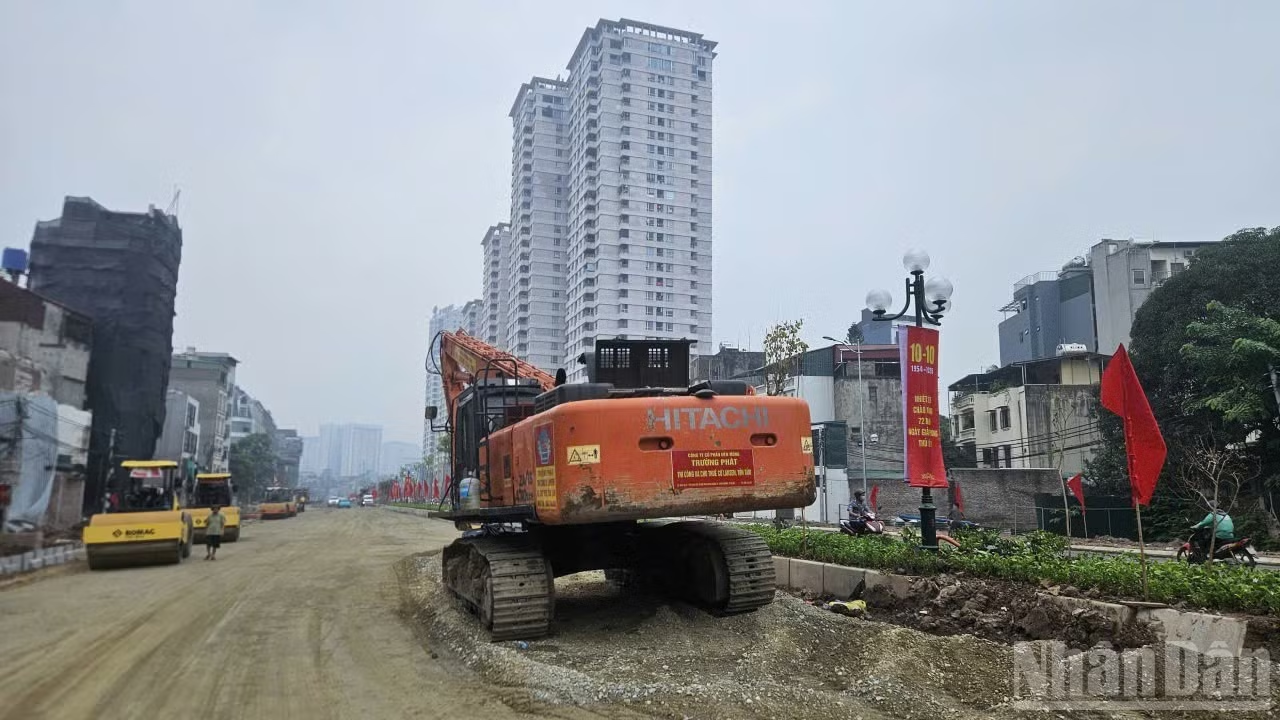
The implementation of projects in many areas helps strengthen the connectivity of the transport network, create more favourable conditions for travel and gradually expand urban development space.
Thu Trang, a resident of Group 10 in Cau Giay Ward, said that seeing wide roads replace narrow alleys after just one year of implementation made local people very proud and strengthened their confidence in the direction of the authorities.
From a planning perspective, architect Tran Huy Anh from the Ha Noi Architects Association said the western part of the capital has very high population density and compression. In this context, the simultaneous opening of Ring Road 1, Ring Road 2.5 and the parallel road of Ring Road 4 on October 10 will help increase transport capacity, shorten travel times, improve connectivity at intersections and reduce pressure on vehicles.
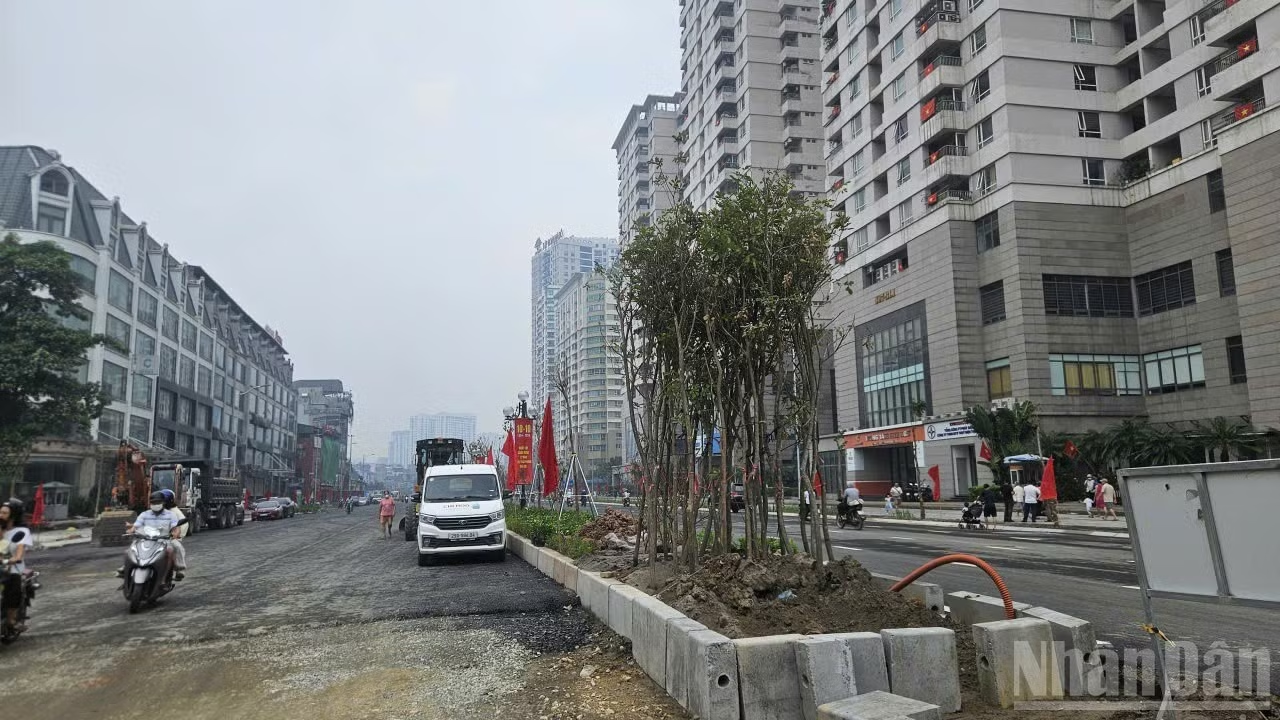
In practice, infrastructure development needs to be carried out in a coordinated and synchronous manner, focusing not only on completing individual roads but also on ensuring connectivity among transport corridors. When projects are implemented and put into effective operation, their benefits will not be limited to a single area but will also help improve traffic flow across the entire network.
In addition to transport projects, Ha Noi plans to start work on several urban renovation projects and cultural-commercial space development projects, including Ho Chi Minh Park, the Phung Hung Arch project, the redevelopment project for the Hoan Kiem Lake area and surrounding areas, and the Vinh Hung urban redevelopment project.
These projects aim to improve the landscape, add public spaces and make more effective use of valuable urban areas. Among them, the Phung Hung Arch project has attracted public attention, with expectations that it will create a new cultural and artistic highlight for the capital.
Nguyen Vu Hai, a resident of Ba Dinh Ward, expressed his hope that the century-old railway arches on Phung Hung Street will be used effectively and become a distinctive cultural and artistic space.
From transport to urban renovation, the projects show that the capital’s development requirements lie not only in expanding infrastructure, but also in the ability to organise harmonious living spaces, improve the quality of the urban environment and meet people’s growing needs.
Notably, along with construction progress, site clearance, coordination among units and implementation at the grassroots level play an important role in bringing projects to completion. The changes seen on Ring Road 2.5 and related roads show that when obstacles are addressed decisively, long-delayed projects can create clear changes in the urban landscape.
From residents’ joy as new roads gradually take shape to expectations for renovated cultural and commercial spaces, the development of the capital can be felt most clearly through changes in everyday life.

![[Video] Renewal and growth milestones of Ha Noi through the lens](https://en-cdn.nhandan.vn/images/1XgBTSIw0KyfD4abQsg-hd4ly6fBUHXC7_OAKyN4YwPfAhBw0Xs6rVX3rF0up9Tr6rLNn30Muc4bzp90E7yOqg/10-10-hanoi-cover.jpg.avif)